
What God cannot do without you — Recording layout test
What God cannot do without you
Suffering, metaconsciousness and agency in Mind at Large
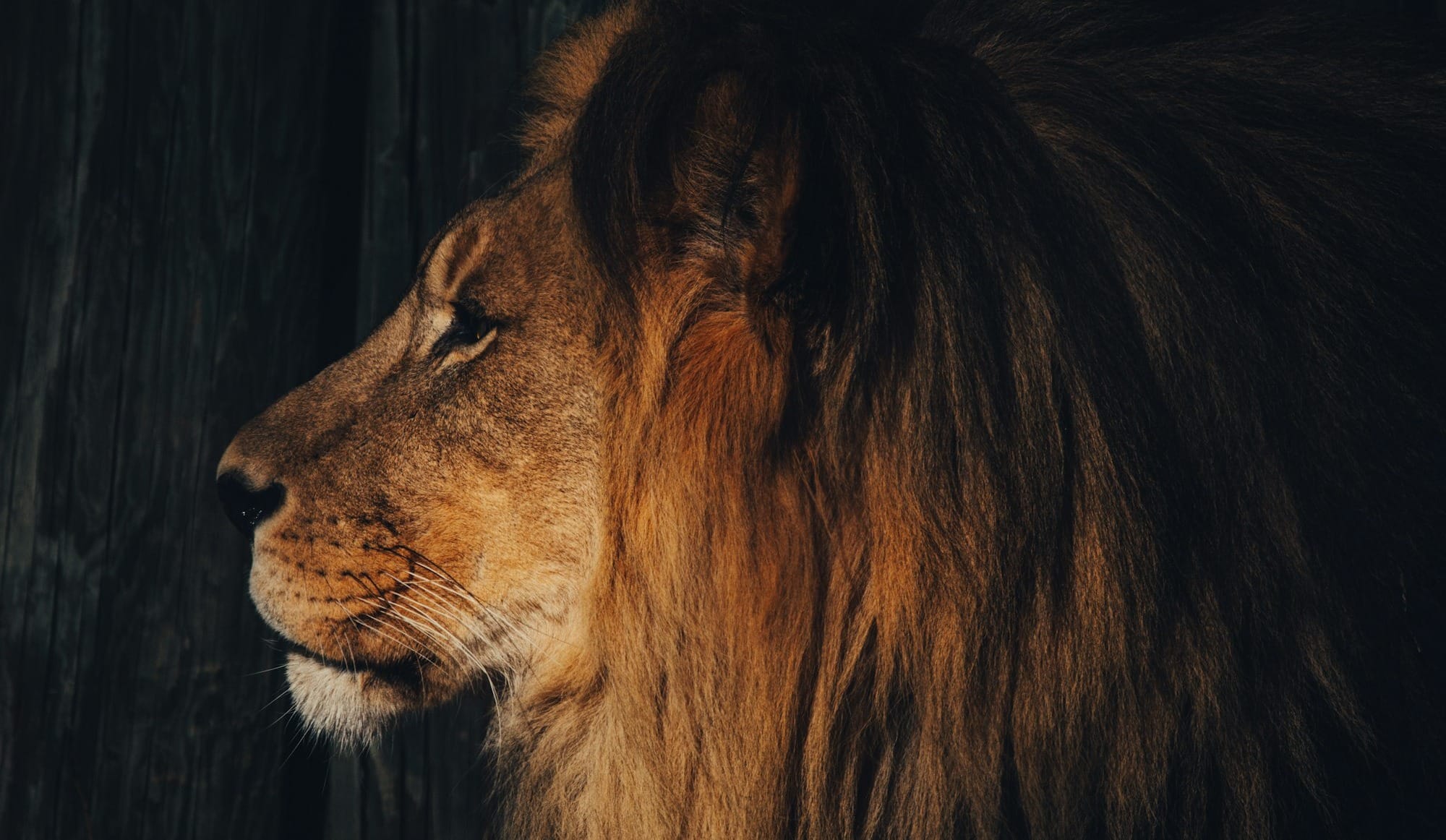
"we are the eyes through which nature is looking and experiencing itself.” - Bernardo Kastrup
The familiar religious picture is of a mind behind nature that knows what it is doing. But for Bernardo, the evidence is the reverse, and it fills life with meaning.
Whilst the inanimate universe is conscious, it is not metaconscious. Regular consciousness is simply having an experience. Metaconsciousness goes beyond, adding a higher-level representation and reflection on that experience. Surprisingly, this is actually implied in parts of the Bible and Buddhism, as we discuss in the meeting.
Following the evidence...
So why guess that the inanimate universe doesn't do this?
One clue is in how the laws of nature are so consistent. This is behaviour you would expect from a creature driven by instinct rather than deliberation. Think of a moth and a flame. Or how a crocodile will consistently lunge, but only when you are exactly within half its body length.

This ties in with the second clue: the fact that metaconsciousness appears only very recently in evolution. Earlier life-forms don’t exhibit obvious signs of self-reflection. If metaconsciousness was intrinsic to the universe, you might expect its earliest dissociations to have it too.
Perhaps most convincing is the problem of evil. Suffering itself isn’t evil. But deliberately inflicted suffering for no purpose almost certainly is. More confounding still, if there is only one mind, the suffering would be self-inflicted.
Why would a mind knowingly do that to itself?
Remember, lack of metaconsciousness does not mean lack of intelligence or even lack of purpose. You can have instinctive purpose. And you can ride a bike or catch a ball without having a clue about the physics involved. When asked, calendar savants immediately know what day of the week 14 March 1743 fell on, the answer just arrives. Ask how they did it and they can't say. The calculation happens with one watching.
Your life has incredible meaning

For Bernardo, the inanimate universe is what Mind at Large looks like to us.
If Mind at Large were metaconscious, everything we’re experiencing could be by design, perhaps based on a whim. Problematically for us, science and philosophy would be stripped of meaning (and so, in that case, would these meetings!) Our exploration of the universe would be more like art or psychology than science or philosophy. It would be more like studying a book or a film rather than revealing something essential about nature, unknown even to itself.
But just because the inanimate universe is not metaconscious does not mean the universe is not metaconscious.
Because you are the universe being metaconscious, right now!
This gives our lives incredible significance as we look out onto our living, feeling world and recognise our unique role, as agents who can feel, reflect and philosophise on the nature of our own existence.
I invite you to look around right now and recognise, you are everything you see, reflecting on everything you see, and the galaxies and stars, as powerful as they are, need you as much as you need them.
This topic is a deep one, so if you have a follow-up question, submit it in the comments on this page and we'll keep diving in deeper.
With appreciation,
Amir
We also discussed:
- Limits of God in Buddhism and the Bible
- Can Mind at Large suffer?
- Schopenhauer’s techniques to overcome suffering
- Is Agency or Awareness primary?
- Bernardo's dis/agreements with Michael Levin: boundaries of life
Recording thumbnail: Photo by Brendan Beale / Unsplash

Bernardo Kastrup
Analytic idealism
Bernardo Kastrup is the Executive Director of Essentia Foundation and Founder/CEO at AI systems company Euclyd BV. His work has set off the modern renaissance of metaphysical idealism. He has a Ph.D. in philosophy (ontology, philosophy of mind) and another in computer engineering (reconfigurable computing, artificial intelligence).
As a scientist, he has worked for the European Organization for Nuclear Research (CERN) and the Philips Research Laboratories (where the ‘Casimir Effect’ of Quantum Field Theory was discovered). He has also been creatively active in the high-tech industry for almost 30 years, having founded parallel processor company Silicon Hive (acquired by Intel in 2011) and worked as a technology strategist for the geopolitically significant company ASML. Most recently, he has founded AI company Euclyd BV.
Formulated in detail in many academic papers and books, his ideas have been featured in Scientific American, the magazine of The Institute of Art and Ideas, the Blog of the American Philosophical Association and Big Think, among others. His most defining book is Analytic Idealism in a Nutshell: A straightforward summary of the 21st-century’s only plausible metaphysics.
Explore Bernardo’s work →Transcript
Join as a member to access the full transcript
Join as a memberResources
Join as a member to access audio and meeting chat
Join as a memberContinue exploring
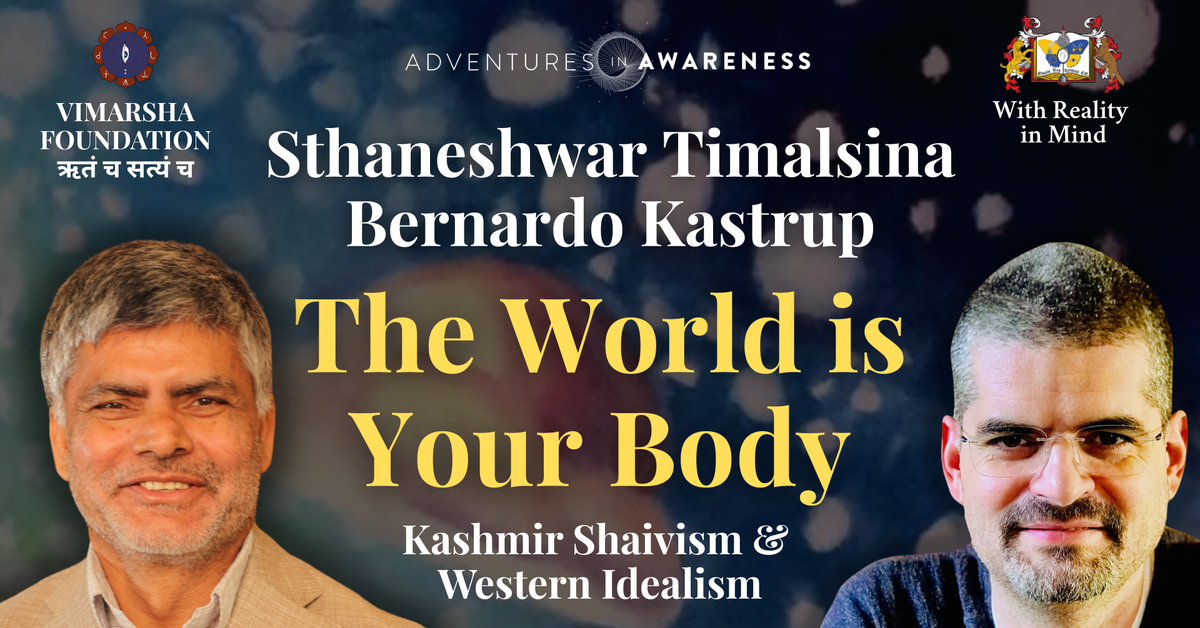


Watch the full conversation
With Reality in Mind is supported by its members. Join to access live meetings, recordings and transcripts, and help us create more conversations like this one.
Join as a member




Member discussion