
Overwhelming evidence for purpose, but is it instinctive or planned?
Recording: Jude Currivan & Bernardo Kastrup, 23rd June 2026, exploring a living, evolving universe

Recording thumbnail: Photo by Finding Dan | Dan Grinwis / Unsplash
Date: 23 June 2026
Title: Purpose and meaning: what analytic idealism leaves open
Duration: 9:45
https://vimeo.com/1228066374/6897969ef3
00:00:30 — Introduction of guest speaker Jude Currivan
00:01:44 — Viewing the world through the lens of separation
00:02:24 — Recurring patterns in the universe
00:03:28 — The Holographic Principle
00:04:25 — Is the universe meaningful?
00:05:21 — The Growing Block Universe theory
00:06:46 — Ontological status of the future vs. the past and the present; is the future determined?
00:10:15 — Bernardo on purpose and meaning
00:15:06 — Jude clarifies the concept of “nature”
00:16:00 — Lee Smolin and cosmological parameters
00:17:29 — Evolutionary purpose in the universe
00:19:54 — Everything is a function of what nature is
00:20:30 — Reference to Just Six Numbers by Martin Rees
00:21:00 — Fine-tuning of the universe
00:21:18 — Is there a telos in the universe? and if so, is it deliberate or spontaneous?
00:25:00 — In biology, random mutations constrained within viable limits (non-random selection effects)
00:27:00 — Primordial composition of the universe after the Big Bang (~75% hydrogen, ~25% helium): question of whether this balance implies purpose or meaning
00:30:00 — Remarkable facts in nature suggesting apparent fine-tuning:
Water density anomaly: maximum density at ~4°C, allowing ice to float and ecosystems to survive; Moon and its tidal influence: stabilizes Earth’s axial tilt and climate; Earth–Moon distance enabling stable tides and long-term orbital stability — Do these facts point toward intention or telos?
00:31:55 — Under Analytic Idealism, everything is mental: physical laws as archetypal patterns in mind-at-large
00:33:00 — Possibility that extraterrestrial life may also be DNA-based
00:35:00 — Philosophy cannot be done without naturalism
00:41:11 — Individuated self-awareness in a sentient planet (planetary consciousness concept)
00:43:50 — Chain of apparent coincidences leading to biological life
00:45:22 — Can a high-order cosmic mind be conceived as deliberating the course of evolution at the birth of the universe?
00:52:05 — The Planck Scale (this is the smallest meaningful scale in physics — ~10⁻³⁵ meters and ~10⁻⁴⁴ seconds — where classical spacetime breaks down and quantum effects dominate)
00:54:50 — Observational bias: any model we conceive must necessarily permit and explain our own existence (anthropic reasoning)
00:55:56 — With the help of AI systems, we may eventually decipher the language of whales
00:58:58 — Complexity and the journey of self-discovery as purpose (Jude’s view)
01:01:50 — Applying philosophical inquiry to business ethics; moving beyond materialism
01:05:11 — Why it matters to enlighten business leaders
01:10:20 — Growing awareness that separation is illusory; we cannot continue exploiting people and ecosystems
01:17:30 — Is AI a blessing or a curse?
01:25:21 — Approaching the Technological Singularity
01:25:50 — Bernardo mentions an AI model trained exclusively on peer-reviewed scientific literature
01:28:30 — Scale of modern AI systems: many trillions of parameters
01:31:00 — Current data center resource consumption is unsustainable and likely to collapse or change rapidly
01:36:20 — AI euphoria compared to past enthusiasm around Nuclear Technology
01:42:40 — Bernardo’s warning: do not underestimate AI
01:44:20 — What is humanity’s role in this technological and philosophical transition?
01:45:45 — A different way of operating, with Analytic Idealism
01:47:00 — Closing the session
Imagine a desert on which there is just one grain of sand that represents the conditions needed to create life. Then imagine this selection happens correctly, many times in a row.
Bernardo and Jude agree, there is overwhelming evidence that the universe has intention and purpose. Against incredible odds, physics appears exquisitely fine-tuned towards the emergence of galaxies, planets and life.
If the initial properties of the Big Bang, gravity, molecular clouds, water and countless other factors had been even slightly different, galaxies would never have formed, never mind life.
In fact, according to Sir Roger Penrose, the precision of the initial low-entropy of the universe is around one part in 10^(10^123). This number is so vast that writing out its zeros would take more digits than there are particles in the entire universe.
Spontaneous or deliberate?
But is this intention instinctive intelligence, or considered deliberation?
Bernardo makes a distinction, and as a naturalist, leans towards purpose being spontaneous. Like the impulse an artist has to create that cannot be understood until the artwork is complete.
Jude however leans towards purpose as deliberate - a plan in which the future is not constrained, but is conceived.
They both engage with evidence from many areas of physics, and the debate was rigorous, respectful and revealing.
What are the chances you're even reading this? I look forward to hearing your thoughts!
Amir
They also discuss:
- Is the block universe evolving?
- The promise and peril of AI
- Can metaphysics transform society?
- Can time be real, yet the future determined?
- The hidden meaning behind it all
- Would aliens agree?
About Jude

Jude Currivan, PhD, MSc, CMA is a futurist and cosmologist, with an MA in physics from Oxford, a PhD in archaeology, and senior business experience including at the UK stock exchange, HMV and Scholl.
Some of the most compelling evidence for an evolving universe is in Jude's recent discussion paper, The Unitive Science of a Living Universe, indicating that:
- The same patterns shape everything — from atoms to the universe to human society
- What we call matter may be better understood as organised information
- Mind and consciousness play a fundamental role in the nature of reality
Jude Currivan
Jude Currivan, PhD, MSc, CMA is a futurist and cosmologist, with an MA in physics from Oxford, a PhD in archaeology, and senior business experience including at the UK stock exchange, HMV and Scholl.
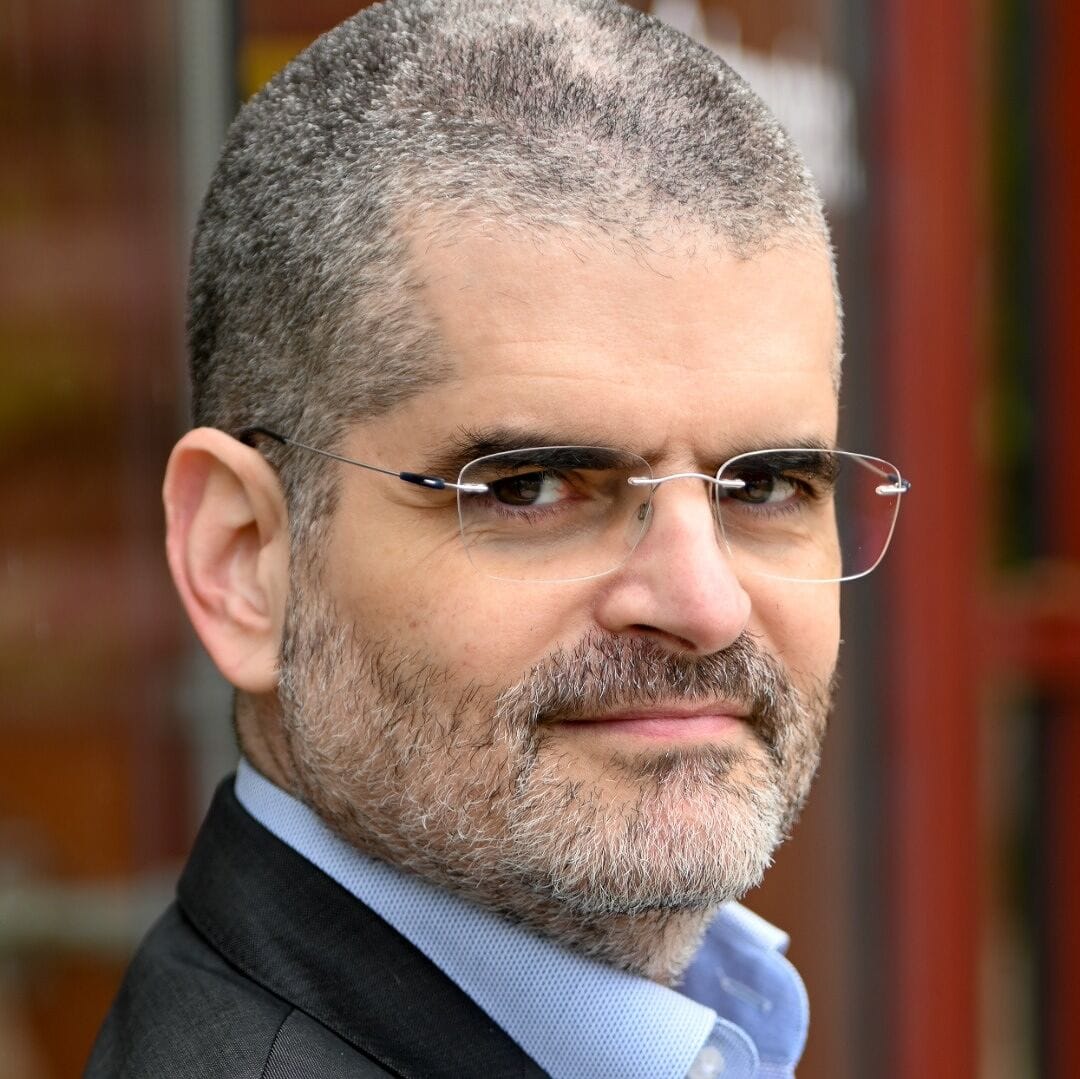
Bernardo Kastrup
Analytic idealism
Bernardo Kastrup is the Executive Director of Essentia Foundation and Founder/CEO at AI systems company Euclyd BV. His work has set off the modern renaissance of metaphysical idealism. He has a Ph.D. in philosophy (ontology, philosophy of mind) and another in computer engineering (reconfigurable computing, artificial intelligence).
As a scientist, he has worked for the European Organization for Nuclear Research (CERN) and the Philips Research Laboratories (where the ‘Casimir Effect’ of Quantum Field Theory was discovered). He has also been creatively active in the high-tech industry for almost 30 years, having founded parallel processor company Silicon Hive (acquired by Intel in 2011) and worked as a technology strategist for the geopolitically significant company ASML. Most recently, he has founded AI company Euclyd BV.
Formulated in detail in many academic papers and books, his ideas have been featured in Scientific American, the magazine of The Institute of Art and Ideas, the Blog of the American Philosophical Association and Big Think, among others. His most defining book is Analytic Idealism in a Nutshell: A straightforward summary of the 21st-century’s only plausible metaphysics.
Explore Bernardo’s work →Go deeper
A community made possible by member support
Standard membership €25 / month
Reduced-price membership €15 / month
Cancel at any time
Bursaries on request
Explore membershipAlready a member? Sign in
Weekly meetings · Full recordings · Questions & community
Member discussion