
The scientist & the wounded healer.
Science is one powerful tool, but life requires many. On Western Enlightenment, neural correlates and IIT aiming at Markov Blankets | Recording with Bernardo Kastrup 25th Aug 2026
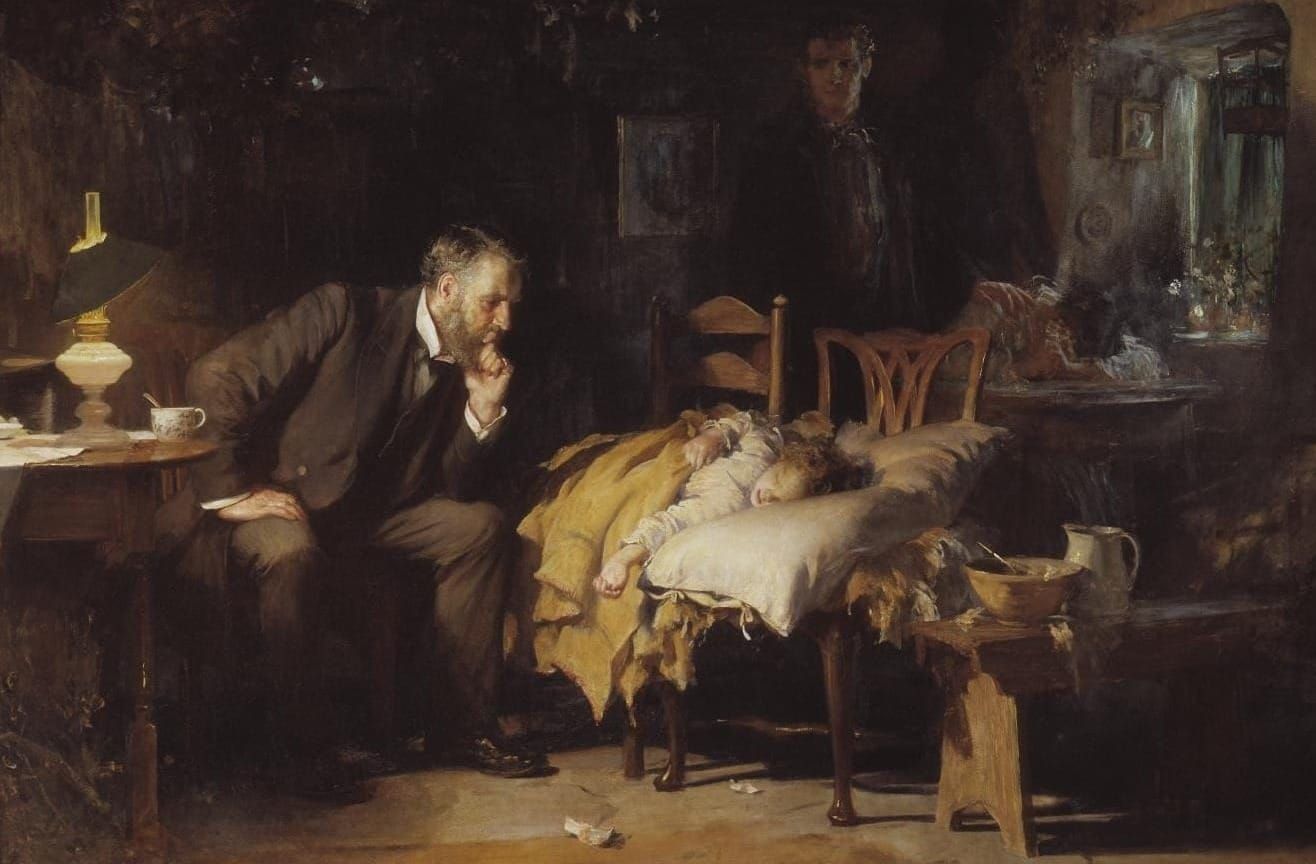
Recording thumbnail: The Doctor (1891) Luke Fildes Public domain, via Wikimedia Commons
Date: 25 August 2026
Duration: 2h 27m
Title: Science is one tool — life needs a toolbox
Duration: 4:13
https://vimeo.com/1228064089/b076aada6e
0:00:00 Intro
0:03:09 Quantum effects in life incompatible with physicalism
0:06:30 Quantum effects disrupt illusion of causality
Neural correlates: physicalism vs idealism:
0:14:10 Idealism accommodates neural correlates better than physicalism
0:25:00 Why does seeing red have complex neural correlates?
0:28:00 Counterintuitive cause and effect: Conway's Game of Life
The power, value and limits of science
0:37:00 The scientific method vs meaning of life
0:41:20 Science just one of many tools
0:45:00 Dreams
0:48:30 Is psychology a unique discipline?
1:05:00 Why do you use dashboard metaphor instead of Jung?
1:13:00 Enlightenment in the language of Jung
1:22:00 Mind at Large vs God Image vs Self
1:29:00 Why doesn't MAL inherit our meta-consciousness at death?
1:39:30 Memories as leakages from eternity
1:43:00 Why are individuals so fragile yet life so resilient?
1:46:00 Analytic Idealism better if MAL is not meta-consciousness
1:49:00 Does Analytic Idealism have a decombination problem (vs Panpsychism)?
1:50:00 Dissociation is common and necessary
1:56:50 Decombination ≠ dissociation (metaphysical vs psychological)
2:03:00 An Alter is a collection of many dissociations
2:09:00 Could IIT explain life? (A Markov Blanket may be a case of Integrated Information Theory)
2:11:00 Mind at Large in a state akin to delirium
2:19:00 AI is more powerful than you think
In Bernardo's personal experience, psychology is a discipline that is neither art, philosophy nor science. Rather, it is a unique approach that can draw on all three. It is exemplified by the wounded healer, able to deeply empathise and assist in ways that a protocol could never capture.
Likewise, for Bernardo, whilst science is one of our most valuable tools, it informs philosophy, it doesn't replace it.
This might explain why the neural correlates of experience appear less complete than a physicalist would expect.
"Talk to neuroscientists who have for decades studied psychiatric pathologies, trying to link them to brain anatomy or patterns of brain activity like autism.
You will find decades of frustration."
Under analytic idealism what we see on a brain scan should correlate with experience. But unlike physicalism, this doesn't need to be exact. Under analytic idealism, the brain is only a representation of a mental state, not its cause.
The most revolutionary part of this discussion was near the end.
Bernardo shared his hope that one day, Integrated Information Theory would model not just consciousness, but life itself.
"If we solve this, IIT explains not only your mentation; IIT explains life. Quite literally."
The open question is whether IIT can also explain the Markov blanket. Under IIT, a conscious whole is a "complex": a set of states bound tightly enough to experience itself as one thing. Bernardo's point is that you are not a single complex but a collection of many. This is why you can be dissociated from parts of yourself in the course of an ordinary day. What holds that collection together is a boundary, the Markov blanket, which appears to us as our skin. If IIT can account for that boundary in the same terms it uses for the complexes inside it, then the same theory explains both why you dissociate and why you are a living body at all.
We also discussed:
- Enlightenment in Jungian language
- How developing AI is an archetypal urge, not greed
- How quantum effects disrupt the illusion of causality
- Why Mind at Large is akin to a state of delirium
I look forward to seeing you again later today for our session with Michael Levin.
Until then!
Amir
p.s. also hidden in the meeting is Bernardo's speculation about why we are so fragile as individuals whilst life is so resilient. It may be a clue to the purpose of life itself.
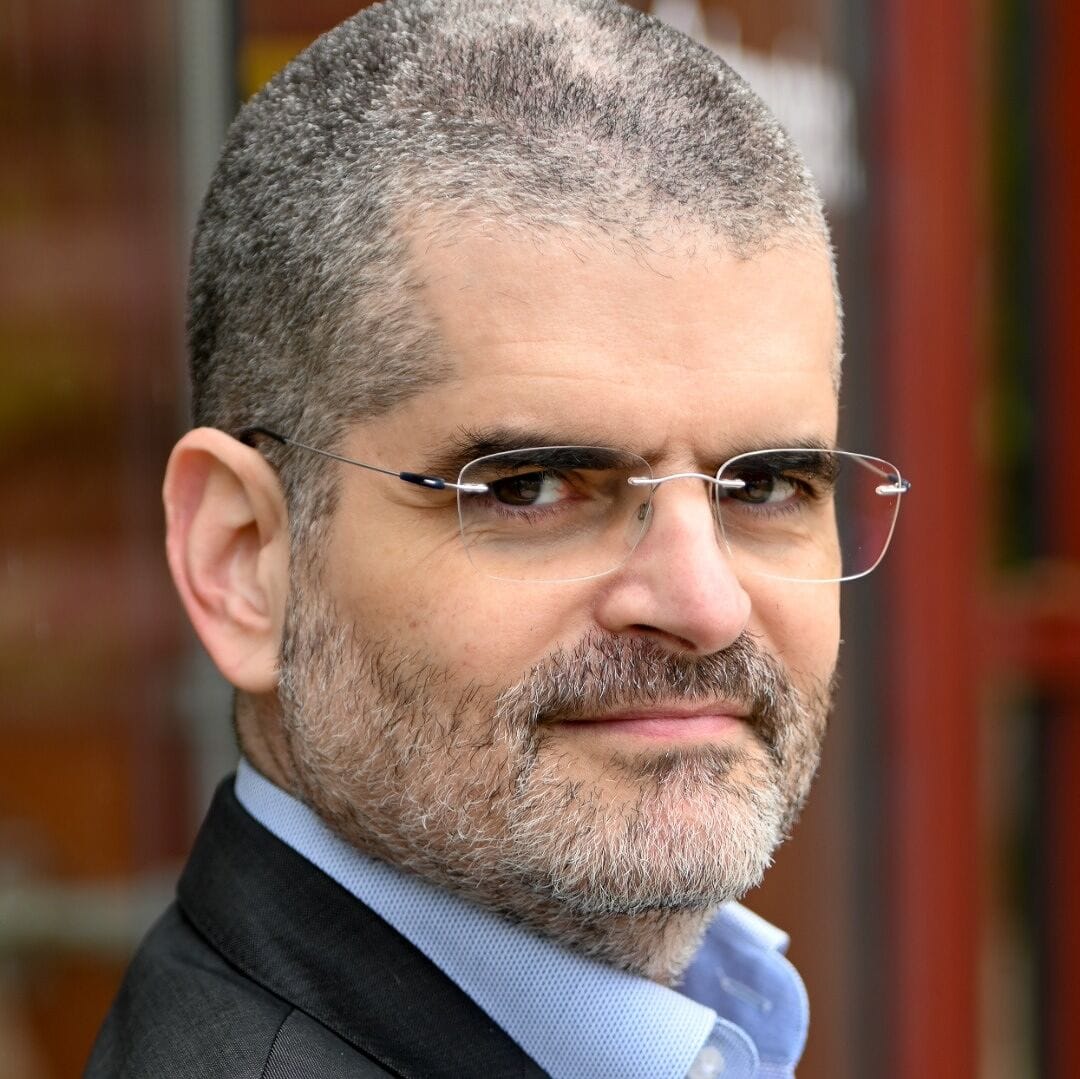
Bernardo Kastrup
Analytic idealism
Bernardo Kastrup is the Executive Director of Essentia Foundation and Founder/CEO at AI systems company Euclyd BV. His work has set off the modern renaissance of metaphysical idealism. He has a Ph.D. in philosophy (ontology, philosophy of mind) and another in computer engineering (reconfigurable computing, artificial intelligence).
As a scientist, he has worked for the European Organization for Nuclear Research (CERN) and the Philips Research Laboratories (where the ‘Casimir Effect’ of Quantum Field Theory was discovered). He has also been creatively active in the high-tech industry for almost 30 years, having founded parallel processor company Silicon Hive (acquired by Intel in 2011) and worked as a technology strategist for the geopolitically significant company ASML. Most recently, he has founded AI company Euclyd BV.
Formulated in detail in many academic papers and books, his ideas have been featured in Scientific American, the magazine of The Institute of Art and Ideas, the Blog of the American Philosophical Association and Big Think, among others. His most defining book is Analytic Idealism in a Nutshell: A straightforward summary of the 21st-century’s only plausible metaphysics.
Go deeper
A community made possible by member support
Standard membership €25 / month
Reduced-price membership €15 / month
Cancel at any time
Bursaries on request
Explore membershipAlready a member? Sign in
Weekly meetings · Full recordings · Questions & community
Member discussion