Science fiction, eat your heart out: Michael Levin redefining the rules of life
Recorded dialogue: Michael Levin with Bernardo Kastrup 26th August 2026
Recording thumbnail: Photo by Liviu Boldis / Unsplash
Date: 26 August 2026
Duration: 2h 5m
Title: Imagining the home worlds of new life forms
Duration: 2:39
https://vimeo.com/1226742035/dd8cc01faf
0:00:00 Radical biology enters the mainstream
0:03:48 The genome as a prompt, not a blueprint
0:11:27 Where does cellular intelligence come from?
0:15:12 Can physics explain everything that happens?
0:23:04 Healing by communicating with cells
0:24:33 Physicalism is dead: maths is behind everything
0:27:28 Why technology doesn’t mean we understand nature
0:32:18 An experience or its memory: which would you choose?
0:39:28 Could cells learn to respond to a placebo?
0:41:38 MomBot: a robot learning to build living forms
0:45:53 Imagining the home worlds of new life forms
0:48:25 Could ageing be a kind of forgetting?
0:49:56 Bored to death? A new theory of ageing
0:55:15 Michael leaves; reflections with Bernardo
0:58:08 Bernardo on ageing, purpose and letting go
1:04:27 Could minds exist without bodies?
1:11:00 Could “aliens” be ancient inhabitants of Earth?
1:22:09 What could hold a disembodied mind together?
1:28:47 When thoughts take on a life of their own
1:39:48 Why false memories can feel so convincing
1:45:45 Memory as a gateway through time
1:50:40 Where does nature’s intelligence come from?
1:55:54 How language divides an undivided reality
2:01:13 Closing reflections
"there are things that can be said now that really couldn't before, and I think partly it's because the data are now there and the applications are coming..." - Michael Levin
Day one of biology class you learn the rules. Genes are the blueprint. Cells are tiny machines. Whatever happens in your body, physics and chemistry explain the whole thing.
Michael's claim is that every one of those is an assumption. When dropped and put to the test, biology might start doing things that no one expected, and put most science fiction to shame.
- Cells could be 'conditioned' to respond to placebos like drugs
- Robots generate new forms of life
- Ageing cells forget what species you are
- Causality emerges from beyond the physical realm
Michael has been challenging convention for quite some time. Increasingly, he's got the data to back this up, and people are starting to notice.
"We had a paper recently in the journal Trends in Genetics, which is a top, mainstream genetics journal... talking about the genome as a set of prompts that need to be interpreted by the literal intelligence of cellular morphogenesis. I don't know that that could have been published even a couple of years ago."
Life: the genome is a prompt, not a blueprint
Read your genome and you'll find no fingers, no eyes, no face. Only a list of proteins. So how do cells know what to build, and when to stop?
The old answer is chemistry. But frankly, that doesn't add up.
Michael's answer: the cells interpret the genome, the way a mind interprets a prompt. The proof is that when disrupted, they reach the same goal by creative means. Or the same genes produce different things depending on the situation.
Cut an embryo in four and you get quadruplets, not four quarter-bodies. Take human cells out of a body and they become a creature that has never existed, with no evolutionary history at all.
He now has a machine, MomBot, that runs its own experiments on living cells to learn how to talk to them.
Intelligence is not in the brain, and not in the genes
Where does the know-how live, if not in DNA?
Michael says: the same place the truths of mathematics live. Nobody invented prime numbers and no experiment can change them. Cells tap into patterns of that kind, and so does everything else that solves problems.
He's already testing this. If cells can learn like Pavlov's dog, you could pair a drug with a harmless substance until the body responds to the placebo alone.
Causality: the physical world is not closed
The bedrock of physicalism is that physics explains everything that happens. Michael and Bernardo both reject it.
In plain terms: some of what happens in the physical world is caused by something that isn't physical.
Michael's argument is a child's game. Keep asking "why?". Why do cicadas emerge every 13 and 17 years? To dodge predators. Why those numbers? They're prime. Why are they prime? Ask a mathematician. You've just walked out of physics, and there is no way back in.
Bernardo adds that we don't have a complete physical model of anything bigger than a small molecule, and never will. So the idea that everything that happens in the physical world can be explained by other things in the physical world is a belief, not a finding.
Bored to death?
His lab modelled cells growing a body. No wear, no damage, no programmed death. It aged anyway. The cells reached their goal, held it a while, and then simply disbanded.
Give them a new challenge and they live longer.
Bernardo's take: perhaps ageing isn't a disease to cure but an archetype written into nature itself.
We also discussed:
- Memory as a gateway
- Minds without bodies: Jung's "semi-autonomous complexes" and tulpas
- Is the platonic space a real separate realm, or a convenient fiction?
This conversation was enthralling, and we hope to have Michael back as soon as his schedule will allow.
Keep an eye on the schedule, and meanwhile, enjoy the recording!
Amir
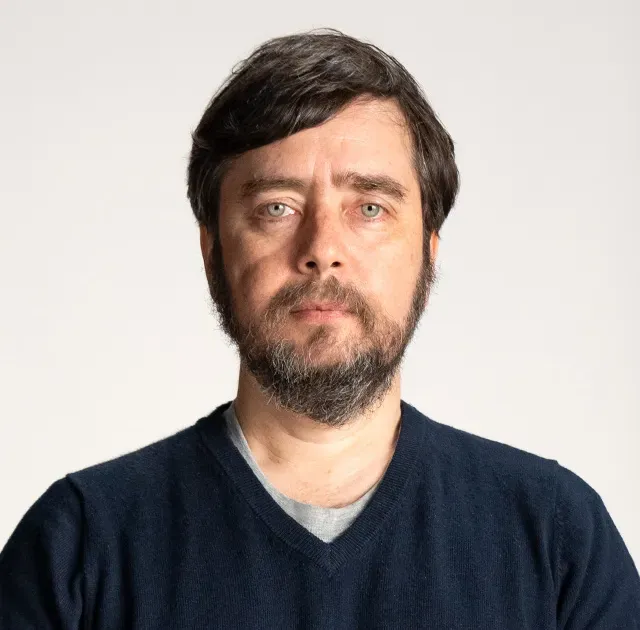
Michael Levin
"One of the most creative biologists working today" - Rupert Sheldrake
“Perhaps the most important person alive” - Bernardo Kastrup
Michael Levin is a Distinguished Professor in the Biology department at Tufts, holds the Vannevar Bush endowed Chair, and serves as director of the Allen Discovery Center at Tufts. He is also an associate member of the Wyss Institute at Harvard.
His group works at the intersection of developmental biology, artificial life, bioengineering, synthetic morphology, and cognitive science. Seeking general principles of life-as-it-can-be, they use a wide range of natural animal models and also create novel synthetic and chimeric life forms.
Their goal is to develop conceptual frameworks and practical tools that help detect, understand, predict, and communicate with truly diverse intelligences, including cells, tissues, organs, synthetic living constructs, robots, and software-based AIs. His mission is to develop fundamental understanding of how minds of all kinds arise, scale, persist, and change, and to use that knowledge to benefit the embodied experience of sentient beings, through biomedicine and beyond.
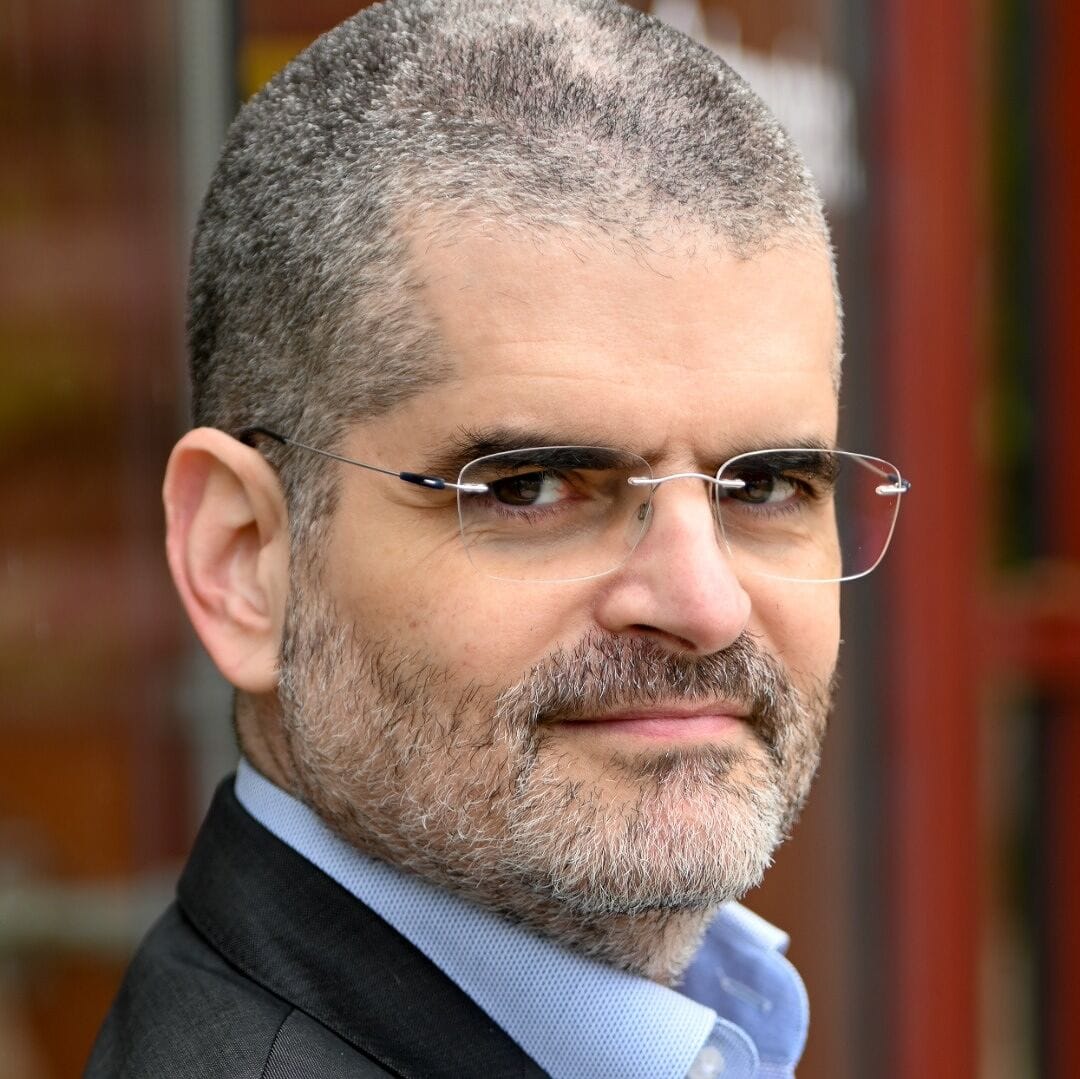
Bernardo Kastrup
Analytic idealism
Bernardo Kastrup is the Executive Director of Essentia Foundation and Founder/CEO at AI systems company Euclyd BV. His work has set off the modern renaissance of metaphysical idealism. He has a Ph.D. in philosophy (ontology, philosophy of mind) and another in computer engineering (reconfigurable computing, artificial intelligence).
As a scientist, he has worked for the European Organization for Nuclear Research (CERN) and the Philips Research Laboratories (where the ‘Casimir Effect’ of Quantum Field Theory was discovered). He has also been creatively active in the high-tech industry for almost 30 years, having founded parallel processor company Silicon Hive (acquired by Intel in 2011) and worked as a technology strategist for the geopolitically significant company ASML. Most recently, he has founded AI company Euclyd BV.
Formulated in detail in many academic papers and books, his ideas have been featured in Scientific American, the magazine of The Institute of Art and Ideas, the Blog of the American Philosophical Association and Big Think, among others. His most defining book is Analytic Idealism in a Nutshell: A straightforward summary of the 21st-century’s only plausible metaphysics.
Go deeper
A community made possible by member support
Standard membership €25 / month
Reduced-price membership €15 / month
Cancel at any time
Bursaries on request
Explore membershipAlready a member? Sign in
Weekly meetings · Full recordings · Questions & community
Member discussion