
Is there a moon when no one is looking? On Rovelli & Relational Quantum Mechanics
Bernardo on the incoherence of physicalist assumptions

Recording thumbnail: Photo by malith d karunarathne / Unsplash
Date: 29 April 2026
Duration: 2h 15m
0:00:00 Does the moon exist when nobody looks?
0:04:11 When suffering becomes lived philosophy
0:06:47 Where do Rovelli and Bernardo part ways?
0:11:09 A world with no absolute physical objects
0:13:44 Relations all the way down—but between what?
0:17:12 Why idealism can accept relational physics
0:18:50 Two dashboards, one sky
0:25:12 Does Nagarjuna deny every kind of ground?
0:29:12 The wave function: reality or knowledge?
0:34:15 Quantum theory as a betting strategy
0:36:29 The moon is real—but not physical
0:37:17 So is the moon still there?
0:42:31 One shared reality, many physical worlds
0:45:01 Is consciousness inside time?
0:48:33 The pilot who has never seen the sky
0:51:15 Spacetime as a filing system for experience
0:55:07 Reality as a web of meaning
0:58:33 Can physics reach reality itself?
1:05:14 Does the absolute need the relative?
1:11:59 What does it mean to exist for yourself?
1:17:03 Which quantum puzzles come from physicalist assumptions?
1:25:17 How much structure does a perspective need?
1:28:56 Why does the universe behave consistently?
1:33:48 Could the laws of physics change?
1:38:01 Conway’s Game of Life: which laws are fundamental?
1:45:43 How can an idealist trust their knowledge?
1:51:02 Bernardo’s case for physicalism’s internal contradiction
1:56:49 Where do archetypes come from?
2:03:12 Why an archetype is not its manifestation
2:08:05 Archetypes in philosophy and clinical practice
Hi %recipient_name%,
Carlos Rovelli is a renowned theoretical physicist and philosopher known for co-founding loop quantum gravity theory. Bernardo and Carlos both accept relational quantum mechanics (a minority view in a landscape crowded with many-worlds advocates) but they disagree on one of the deepest questions of philosophy.
Rovelli is a physicalist. And if you are a physicalist, RQM leaves you in what Bernardo describes as a metaphysical shitshow. If nothing physical has absolute existence — if it's all relational — then what, precisely, is doing the relating? Relations between relations between relations... you are off to the races, and you never reach the bottom. It is like saying there is only movement, but nothing that moves.
Analytic idealism, by contrast, escapes this infinite regress cleanly. If physical entities are representations, dashboard dials, then of course they are relational. Of course two airplanes flying in opposite directions will show different airspeed readings. That tells you nothing troubling about the sky itself. The sky is absolute. The representations are relational.
Which brought us to one of the most clarifying formulations I've heard in these sessions: Bernardo is a physical non-realist and an ontic realist. There is something real and absolute out there — he insists on it. It simply isn't physical. And there are, in a very precise sense, as many physical worlds as there are living beings.
We also discussed:
- The phenomenology of single celled organisms
- The wave function: epistemic or ontic? Why Bernardo sides with "betting strategy"
- Could the laws of physics be evolving? Conway's Game of Life and the levels of law
- Physicalism's internal inconsistency — the hard problem explained from first principles
- Archetypes as the fundamental properties implied by the beingness of a thing
- Spacetime as a cognitive construct — why the pilot born in the cockpit can't describe the sky
- Epistemology under analytic idealism: correspondence, coherence, internal consistency, parsimony
Before listening to the recording below, I also recommend Nour's introduction to the session, which you can read here. She shares her reflections below.
See you next week!
Amir
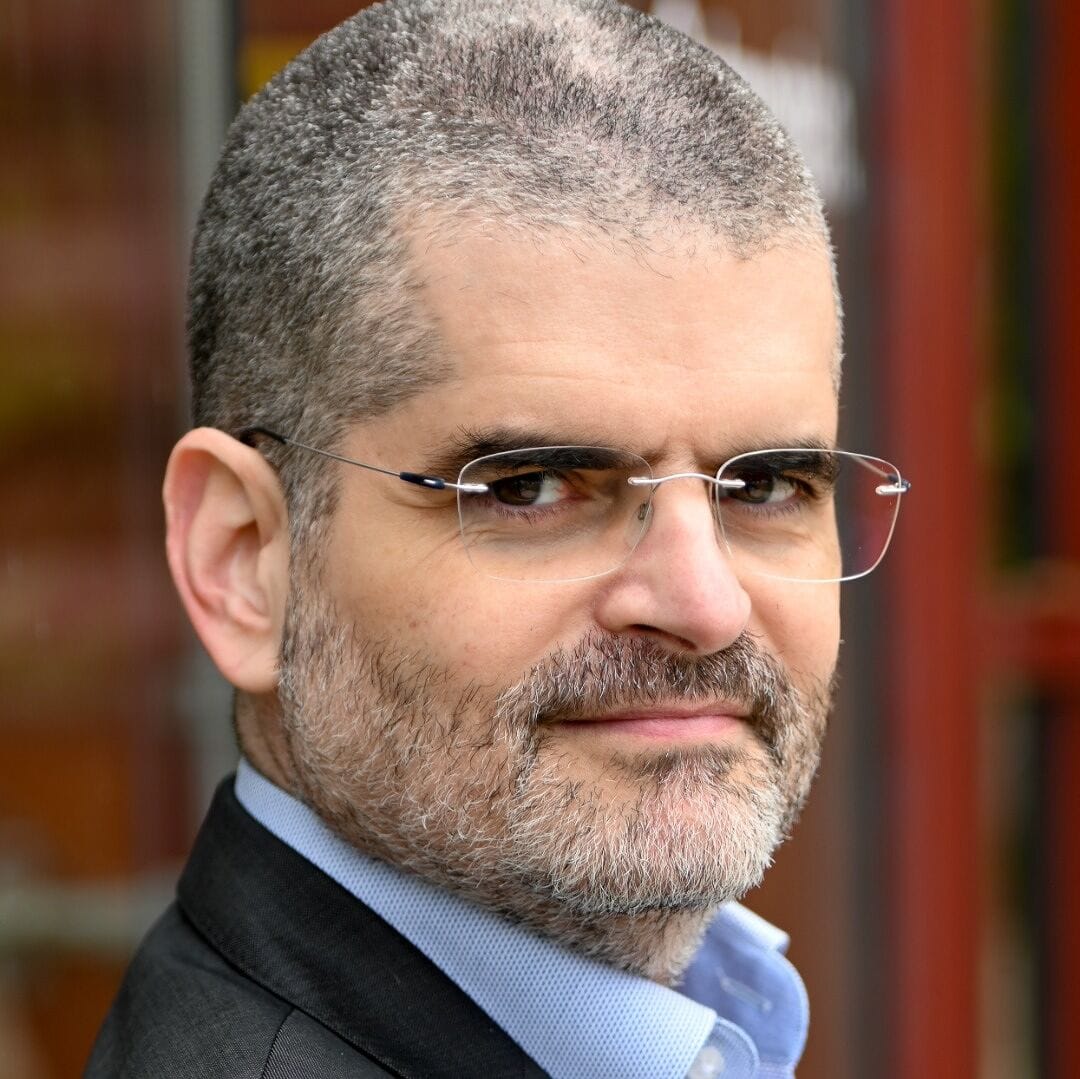
Bernardo Kastrup
Analytic idealism
Bernardo Kastrup is the Executive Director of Essentia Foundation and Founder/CEO at AI systems company Euclyd BV. His work has set off the modern renaissance of metaphysical idealism. He has a Ph.D. in philosophy (ontology, philosophy of mind) and another in computer engineering (reconfigurable computing, artificial intelligence).
As a scientist, he has worked for the European Organization for Nuclear Research (CERN) and the Philips Research Laboratories (where the ‘Casimir Effect’ of Quantum Field Theory was discovered). He has also been creatively active in the high-tech industry for almost 30 years, having founded parallel processor company Silicon Hive (acquired by Intel in 2011) and worked as a technology strategist for the geopolitically significant company ASML. Most recently, he has founded AI company Euclyd BV.
Formulated in detail in many academic papers and books, his ideas have been featured in Scientific American, the magazine of The Institute of Art and Ideas, the Blog of the American Philosophical Association and Big Think, among others. His most defining book is Analytic Idealism in a Nutshell: A straightforward summary of the 21st-century’s only plausible metaphysics.
Explore Bernardo’s work →Go deeper
A community made possible by member support
Standard membership €25 / month
Reduced-price membership €15 / month
Cancel at any time
Bursaries on request
Explore membershipAlready a member? Sign in
Weekly meetings · Full recordings · Questions & community
Member discussion