
The biggest misunderstandings about archetypes, synchronicity & causality
On Jung, multiple perspectives & physics | Q&A 24th March 2026

Date: 24 March 2026
Duration: 1h 51m
Title: Archetypes are not things
Duration: 8:26
https://vimeo.com/1226769388/dd08c220b4
0:02:40 Apollonian vs Dionysian idealism
0:06:34 Jung's circumambulation: many perspectives needed to approach truth
0:17:00 Reality: a cacophony of archetypal events
0:27:00 Archetypes are not things; things are expressions of archetypes
0:35:00 No separate archetypal realm
0:38:00 Archetypes defined: the properties of existence
0:44:00 The synchronicities that broke Bernardo's scepticism
0:57:00 Reconciling synchronicity & causality
1:02:00 Proposed early explanations from quantum indeterminacy
1:08:00 Similarity & symmetry: the primary tendency of mind
1:19:00 Maths represents intrinsic regularities of mind
1:23:00 The universe is unpredictable, but deterministic
1:32:00 We vastly underestimate ancient civilisations
1:35:00 Socio-political origins of the materialism 'blip
In the first half of this meeting, Bernardo gives a thorough account of archetypes as the properties, tendencies and proclivities that define existence. Amy Lemon, after 40 years studying Jung, was kind enough to say that it “was the best depiction of archetypes I’ve ever heard.”
In the second part of the meeting, Bernardo recounts the astounding synchronicities that convinced him Jung was not exaggerating for effect and how synchronicities can be reconciled with causality and the laws of physics through an archetypal understanding of reality.
Analytic Idealism is Apollonian: just one side of the coin.
Historically, idealism in the West has not been approached analytically. It has surfaced rather in spiritual traditions or the so-called continental philosophical tradition. This is a tradition associated with feeling and intuition. A tradition of embodied philosophy and “of ambiguity, of emotional charge, of metaphor, of symbolism.”
In contrast, analytic idealism is Bernardo’s attempt to show that the same conclusion can be arrived at through the intellect alone. “A rigorous, level-headed, explicit and unambiguous argument” that could pass peer review in an academic journal.
“You directly say the thing, you resolve contradictions, you avoid ambiguity. You make everything explicit. That is the Apollonian way."
But that doesn’t mean the Dionysian approach should be discarded, even if the idealist conclusion is the same.
“The absolutely wrong and counterproductive conclusion is to say, since they are the same thing, if I follow the Apollonian path, I know all there is to know.”
Yes, the Apollonian and the Dionysian are two sides of the same coin, but both sides matter.
“There is something to be gained with that diversity of perspective. There is something to be gained by exploring the same thing through different facets. That's the whole point of Jungian circumambulation.”
Jungian circumambulation
Imagine an object you are trying to fully understand. You need to walk around, observing it from many different perspectives, and not confuse one view for the whole thing.
If you only look at someone from behind, you could not say you have discovered everything there is to know about them.
You want to see the truth from the front, from the back, from the left, from the right, and all angles around it. You need to circumambulate it, to grasp it in all its nuance, richness, and layers of meaning.”
For me this is one of the deepest gifts of these weekly meetings - hearing the same questions from many voices, and Bernardo’s answers restated in many different ways.
Archetypes, Synchronicity & Causality
Below are the photos Bernardo discussed in the meeting depicting the events that punctured his natural scepticism around synchronicity - moments when inner and outer experiences correspond in ways that cannot be accounted for by conventional causality.
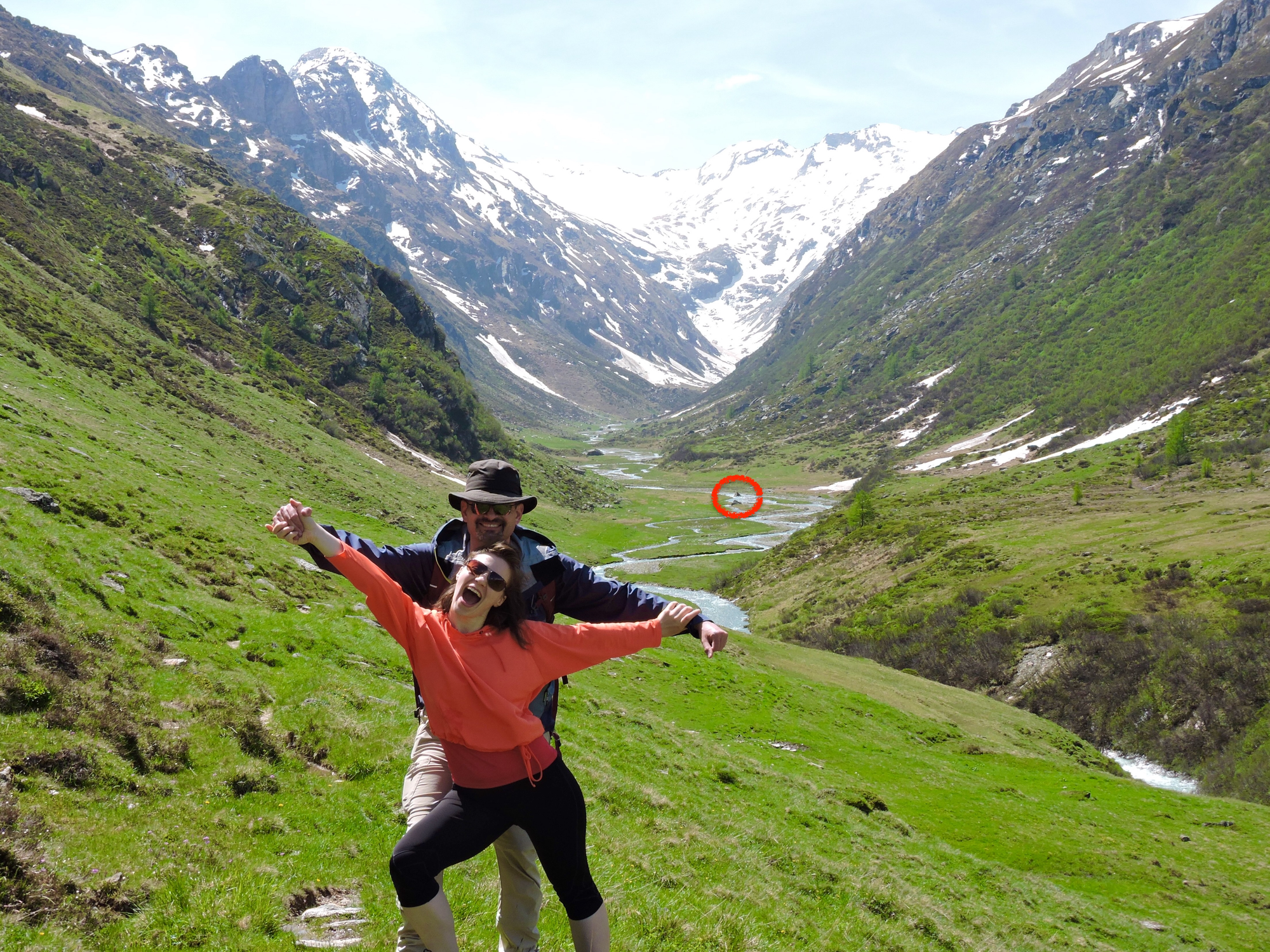


He went on to explain his understanding of the correspondence between Jung and Pauli, a pioneer of quantum mechanics:
Whilst initially they believed synchronicity was complementary to causality, Jung's final conclusion was that everything is synchronistic. Inner and outer experience are both manifestations of the same archetypes...
“causality itself is an emergent form of synchronicity that we only recognise as such when one archetype is manifest much more strongly than the others.”
We also discussed:
- The most common misconceptions even Jungians make about archetypes
- The hidden significance of the astounding universal agreement on mathematics
- How we vastly underestimate ancient civilisations
- The socio-political origins of materialism
After listening to this conversation, I would be curious if you start to notice more synchronicities in the "cacophony of archetypal events" which are our lives.
Feel free to email me or share on the telegram group your observations...
With appreciation!
Amir
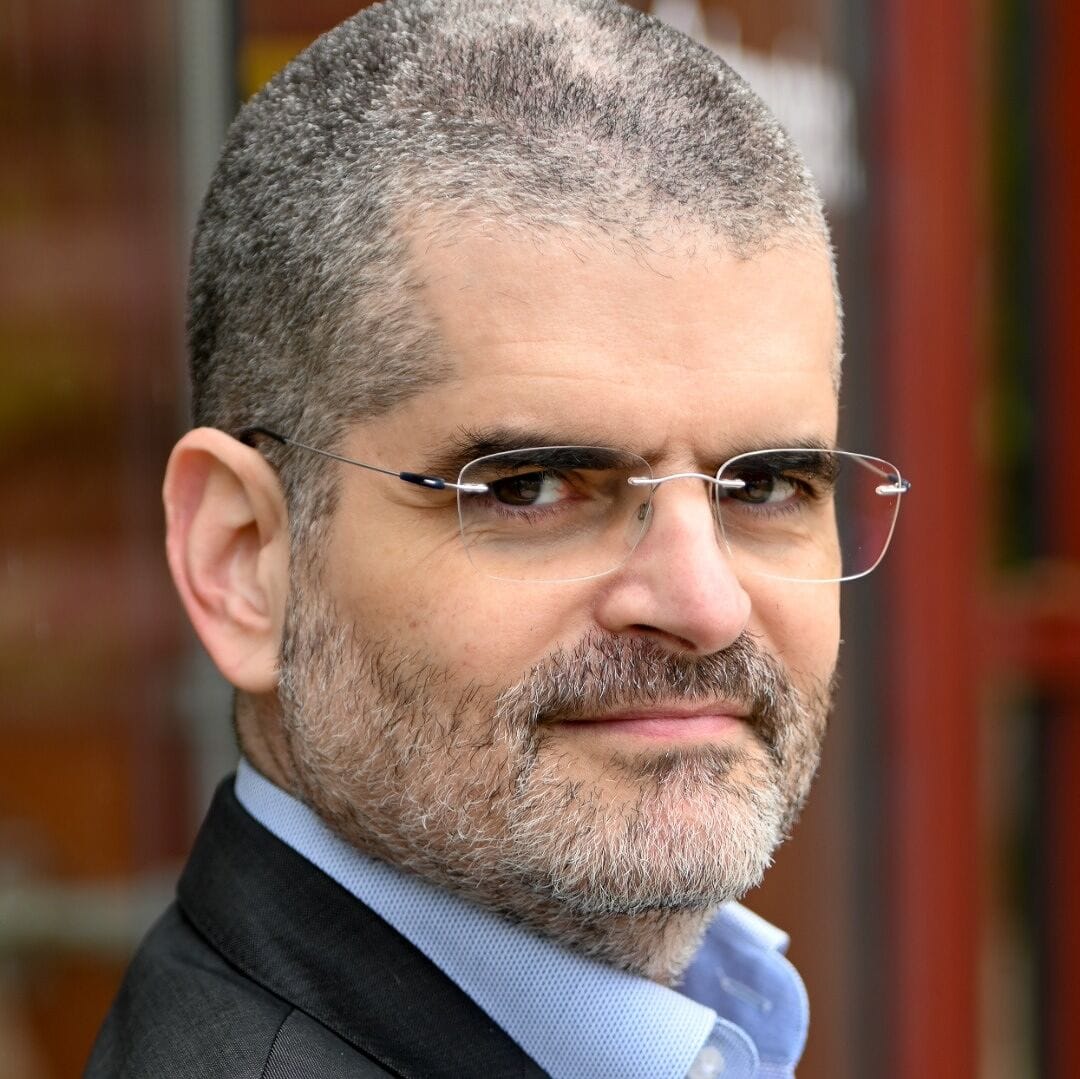
Bernardo Kastrup
Analytic idealism
Bernardo Kastrup is the Executive Director of Essentia Foundation and Founder/CEO at AI systems company Euclyd BV. His work has set off the modern renaissance of metaphysical idealism. He has a Ph.D. in philosophy (ontology, philosophy of mind) and another in computer engineering (reconfigurable computing, artificial intelligence).
As a scientist, he has worked for the European Organization for Nuclear Research (CERN) and the Philips Research Laboratories (where the ‘Casimir Effect’ of Quantum Field Theory was discovered). He has also been creatively active in the high-tech industry for almost 30 years, having founded parallel processor company Silicon Hive (acquired by Intel in 2011) and worked as a technology strategist for the geopolitically significant company ASML. Most recently, he has founded AI company Euclyd BV.
Formulated in detail in many academic papers and books, his ideas have been featured in Scientific American, the magazine of The Institute of Art and Ideas, the Blog of the American Philosophical Association and Big Think, among others. His most defining book is Analytic Idealism in a Nutshell: A straightforward summary of the 21st-century’s only plausible metaphysics.
Go deeper
A community made possible by member support
Standard membership €25 / month
Reduced-price membership €15 / month
Cancel at any time
Bursaries on request
Explore membershipAlready a member? Sign in
Weekly meetings · Full recordings · Questions & community
Member discussion