Explanation vs Computation

What a wonderful discussion we had last night!
I’ve never realised how slippery the word explanation actually is. We use it constantly, in science, in conversation, in our own heads, but when Bernardo pushed on it, it became clear that what we usually call an explanation is really just an analogy we’ve grown comfortable with. We reach for the familiar, we build a picture that feels satisfying, and we call it understanding. But satisfaction isn’t the same as truth. An explanation that merely fits our cognitive shape, that tells us a story we were already primed to receive, might be doing something closer to comfort than knowledge. That distinction felt important tonight, and a little unsettling.
Then comes the relationship between explanation and computation, I found myself surprised by how much tension lives there. Computation, when it’s honest, keeps explanation grounded, it forces you to be precise, to commit, to produce something that can be wrong (don’t get me started about the hard work that goes into building a robust and trustworthy AI agentic systems). But there’s a version of computation that drifts away from that, where the model becomes self-justifying, where the outputs look rigorous while the underlying picture has quietly been abandoned.
We conclude that explanation is what makes computation honest. Without it, computation can become its own kind of convenient fiction, just a more elaborate one.
Which brought us to the question Tierney raised, about humanity’s perpetual belief that we’re close, that this theory, this framework, this breakthrough is the one that finally closes the gap. Bernardo’s response was that this is an archetypal theme, baked into how we relate to knowledge itself. We are always almost there. And maybe that’s not a failure of science or philosophy, maybe it’s just the structure of the pursuit. What I’m sitting with now is whether that perpetual nearness is frustrating or actually the point. Whether the satisfaction was never supposed to last. And whether the models we build, however precise, however elegant, are always, at some level, conveniences we’ve agreed to believe in together.
And how beautiful it is to walk this journey with you, together.
Nour
A few things worth exploring before listening to the recording, if you're curious:
- David Deutsch: A New Way to Explain Explanation — his TED talk. Seventeen minutes, very direct, a good grounding for the session.
- The Beginning of Infinity by David Deutsch — if you pick it up, the first chapter is the one to read. It reframes what you thought science was doing.
- Closer to Truth on Scientific Realism — short conversations with physicists and philosophers on whether science describes reality or models it.
- Sean Carroll's Mindscape, Episode 253: David Deutsch on Science, Complexity, and Explanation — a longer, more technical conversation that gets into quantum mechanics and explanation in real depth.
The email introducing this session is here:
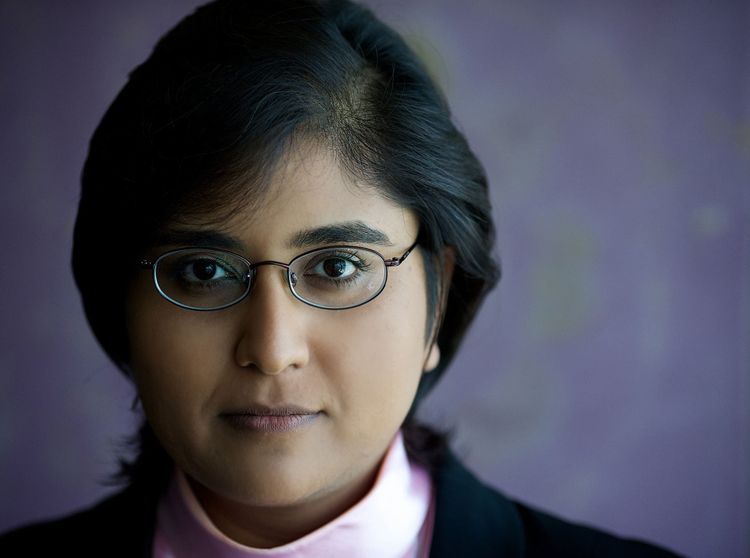
 Nour Elhuda Zuraiki
Timestamps
0:00:00 Does calculation give us understanding?
0:05:25 Explanation and computation keep each other honest
0:07:03 A satisfying explanation can still mislead us
0:14:03 The power of a convenient fiction
0:14:45 Explaining quantum computers through many worlds
0:18:14 Why do we crave ultimate truth?
0:21:34 Recognising the loop that deepens suffering
0:23:09 Could nature be more intelligent than our computers?
0:27:25 AI reasoning: different routes to the same result
0:32:26 How simple rules unfold entire worlds
0:35:19 The cosmic egg: simplicity is complexity
0:43:54 Is life a computation?
0:46:47 Can we predict the universe faster than it unfolds?
0:49:37 Does complexity grow by absorbing smaller systems?
0:57:24 Could nature have direction without a plan?
0:59:06 Why are we always almost at the answer?
1:03:11 When lost meaning becomes a promise of deliverance
1:08:02 The AI singularity as a religious story
1:16:38 Evolution as a spiral, rather than a straight line
1:19:46 AI in the brain: spectacles inside your skull?
1:24:06 Why high strangeness still intrigues Bernardo
1:26:28 Bringing the promise of completion back within
1:35:21 What could a holographic universe explain?
1:40:43 Even the hologram speaks dashboard language
1:48:09 Can mathematics take us beyond spacetime?
1:51:31 What science would we have without perception?
1:57:29 Kuhn and the limits of scientific models
2:05:03 Is analytic idealism a convenient fiction too?
2:06:15 Popper: why science tests rather than proves
2:13:01 Can we judge metaphysics by the same test?
Recording
Become a member to join our weekly live calls and access all the recordings
Go deeper
A community made possible by member support
Standard membership €25 / month
Reduced-price membership €15 / month
Cancel at any time
Bursaries on request
Explore membershipAlready a member? Sign in
Weekly meetings · Full recordings · Questions & community