Explanation, Computation, and Reality

There's a phrase that became almost a mantra in 20th century physics: shut up and calculate. That was one of my first shocks studying physics at university.
It's attributed, loosely, to physicist David Mermin, a summary of the Copenhagen interpretation's attitude toward quantum mechanics. Don't worry about what the theory means. Don't ask what's "really" happening. Use the equations, get the numbers, make your predictions, and move on. And for a long time, that was enough. Quantum mechanics made extraordinarily precise predictions. It worked.
But a question lingered, and it's the one we're going to dig into this session: is working the same thing as being true?
Prediction and explanation are not the same thing, and the difference between them matters enormously. A theory can predict with perfect accuracy while being completely silent, or even wrong, about what reality actually looks like. For centuries, Ptolemy's geocentric model of the solar system made usable astronomical predictions. It just didn't describe anything real. The question of whether science is in the business of explaining reality, or merely modelling it for practical purposes, is one of the deepest and least resolved in the philosophy of science.
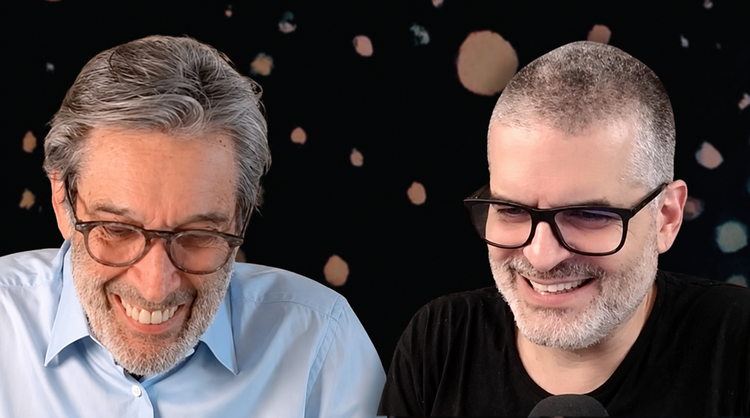
Physicist and philosopher David Deutsch has staked out a sharp position here. In The Beginning of Infinity, he argues that what distinguishes genuine knowledge from mere pattern-matching is the quality of explanation, and specifically, whether an explanation is hard to vary. A good explanation is one where you can't just tweak it arbitrarily and still have it work. That constraint, he thinks, is what makes a theory more than a useful instrument, it's what makes it track something real. His TED talk on explanation is seventeen minutes and remarkably clear if you want to get the argument straight from him before the session.
"The purpose of science is not just to predict but to explain — and to explain means to give a picture of what reality is actually like." — David Deutsch
What makes this especially interesting is that Deutsch's commitment to explanation wasn't just philosophical, it was generative. The idea for quantum computation came directly from taking the many-worlds interpretation of quantum mechanics seriously as an explanation, rather than bracketing it as metaphysical excess. If particles genuinely explore multiple paths simultaneously, a computer built on that fact should be capable of things classical machines never could. The explanation unlocked the technology. Which raises the question: if our willingness to ask "what is really going on?" produces results that pure prediction-making never would, what does that tell us about the relationship between explanation and reality?
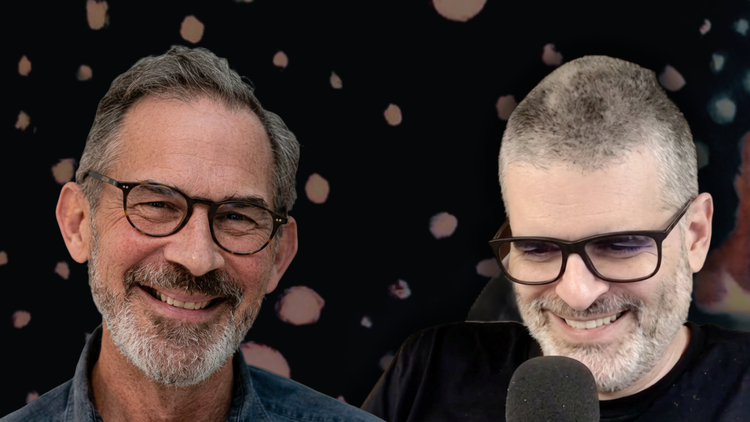
Bernardo's work adds a layer that neither physics nor conventional philosophy of science tends to touch. Even granting that our best explanations track something real, what is that reality made of? The deeper physics goes, the less it resembles anything you could call solid matter. What remains are mathematical relationships, probabilities, fields, information. Bernardo argues that what our explanations are actually pointing toward, when followed all the way down, is something more like mind than matter, that consciousness isn't a late arrival in a physical universe, but the ground in which any explanation, any observation, any reality at all becomes possible. Realism, in his view, doesn't require materialism. It might actually be incompatible with it.
The questions we'll explore together:
- What's the real difference between predicting and explaining, and does it matter which one we think science is doing?
- Did quantum computation prove something philosophical about the nature of reality, or is it just a very elegant engineering feat?
- Can you be a realist about science without being a reductionist, without believing everything bottoms out in particles?
- If we follow our best explanations all the way to their foundations, what kind of reality do they point toward?
A few things worth exploring beforehand if you're curious:
- David Deutsch: A New Way to Explain Explanation — his TED talk. Seventeen minutes, very direct, a good grounding for the session.
- The Beginning of Infinity by David Deutsch — if you pick it up, the first chapter is the one to read. It reframes what you thought science was doing.
- Closer to Truth on Scientific Realism — short conversations with physicists and philosophers on whether science describes reality or models it.
- Sean Carroll's Mindscape, Episode 253: David Deutsch on Science, Complexity, and Explanation — a longer, more technical conversation that gets into quantum mechanics and explanation in real depth.
See you there!
Nour
Zoom Room
Become a member to join our weekly live calls and access all the recordings
Go deeper
A community made possible by member support
Standard membership €25 / month
Reduced-price membership €15 / month
Cancel at any time
Bursaries on request
Explore membershipAlready a member? Sign in
Weekly meetings · Full recordings · Questions & community