
AI, consciousness & awakening | Shamil Chandaria
Recording: In a world of words... could AI wake up? Shamil Chandaria in dialogue with Bernardo Kastrup | 7th July, 2026
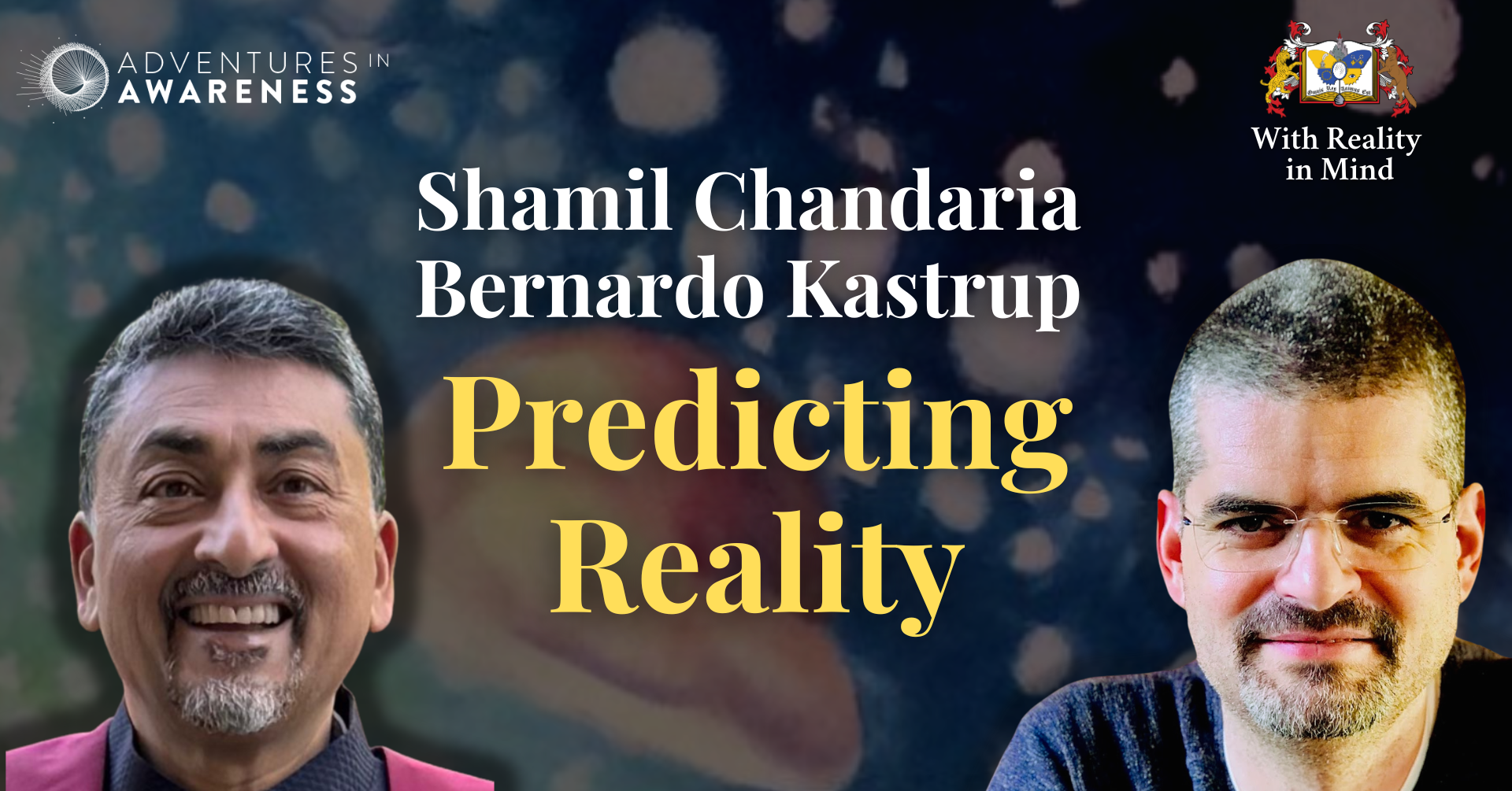
Date: 7 July 2026
Duration: 1h 56m
Title: Access to information is not the same as experience
Duration: 3:52
https://vimeo.com/1226767494/215d32450c
0:00:00 Welcome to Shamil Chandaria
0:05:00 Can different philosophies be helpful ways of seeing?
0:07:49 You live inside your own model of reality
0:08:51 Meditation and the constructed self
0:13:05 Does the infinite need finite perspectives?
0:17:51 What holds a private inner world together?
0:22:46 Could AI have an inner life?
0:25:32 Access to information is not the same as experience
0:29:15 Does consciousness depend on biology?
0:37:42 Five ways to think about machine consciousness
0:42:52 Why Bernardo starts with living beings
0:51:02 If a computer is conscious, where does it end?
0:58:26 Can our minds understand reality?
1:03:19 Can language model the world?
1:14:11 From world models to awakening
1:21:22 What remains when we deconstruct experience?
1:25:52 Emptiness without nihilism
1:29:01 Bernardo’s insight: nothing pretending to be something
1:36:14 Why the cosmic joke made Bernardo laugh
1:40:11 Finding peace with getting lost again
1:44:49 Meditate like an old cow pees
1:47:36 When the search for awakening becomes grasping
1:51:24 Alan Watts, insight and the persistence of suffering
1:53:27 Looking ahead: human flourishing after AI
Shamil Chandaria, is an advisor to Google's Deep Mind, and a philosopher, neuroscientist and meditation researcher in consciousness studies at both Oxford, Cambridge, and Imperial College London.
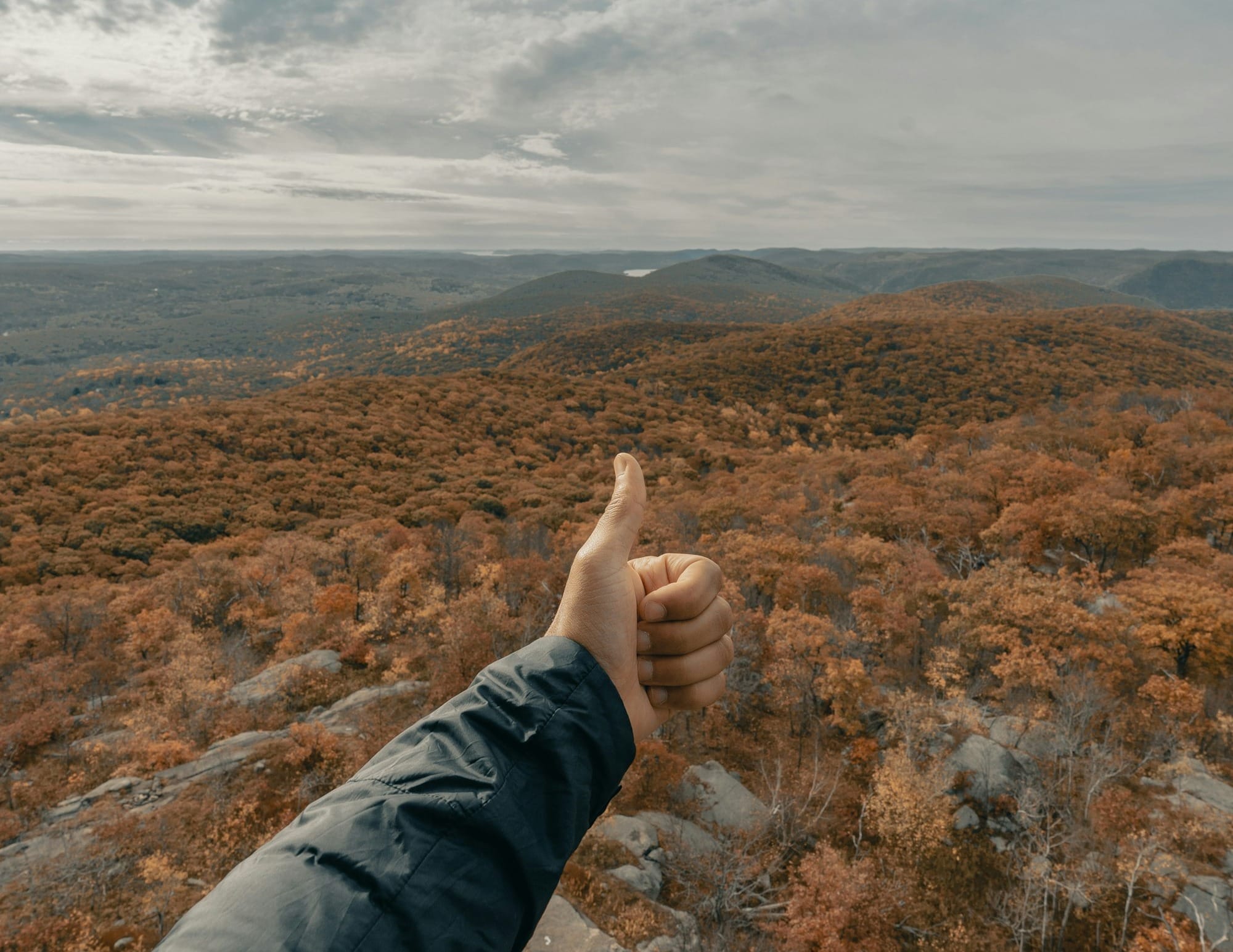
He explains that according to the neuroscience of perception, if you hold your thumb up at arm's length, your thumbnail covers the only part of your visual field where your eyes are receiving sharp, colour-rich data.
The rest of the vivid world you see is generated based on a best guess. A hallucination continuously updated based on a thin trickle of sensory evidence.
And it's not just what you see. Everything you hear, feel, taste... even your emotions and sense of self are all constructed from scant and messy data.
As Shamil explains it, we are living inside our own simulation. A generative model that organises perceptions based on prior expectations.
In meditation these priors can be discovered, dissolved and even redesigned.
In a world of words... could AI wake up?
It now seems that computers are also processing vast amounts of data and developing sophisticated models of the world, even when restricted to language.
But does that mean they could develop consciousness?
Shamil shared a preview of an upcoming paper describing the five criteria being considered as evidence. From behaviour, to algorithms, to the causal structure of IIT, down to living biology and a 'coupling' between organism and environment.
Bernardo is sympathetic to IIT, but suspicious of substrate independent consciousness. In other words, he leans firmly towards biology as the place where alters emerge. For him, the only compelling empirical evidence we have for inner life is... life. The rest of our dashboard lacks clear boundaries, so his challenge to computationalists is a simple question: what exactly is the thing that's meant to be conscious? The microchips? The cooling system? The river that supplies the cooling water?
Having said that, both agree that AI has only just begun and no one can predict where it will end up.
In the meantime, as we discover more about how computers generate models of reality, sometimes based on language alone, we might be learning more about how we do it, too.
The cosmic joke that never happened
For me, the most captivating part of the conversation was when it turned away from machines waking up and back to humans.
Bernardo shared the one realisation that he has experienced personally: everything comes out of nothing, is made of nothing, and never ceased to be nothing.
His response when this happened was not reverence, but laughter.
Shamil recognised the legitimacy of this response, but insists there is more juice in the apple. He took us deep into a phenomenology of awakening and the silence, stillness, boundlessness and timelessness behind all experience. The awareness that is the host to all things without being one.
Whilst Shamil strongly encourages meditation practice as a way to cultivate insights that translate into human flourishing, Bernardo insists he is at peace with dipping his toe in that lake only occasionally. A kind of meta-peace with everyday suffering.
Paradoxically, it's an orientation that Shamil recommends to most people striving for enlightenment. Nevertheless, as an advocate for taking multiple perspectives, he strongly encourages daily meditation, and the beauty the practice unfolds.
(If you want to explore this more, I'm hosting a series of meditation and Q&A evenings with Shamil, and you can join the next one here.)
I know the meeting never happened, but I look forward to hearing your thoughts!
Amir
We also discuss:
- Access vs phenomenal consciousness - and why the first is a misnomer
- Can language model the world?
- How Schopenhauer came so close
- Why the infinite needs finite perspectives to know itself
- How to meditate like an old cow pees
Upcoming meditation events with Shamil
https://dandelion.events/o/adventuresinawareness/a/shamil-chandaria-events
Shamil Chandaria
Shamil Chandaria, is an advisor to Google's Deep Mind, and a philosopher, neuroscientist and meditation researcher in consciousness studies at both Oxford, Cambridge, and Imperial College London.
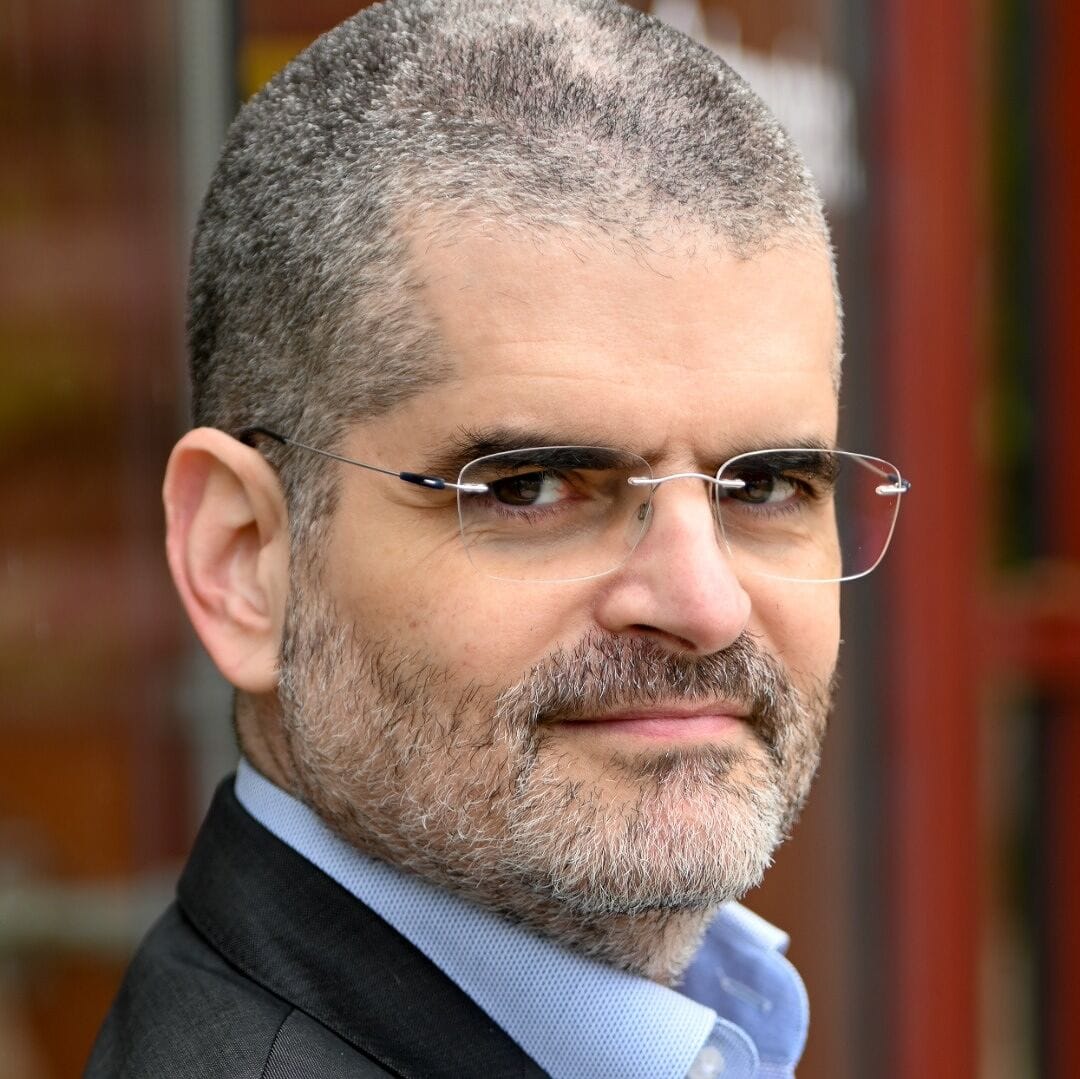
Bernardo Kastrup
Analytic idealism
Bernardo Kastrup is the Executive Director of Essentia Foundation and Founder/CEO at AI systems company Euclyd BV. His work has set off the modern renaissance of metaphysical idealism. He has a Ph.D. in philosophy (ontology, philosophy of mind) and another in computer engineering (reconfigurable computing, artificial intelligence).
As a scientist, he has worked for the European Organization for Nuclear Research (CERN) and the Philips Research Laboratories (where the ‘Casimir Effect’ of Quantum Field Theory was discovered). He has also been creatively active in the high-tech industry for almost 30 years, having founded parallel processor company Silicon Hive (acquired by Intel in 2011) and worked as a technology strategist for the geopolitically significant company ASML. Most recently, he has founded AI company Euclyd BV.
Formulated in detail in many academic papers and books, his ideas have been featured in Scientific American, the magazine of The Institute of Art and Ideas, the Blog of the American Philosophical Association and Big Think, among others. His most defining book is Analytic Idealism in a Nutshell: A straightforward summary of the 21st-century’s only plausible metaphysics.
Go deeper
A community made possible by member support
Standard membership €25 / month
Reduced-price membership €15 / month
Cancel at any time
Bursaries on request
Explore membershipAlready a member? Sign in
Weekly meetings · Full recordings · Questions & community
Member discussion