
Dreams of reality
Do you remember your most recent dream?
According to Bernardo, it could be significant in both content and substance. Whilst dreams should not be taken literally, if interpreted with care, they may reveal layers of objective reality invisible to the waking mind.
Under Analytic Idealism, consciousness is fundamental, and all reality is an appearance in one great Mind-at-Large. As apparent individuals, we are temporary vantage points of a universal consciousness looking back at itself.
(The many compelling philosophical and empirical reasons to entertain this idea are explained in the course available here.)
One way to think about it is this:
Imagine you are a snowy peak on a mountain range. When you observe a neighbouring peak you see it from the outside, and it seems to be separate from you. But look down within, and all the peaks emerge from the same ground. The neighbouring peak is you, taking a neighbouring perspective.

Dreams are a dialogue between different layers of your mind
In this analogy, waking perception is the looking out at neighbouring peaks. Dreaming is a way to look within.
Whilst many dreams go only a little way down and simply reorganise and evaluate experiences you had that day, others have content that is otherwise repressed. Emotions, inclinations, memories and material that don't suit the story the ego likes to tell about itself.
The waking ego does have the advantage of metacognition and discernment, but this also narrows its lens. Under Analytic Idealism, when content arrises from deeper layers of mind, it is the same as saying it comes from deeper layers of reality. With that deeper access comes the possibility of greater intuition.
If you've had, or heard of dreams that turned out to be instructive, healing, or even prophetic, this could be why: "The dream state is where those two levels find common ground for legitimate communication."
Several examples were shared by participants during the meeting.
Archetypal dreams

Some dreams go deeper still, bringing up archetypal content from the shared ground, the collective unconscious, from Mind-at-Large.
This content will be conveyed in different forms, dressed in imagery that conveys its essence to the person experiencing it. The Christian may see Christ when the Hindu might see Krishna. But the experience the image evokes is the same. In fact, that is all the images are there to do, to evoke a certain state, realisation or recognition.
The dangers of rampant literalism
So a mistake would be to take the images in dreams literally, as opposed to a symbolic hint, a suggestion, or a metaphor.
The problem is that sometimes the message "is conveyed using a symbolic language that unfortunately can be taken literally, like, the Bible."
Dreams of desire or death might not literally mean either of these things - it could be a part of you that is ready to come forward, or give way to something new. Perhaps there is a memory you cannot access, or some other reason for distress in your life.
Before the sophistication of language and abstract thought comes the simple recognition that some things are similar to others. The meaning of one experience is evoked by another, and this is primordial language of mind: analogy.
Interpret your life with the same care as your dreams
So under Analytic Idealism, dreams may contain significant content. But perhaps more importantly, so can waking life. Remember, the agency behind archetypal dreams and the physical world is the same. Waking and dreaming are different ways to experience the same reality.
If the snowy layer of a mountain peak is your waking ego, you both surround and are surrounded by the collective unconscious.
In dreams, the archetypal communication arrives in symbols, in waking life, as synchronicity: An external event that corresponds with a mental one without any obvious cause. Or when the same motif shows up many more times than chance would suggest. Jung's often-cited example was a run of fish references appearing across a single day.
Previous cultures would take the symbolic significance of reality for granted. That waking life is as richly symbolic as dreams.
For Bernardo, it is "perhaps the greatest tragedy of our time" that we have withdrawn this deep symbolic meaning from life. We think the meaning is what we achieve rather than the magic of what we are.

Consider instead that life is not a test, but a journey of self-discovery. Less like a grind towards a goal, more like music to be moved by.
We can discover what something is if we observe how it behaves. Our choices may feel free, but are determined by who we are. Each peak in the mountain range is a unique perspective of the one mind discovering itself.
So live your life as a mystery novel. Look for the clues. Become a metaphysical Sherlock Holmes. Learn to spot the patterns and to read the deeper significance in life's events. Play your part as the play of life unfolds.
The fact that a story is already written doesn't diminish its meaning, its intrigue, its fascination. The images are not flat. There is a whole universe behind everything you observe, rich with meaning.
Every event has significance. Perhaps not the significance you project, desire or fear. Not even a significance you can always understand; Bernardo suggests that an aspect of paranoid schizophrenia might be the inability to tolerate this mystery. Observing patterns, but confining them to a single, narrow interpretation.
Instead, let go of needing to know how the story ends whilst you're right in the middle. Learn to live in the mystery, the curiosity, the thrill of the front row seat of the greatest show in existence: conscious life.
As always, I look forward to hearing the perspective from your personal snowy peak, and seeing you from across the mountain range in our next meeting.
Until then!
Amir
p.s. In this article I spoke about the significance of the content of dreams. In the next, I'll speak to the substance.
Time stamps
0:00:00 Why even spiders dream
0:02:00 Why we don't debate physicalists
0:05:00 Significance of recurring dreams
0:17:00 Parallel universes = other dreams in MAL
0:20:00 Dreams vs Out of Body vs Near Death vs Lucidity
0:25:00 Depth of lucid dreams restricted by metacognition?
0:36:00 False awakenings: dreams within dreams
0:49:00 Prophetic, instructive and healing dreams
0:55:50 Danger of taking dreams literally, not symbolically
0:58:00 Analogy is the primordial language of mind
1:03:00 Signs you are having an archetypal dream
1:13:00 Limits of ego's intentions
1:17:00 Possibility of shared dreams
1:18:30 Astral projection / OBE: a challenge to analytic idealism
1:21:00 Power of liminal states: drowsiness, travel, death
1:25:00 Types and meanings of hallucination, and how to induce them
1:38:00 Waking up from the dream of reality: time doesn't exist
1:41:00 Nothing is purely the ego
1:48:00 Dreams are a nested dissociation with less ego
1:54:14 We are immersed in collective unconscious
1:57:00 Both waking life and dreams are surrounded collective unconscious
2:00:00 Waking life is as richly symbolic as dreams
2:07:00 Living life as a mystery novel; staying with the curiosity
2:17:00 Determinism can be full of meaning
2:20:00 Archetypal dreams appear with individualised imagery
Articles and papers mentioned
 Bernardo Kastrup
 Giovanni B Caputo
 ✉*Giovanni B. Caputo: giovanni.caputouniurb.it Academic Editor: Pietro Pietrini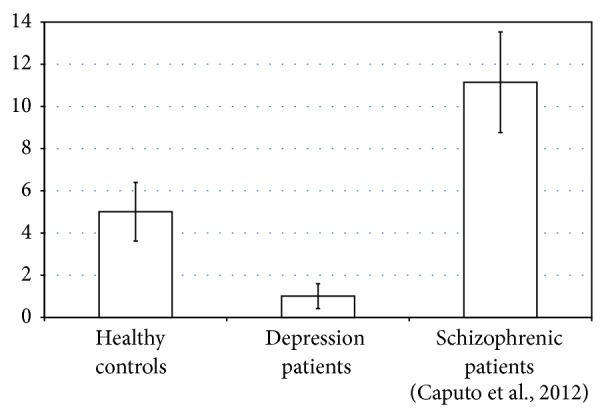
 Author
Recording
Become a member to join our weekly live calls and access all the recordings
Go deeper
A community made possible by member support
Standard membership €25 / month
Reduced-price membership €15 / month
Cancel at any time
Bursaries on request
Explore membershipAlready a member? Sign in
Weekly meetings · Full recordings · Questions & community