
One journey. Many paths.
The Western Path, the Cosmic Itch, and navigating the forces of nature
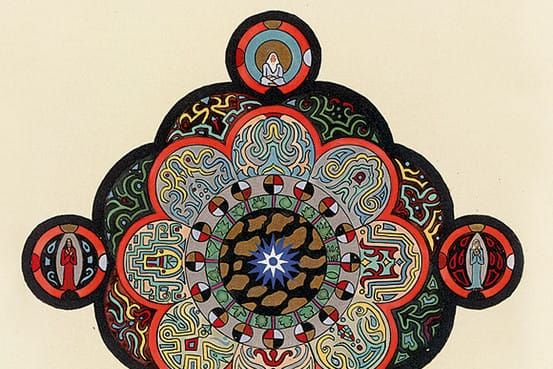
Recording thumbnail: An illustration from Carl Gustav Jung's 'The Red Book,' p.105 (1919)
Date: 9 September 2025
Duration: 2h 16m
Courtesy of Rita Conde
0:00:10 The launch of Euclyd.ai, Bernardo's new AI venture
0:04:55 This week’s theme
0:07:00 Hebrew writing in alchemy and esoteric traditions
0:08:28 Differences between Eastern and Western thought
0:10:20 What do we mean by Western thought?
0:11:40 Is Christianity the main influence in the Western path?
0:16:00 The purpose of alchemy
0:17:33 We are the stars
0:18:18 Some important Christian thinkers
0:21:06 Is there a fundamental division between East & West?
0:25:00 There are no human races
0:30:00 It’s hard to live every day grounded in absolute truths
0:33:30 Each one of us is a doing of nature
0:34:34 Buddhist perspective: Not better, not worse, not the same
0:37:17 Bernardo has always been a seeker
0:40:40 Allow what nature wants to do through you
0:42:35 We are not tabula rasa
0:43:30 The archetypes according to Jung
0:45:00 Are there collective Daimons?
0:47:30 The apple blossom’s infinite becoming
0:49:40 The West is more predisposed to follow the flow of the impersonal
0:55:50 Is it possible to get in the way of the Daimon?
0:58:20 The ego is a function of nature
1:02:20 Resisting the Daimon is sometimes necessary
1:06:58 God doesn’t know what our next step will be
1:09:08 The danger of not supervising the Daimon
1:12:19 We no longer know what is natural in us
1:13:38 Our lives are not about us
1:17:35 How to achieve harmony with the Daimon
1:20:00 Schopenhauer’s definition of ego
1:21:55 The ego’s ethical oversight of the Daimon, and then its surrender (in Bernardo’s book)
1:28:00 Controlling your emotional impulses while staying faithful to the Daimon
1:30:40 Hitler’s Daimon
1:35:00 The primordial lack
1:37:47 The universe is consciousness
1:38:58 Only states of lack can allow for dynamism in nature
1:40:57 The West is more vulnerable to the primordial lack
1:42:50 The contentment of the mind
1:44:40 There is no going back once you have been exposed to the primordial lack
1:47:00 The Palace of the Mind
1:49:00 The emergence of hope after unbearable suffering
1:53:30 The West is more open to Daimonic influence
1:56:00 Japanese Zen teachings
1:58:00 Buddha’s daimon
1:59:00 The magic mountain of Bernardo’s childhood
2:04:00 Next week’s theme
2:11:45 Is there a historical force behind the Daimonic influence in the West?
Before we could discuss The Western Path, Bernardo had to address a common objection. Might not dividing East from West contradict the very message of unity they both proclaim?
This is something Bernardo has wrestled with himself. At times he considered the Eastern mind superior, and Western culture lost. But recognising the rich diversity of how nature moves through us can engender mutual respect and self-acceptance.
When introducing this subject, I mentioned how mystics worldwide have concluded that duality is an illusion, but had starkly different intuitions regarding how to align their lives with this idea. In the Eastern cultures, the goal was often to transcend the illusory world. In the West, material forms were symbols for deeper truths, appearances to be revered for what they reveal.
There were further questions about how to navigate the Daimon - the impersonal natural forces that upend egoic intentions for our lives. Inspired by Schopenhauer's lame man riding a blind giant, Bernardo contends that Daimonic forces demand respect, but also moral guidance.

So we take responsibility for determining our lives, whilst accepting determinism? Yes. When you look back, accept determinism. When you look forward, ‘free will’ is the better metaphor.
Bernardo offered several tentative statements that he acknowledged could not be justified with reason, but instead betray intuition and lived experience:
For example, a dangerous seminal thought that plants the seed of “primordial lack” that once seen, can never be forgotten. In the absence of suffering, it comes more into focus, and what was originally seen as irrelevant because of the monstrous hardship of our lives slowly "starts springing to the foreground."
The thought emerges out of the impossibility of full self-understanding. Although this thought is self-reflective it is not the same as “the separate self.” This cosmic itch is not a problem to be solved, but a reality to be experienced. A template of being, and a formidable driver for action. Perhaps even integral to the Western Path itself.
We also discussed:
- Bernardo's new AI venture: https://www.euclyd.ai
- East / West are convenient terms
- All the traditions merge if you go back far enough
- Western individualism may be conducive to Daimonic life
- The astounding synchronicities of Daimonic life
- Happiness is beyond our control
Next week we meet to discuss Creativity, Expression and Art
 Amir Giles

Some resources shared by members in the chat:
- 'The Immortal Key' of Brian C. Murakesky
- John Scotus Etiugena
- Dr Justin Sledge Esoterica Channel on Youtube
- Quote from Christian poet Silesius: “The rose is without 'why'; it blooms simply because it blooms. It pays no attention to itself, nor does it ask whether anyone sees it.”
- The pollination scene from the movie Adaptation - that movie is comic and complex but it seems to me to a direct exploration of the Daimonic in all its characters especially from a Western perspective - leading to Chaos but also great insight in their own psychological struggles. https://youtu.be/C67d3tWgMFE?si=5kCNaZ2JdJNzKlaT
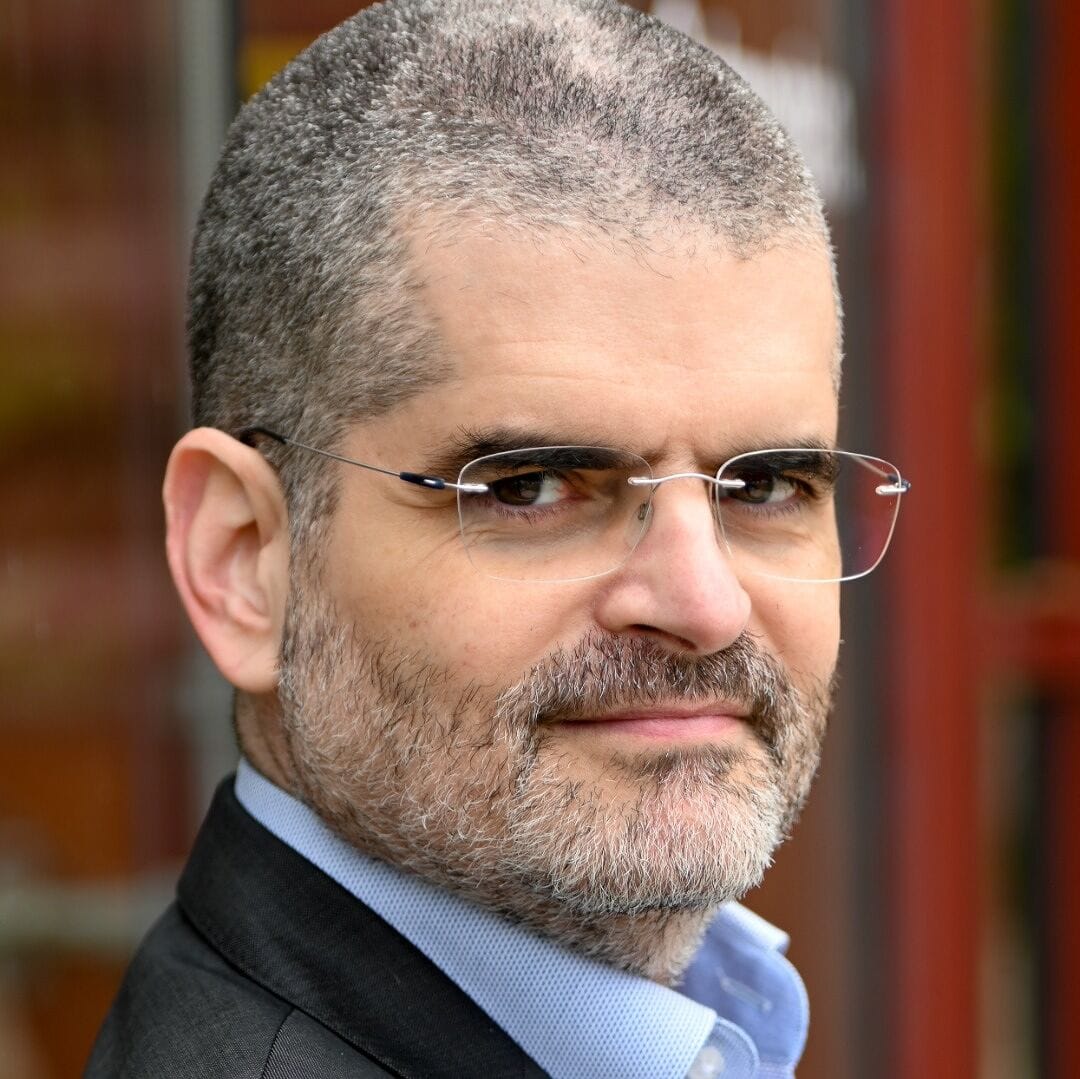
Bernardo Kastrup
Analytic idealism
Bernardo Kastrup is the Executive Director of Essentia Foundation and Founder/CEO at AI systems company Euclyd BV. His work has set off the modern renaissance of metaphysical idealism. He has a Ph.D. in philosophy (ontology, philosophy of mind) and another in computer engineering (reconfigurable computing, artificial intelligence).
As a scientist, he has worked for the European Organization for Nuclear Research (CERN) and the Philips Research Laboratories (where the ‘Casimir Effect’ of Quantum Field Theory was discovered). He has also been creatively active in the high-tech industry for almost 30 years, having founded parallel processor company Silicon Hive (acquired by Intel in 2011) and worked as a technology strategist for the geopolitically significant company ASML. Most recently, he has founded AI company Euclyd BV.
Formulated in detail in many academic papers and books, his ideas have been featured in Scientific American, the magazine of The Institute of Art and Ideas, the Blog of the American Philosophical Association and Big Think, among others. His most defining book is Analytic Idealism in a Nutshell: A straightforward summary of the 21st-century’s only plausible metaphysics.
Explore Bernardo’s work →Go deeper
A community made possible by member support
Standard membership €25 / month
Reduced-price membership €15 / month
Cancel at any time
Bursaries on request
Explore membershipAlready a member? Sign in
Weekly meetings · Full recordings · Questions & community
Member discussion