
The liberating freefall beyond space-time...
and why Bernardo rejects the simulation hypothesis
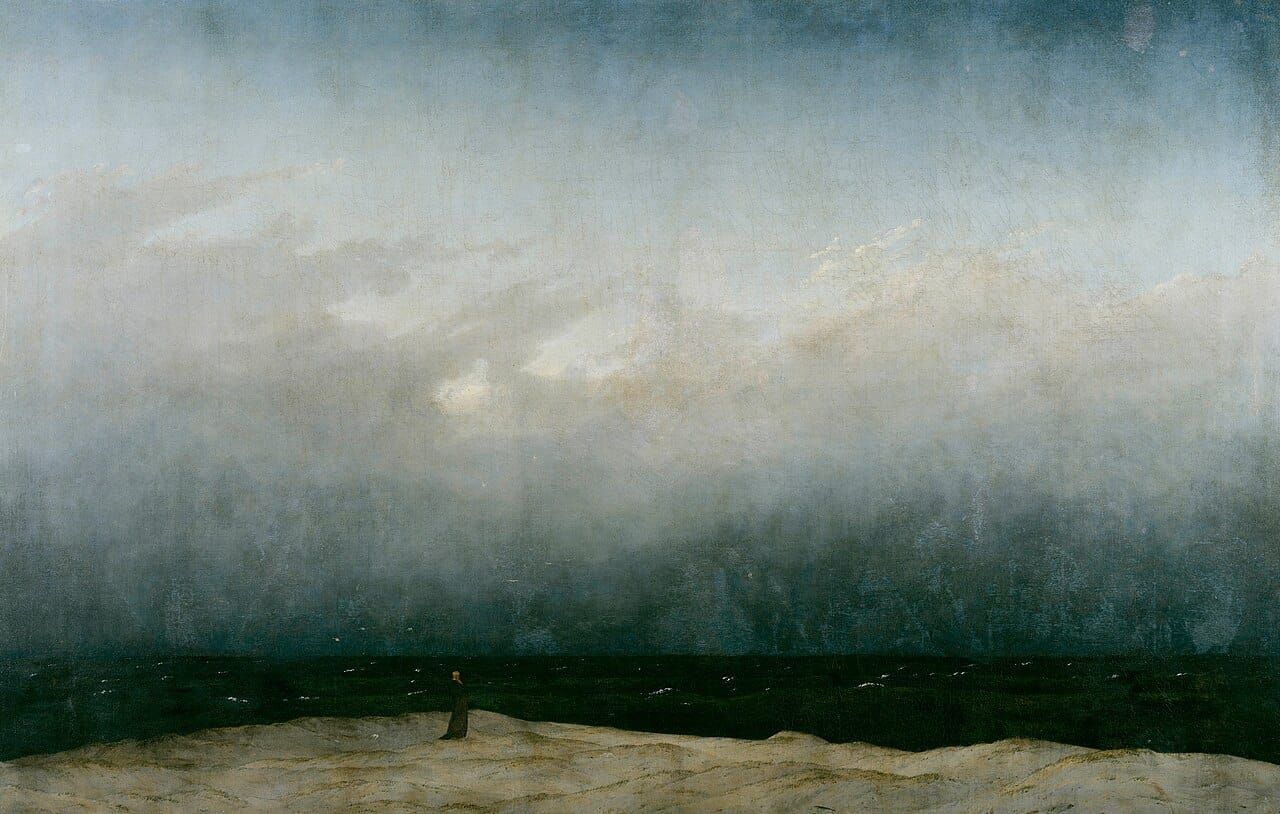
Recording thumbnail: Caspar David Friedrich, The Monk and the Sea, Public domain

Date: 15 September 2026
Duration: 2h 10m 55s
Title: The liberating freefall beyond space-time
Duration: 9m 51s
https://vimeo.com/1227406528/7908286029
0:00:00 Bernardo’s Euclyd update
0:03:12 New website, scheduling and community updates
0:08:07 Is reality spontaneous or planned?
EXITS FROM THE FINE-TUNING PROBLEM
0:12:00 Doesn't fine-tuning imply a plan?
0:13:15 Fine-tuning explained as first-person perspective
0:18:20 Could Black holes explain fine-tuning?
0:25:16 The birth of the first universe
0:29:09 Fine-tuning the dashboard
LIBERATION BEYOND SPACE TIME
0:32:38 Metacognition outside time?
0:35:51 The limits of language and logic
0:40:10 Letting go of our last safety line
0:48:25 Silent teaching and the power of presence
WHY BERNARDO REJECTS THE SIMULATION HYPOTHESIS
0:51:36 Are we statistically likely to be in a simulation?
1:01:55 Would science still matter in a designed world?
1:09:24 Science, engineering and metaphysics in a simulation
1:17:47 Chalmers & Kingsley on deception
1:25:07 Why a simulation would invalidate empiricism
1:30:47 Near-death experiences, life reviews and nested dissociation
1:35:01 Why would seeing without eyes challenge naturalism?
1:41:26 What dreams prove
1:46:39 Why do dreams contain a subject–object split?
1:51:26 What defines the boundaries between minds?
REFUTING SOLIPSISM
1:54:45 Don't dream characters imply solipsism?
1:59:07 Archetypal dreams and semi-autonomous daimons
2:04:14 Solipsism is not parsimonious
2:09:49 Closing thanks and community meetings
Despite some legitimate evidence, Bernardo rejects the idea that our reality is planned.
Near-death life reviews. Statistical probability. The ways in which the universe seems so carefully calibrated for the unlikely emergence of life…
These could all imply a deliberate design rather than spontaneous emergence, the scenario that Bernardo favours and argued for two weeks back.
He addresses each of these points in turn, drawing on new theories in physics and the practice of philosophy. Whilst we might be deceived about the nature of reality, it needn't mean that nature is deceptive.
Freefall
But what stayed with me at 4am last night was the dialogue that went beyond analytic philosophy, and beyond analysis altogether.
There are limits to what can be said with language, but parts of this meeting came close:
“what is really going on is beyond thought, beyond logic, beyond language, beyond space, beyond time”
A few brave souls who loosen their attachment to personal identity, science, even to logic itself, might acquire a taste for this liberating freefall. Meanwhile, the conceptual maps we build still have purpose in their immediate applicability to life. You can click the clip above for a free preview of this section, and of course members can watch the whole show.
Personally, I love the physics, but I keep coming back for the mysticism. Lucky for us, this meeting has both.
We also discussed:
- Why a plan implies we're in a simulation
- How black holes could explain our fine-tuned universe
- How Bernardo rejects solipsism
- What dreams might prove about the nature of mind
Also, next week we have Jamey Hecht advocating for a theistic idealism. So the conversation continues, and I hope to see you there!
With appreciation,
Amir
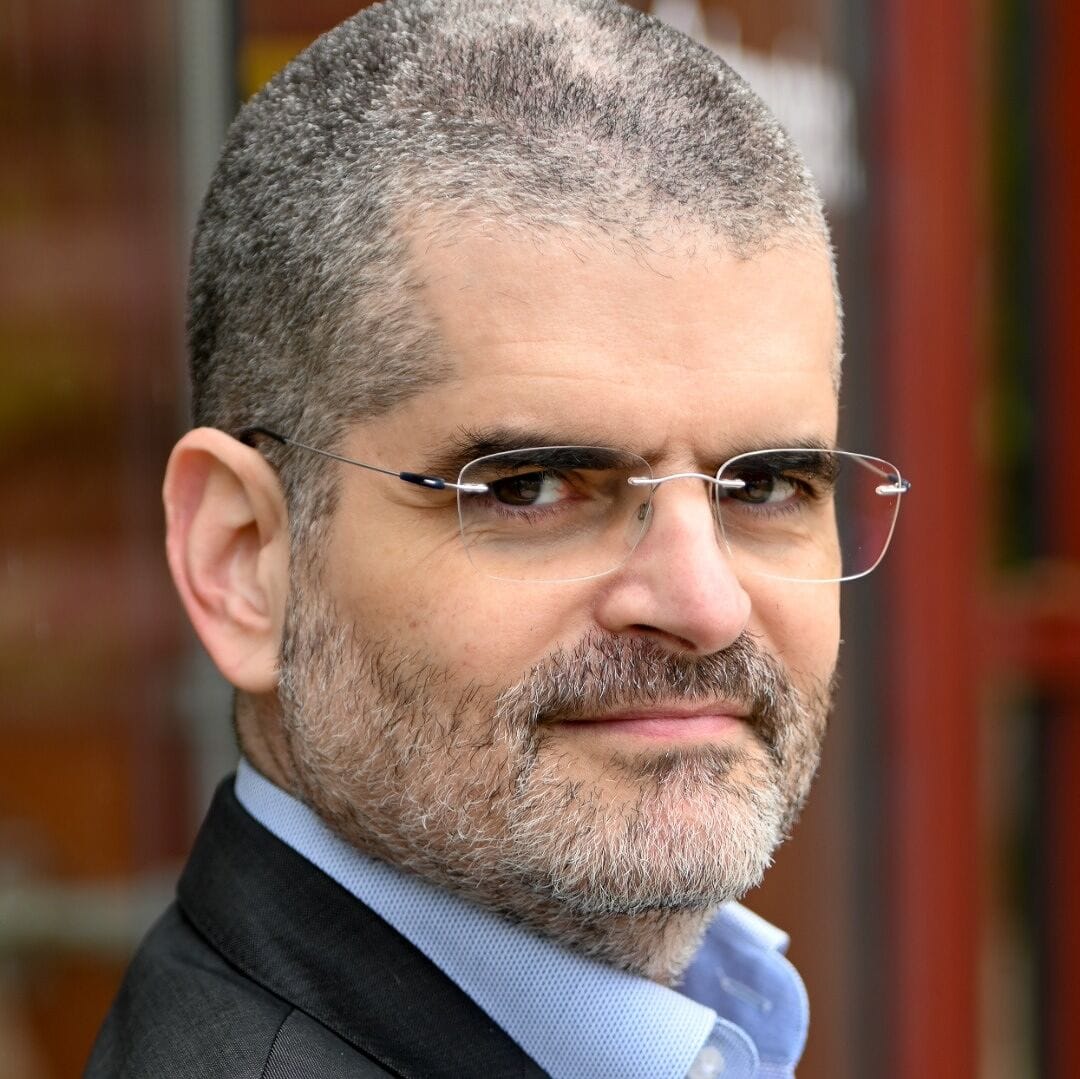
Bernardo Kastrup
Analytic idealism
Bernardo Kastrup is the Executive Director of Essentia Foundation and Founder/CEO at AI systems company Euclyd BV. His work has set off the modern renaissance of metaphysical idealism. He has a Ph.D. in philosophy (ontology, philosophy of mind) and another in computer engineering (reconfigurable computing, artificial intelligence).
As a scientist, he has worked for the European Organization for Nuclear Research (CERN) and the Philips Research Laboratories (where the ‘Casimir Effect’ of Quantum Field Theory was discovered). He has also been creatively active in the high-tech industry for almost 30 years, having founded parallel processor company Silicon Hive (acquired by Intel in 2011) and worked as a technology strategist for the geopolitically significant company ASML. Most recently, he has founded AI company Euclyd BV.
Formulated in detail in many academic papers and books, his ideas have been featured in Scientific American, the magazine of The Institute of Art and Ideas, the Blog of the American Philosophical Association and Big Think, among others. His most defining book is Analytic Idealism in a Nutshell: A straightforward summary of the 21st-century’s only plausible metaphysics.
Go deeper
A community made possible by member support
Standard membership €25 / month
Reduced-price membership €15 / month
Cancel at any time
Bursaries on request
Explore membershipAlready a member? Sign in
Weekly meetings · Full recordings · Questions & community
Member discussion