God, soul & the problem of evil
Do you think the belief in a metaconscious God and an enduring Soul could be compatible with Analytic Idealism? And if so, where does that leave the problem of evil?
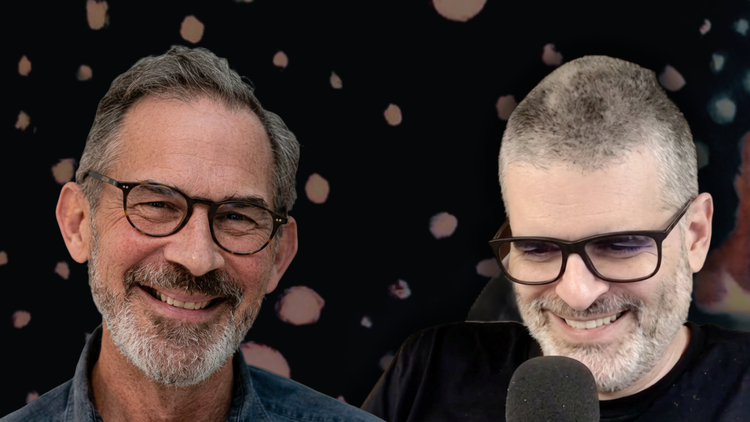
In recent sessions Bernardo shared his many reasons for rejecting a metaconscious creator, but this week is a chance to consider an alternative. Our guest is author, poet and psychoanalyst Jamey Hecht, presenting themes from his upcoming book Into Theism: Overcoming Obstacles to Belief in God (Essentia Books, 2027).
He shares an introduction below on Ontology, (the philosophy of Being), Cosmogony, (the origin of the world), and Thiodicy, (the Problem of Evil):
Ontology: A Compromise with Dualism?
Theism and Analytic Idealism seem compatible, especially if either or both of them are construed flexibly. It can be illuminating to explore how they do or don't fit together. Neither entails the other, nor do they preclude one another in the same strong way that each precludes physicalism.
As for substance dualism, it contradicts idealism's clear axiom that mental states are the only ontological primitive. The evidence that's typically called "anomalous" (the best of the NDE, reincarnation, mediumship, and apparition literatures) suggests, but does not require, that the individuated psyches that Bernardo's Analytic Idealism calls "alters" do (or can, at least) remain individuated after bodily death. The language of substance dualism can be useful here, even if we stay committed to idealist ontology.
"Substance," per Thomas Aquinas, is any entity that exists by itself, apart from its "accidents," its secondary qualia. A postmortem soul that is physically undetectable under normal conditions, and localized (even if it can travel instantaneously, like thought), is a psychically dissociated alter. But in addition, it is perhaps an "immaterial substance" in that the dissociation no longer extends, as a body, into physicality. Indeed, only in anomalous moments does it extend into physicality anymore at all.
Cosmogony: Theism and Analytic Idealism on the "Origin"
This issue is the origin of the phenomenal world from the noumenal world, with a metaconscious Agent responsible for Creation, as under theism, or without such an Agent, as seems to be the case under Analytic Idealism.
With a creating God, Time begins from within Eternity, in a first moment/first event. Without a creating God, the source of the physical universe is a nonmetaconscious and non-agentic Universal Consciousness (UC). Either the physical universe is coeternal with UC, or UC's worldmaking is similar to God's in having a first moment/first event that starts within Eternity. Per Heraclitus and Leibniz, time is the flow of events. Per Parmenides and Schopenhauer, eternity has no events (Bernardo calls it a crystal), in the same sense that the universe has no location: a totality has nothing "outside" it, in relation to which it could conceivably be situated, whether in time or in space.
Theodicy: Natural Evil, within "What Nature Is and Does." Human Evil, inside vs outside of Embodiment.
Leibniz coined the term Theodicy (theos "God" + dikei "justice") in 1710, referring to the problem of evil. He split it into "natural evil," including disasters like earthquakes and floods, and predation (the endless carnage of nature); and "human evil," the horror-show of our species' behavioral dark side, down to its unthinkable nadir. If the term "evil" is unacceptable, call it undeserved suffering. It can be anywhere, and it is always somewhere, present, past, and future. So any theism worth espousing will require an engagement with it, and this is attempted here.
For anyone wanting a head start, the Theodicy chapter from Into Theism is available online.
About Jamey Hecht
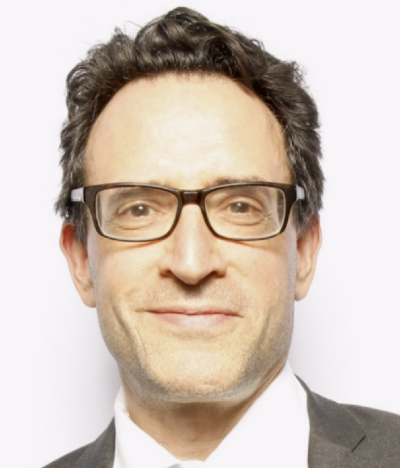
Jamey Hecht, PhD, PsyD, LMFT is a psychoanalyst in private practice in Brooklyn, NY. He has published papers on literature, philosophy, art, film, and psychoanalysis in many scholarly journals, and poetry and fiction in some two dozen literary magazines.
His books are: Plato’s Symposium: Eros and the Human Predicament (Twayne,1999); a translation with commentary, Sophocles’ Three Theban Plays: Antigone, Oedipus the Tyrant, Oedipus at Colonus (Wordsworth Editions, 2005); Bloom’s How To Write About Homer (Chelsea, 2010); and two books of poetry: Limousine, Midnight Blue (Red Hen Press, 2009), and Dodo Feathers: Poems 1989-2019 (IPB, 2019). His major work, Into Theism: Overcoming Obstacles to Belief in God will appear from Essentia Books in the Spring of 2027.
He enjoys acting in Shakespeare plays, sculpting, and drawing comics.
Publications: www.jameyhechtauthor.com
Clinical blog: https://www.drjameyhecht.com/blog
Zoom Room
Tues 22nd Sep 2026
6-8pm UK time / 7-9pm CEST / 1-3pm ET
Become a member to join our weekly live calls and access all the recordings
Go deeper
A community made possible by member support
Standard membership €25 / month
Reduced-price membership €15 / month
Cancel at any time
Bursaries on request
Explore membershipAlready a member? Sign in
Weekly meetings · Full recordings · Questions & community