The Daimon & Western Non-Duality in Ancient Greece | Dr Athena Potari
24th Feb 2026 | Dialogue with Bernardo Kastrup comparing Hellenic philosophy & Analytic Idealism
I'm convinced you'll find listening to Athena Potari on Ancient Hellenic Philosphy as inspiring as I did, totally updating my understanding of myths and terms I thought I knew...
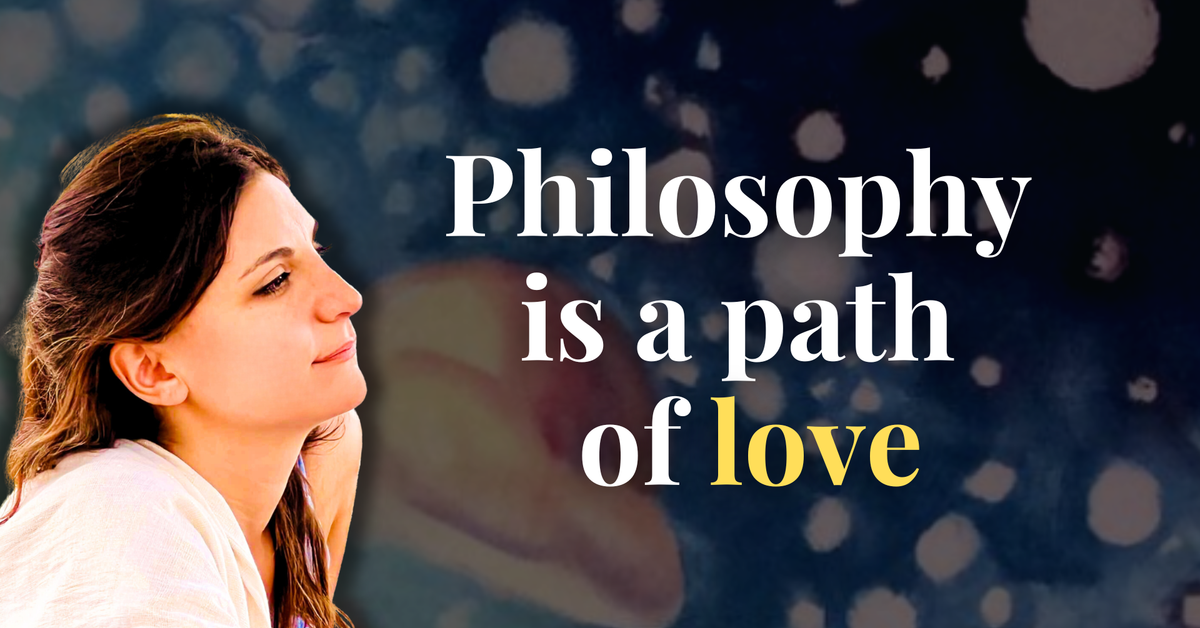
“The ancients were very clear,” she says, “philosophy is a path of love.”
“We find this definition in Pythagoras. We find those teachings in Delphi" and the injunction “know thyself” running through the writings of Plato, Proclus and Marcus Aurelius.
According to Athena, philosophy wasn't a contest of clever ideas, and science was not separate from spirituality. These were just different angles to realising our unity with that luminous, loving, vibrating oneness.
“The mind’s way to approach the divinity of the world was called science, the heart’s way was called mysticism, and the way of the spirit was philosophy.”
Athena and Bernardo meet on the 24th of Feb. We'll discuss the Daimon, Non-Duality and the origins of the Western Path of spirituality.
You can find the zoom link below, or non-members can join this special event as a one-off by getting a ticket here.
You can see my discussion with Athena here, which ends with a guided meditation.
How this understanding was lost
To know the world through scientific exploration meant to know God's mind, body, nature and being; Science, philosophy and theology were complimentary paths.
So perhaps it should be no surprise that in 529, non-Christians were barred from payment for teaching any subject, even maths or science, by Emperor Justinian I. Christianity was to be the only authorised path to spiritual realisation. So-called “pagans”,
”since they have had such an ill effect, they should have no influence nor enjoy any dignity, nor, acting as teachers of any subjects, should they drag the minds of the simple to their errors and, in this way, turn the more ignorant among them against the pure and true orthodox faith; so we permit only those who are of the orthodox faith to teach and accept a public stipend” Corpus Juris Civilis (1)
Yes, the Renaissance excavated Greek mythology, art and science, but as ‘humanistic’ endeavours that left all matters of spirit to the church. This division continues in modern universities, where philosophy is rarely taught as a path towards spiritual realisation.
A celebration of life
Equally interesting is how this tradition was far from the monasticism of Advaita Vedanta or Buddhism. It seems it had more in common with later Kashmir Shaivite traditions, viewed life as a manifestation of divinity worthy of our admiration and attention.
“That is what led that tradition to create art, and music, and temples and drama, and all those arts that basically were the flourishing, the blossoming of that light and deeper wholistic and spiritual understanding.”
After her sojourn through Eastern approaches, her own awakening, and an impressive academic career (in 2020 Athena received the Academy of Athens Award of Philosophy, and received her PhD from Oxford), Athena is reviving the deeper meaning to be found in Ancient Hellenic culture: Her school, Athenoa, is a place where Hellenism can be approached as a living wisdom tradition.
I look forward to seeing you on Tuesday!
Amir
About Athena
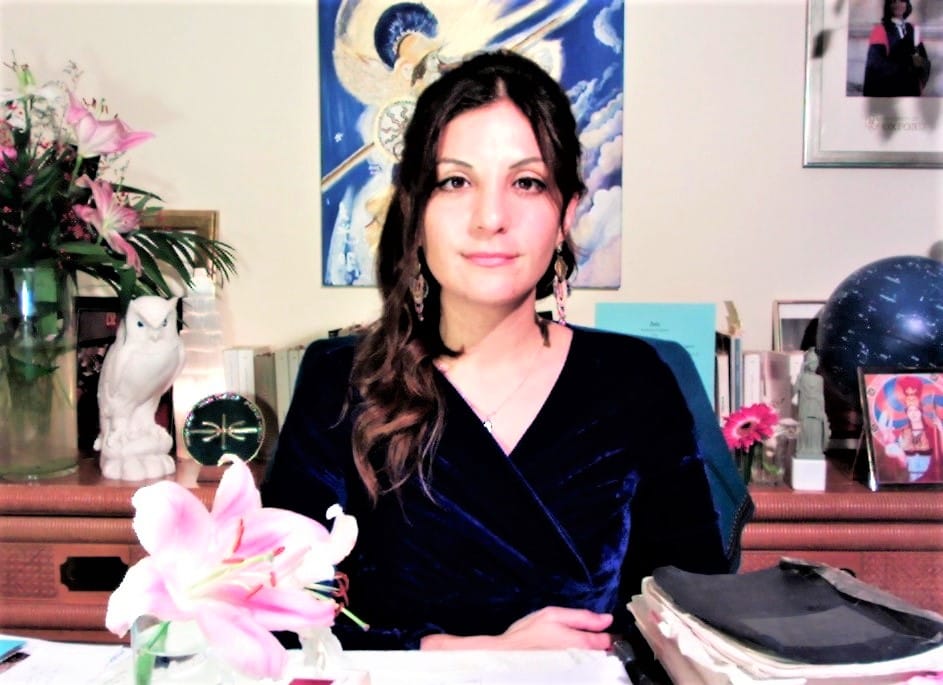
Dr Athena Potari founded Athenoa in 2019, a School of Hellenic Philosophy based in Greece where Hellenism is approached as a living wisdom tradition whose core consists in the inextricable synthesis of scientific reason and spirituality.
She was previously Fellow at the Center for Hellenic Studies at Harvard University, where she explored possibilities for an expanded practice of Philosophy by re-integrating elements and histories of the feminine.
She received her PhD from the University of Oxford specializing in Political Philosophy, and her MA in Political Theory with Distinction from the London School of Economics and Political Science (LSE).
She is recipient of the Academy of Athens Award of Philosophy (2020), author of “A Call for a Renaissance of the Spirit in the Humanities” published by the Galileo Commission, and Member of the Galileo Commission Steering Committee.
Her work aims to revive the deeper spiritual and experiential dimensions of Hellenic Philosophy as a living spiritual lineage, combining discursive rigor and embodied meditative practices, with the aim of awakening to the ever-present mystery of being – our true Self.
Recommended viewing before the session
Zoom room
6-8pm UK time / 7-9pm CET / 1-3pm EST