Solstice & the symbols of nature
The power and importance of ritual
“As far as we can discern, the sole purpose of human existence is to kindle a light in the darkness of mere being.” - Carl Jung
Day and night. The yearly seasons. The forms of life. For the idealist, nature can become a book of symbols that hints at hidden meaning, and ritual can be a way to align our inner world with what they represent. Bernardo even argues that ritual may be crucial for true psychological health.
"Under analytic idealism rituals are not futile. They are not a mere theatrical play for an audience. They are a way to attune our own internal mental processes through sympathetic resonance with the mental processes flowing out through the world in which we live and in which we are immersed in all times."
Deciphering what nature symbolises is a matter of speculation. The only way to access what is beyond our dashboard is via intuition and altered states, and both are notoriously unreliable. Anything objective, is by definition, only about the dashboard. Nevertheless, Bernardo was happy to share his intuition about the significance of solstice; In the same way the earth rotates towards and away from light, conscious beings need times to introvert and times to express.
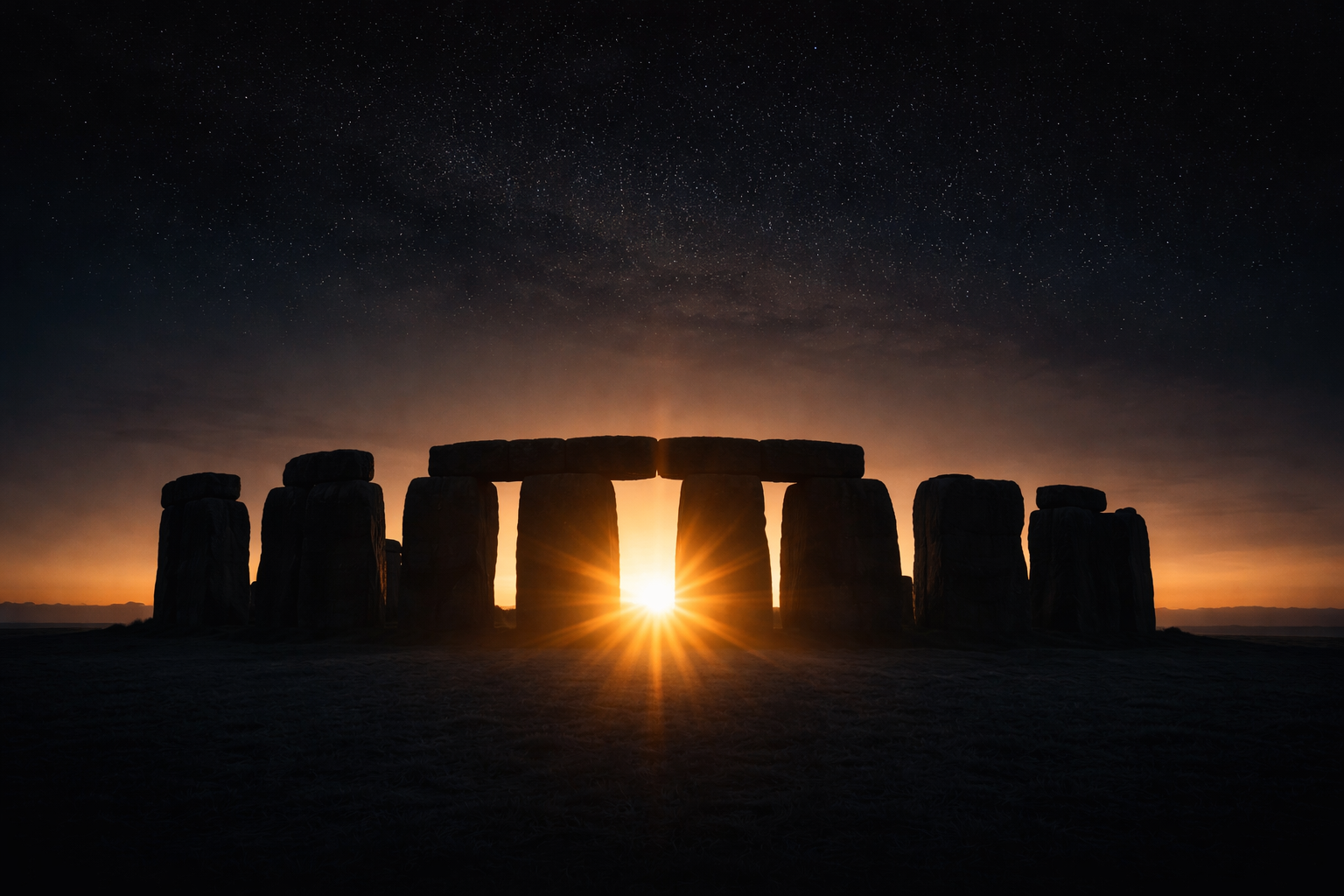
The winter solstice is an opportunity to attune to this rhythm of pause and reflection, and welcome the coming light.
“One does not become enlightened by imagining figures of light, but by making the darkness conscious.” - Carl Jung
Pre-literate societies may have been more easily attuned with these rhythms. With less conceptual frameworks to distract them, instinct remains intact.
To bring nature into metacognitive awareness requires distance. The immediacy of unthinking instinct is lost, but something is gained: a new and vibrant awareness of the wonder, a crystalised appreciation for the miracle in its context.
"There is something about taking explicit account, as an adult, of the wonders of existence, that brings the world into a new act of creation. In that sense we have the divine power of creation, because we bring what is latent up to a different level of existence, that is not merely instinctive." - Bernardo
The discussion today hinted at some distant future time in which our culture may mature towards a synthesis of these two ways of knowing, the literal and poetic.
Iain McGilchrist has charted the move from the wholistic and intimate perspective of the right brain to the analytic distance of the left, then back. The synthesis requires subsuming metacognitive insights into the relational and intimate knowing of the right hemisphere.
For now, our culture seems trapped in abstractions and analysis, mistrusting the mytho-poetic. As such, Bernard is happy to "fight the battles of today" and champion our understanding of reality as mind.
Along with many others, I was inspired by this discussion to revive rituals that harmonise my inner and outer worlds. It would be a pleasure to hear your reflections and intentions in the comments below, on Telegram or by email.
Wishing you all a festive, reflective and connecting time of the year.
Amir
Time stamps
00:00 Bernardo’s schedule with Euclyd
05:20 Solstice recognised cross culturally
07:40 Clarifying free will - a nonsensical question
11:00 Ritual attunes us to the world
18:20 In losing religion we’ve lost ritual
21:20 Everything has meaning, perhaps best known by poets
30:00 Rituals support psychological health
40:00 Jung on the value of metacognitive experience of reality
43:00 Everything hidden wants to known
51:00 Should we create new myths?
55:00 Future cultures may synthesise the literal & poetic truth (we need both)
1:10:00 Right/Left hemisphere
1:13:00 Science as a new creation myth?
1:15:00 Why the Buddha negated the importance of ritual
1:24:00 Nature is a symbol, and can be read like a book
1:35:00 How to create your own ritual
1:37:00 The church fathers & mythmaking
1:41:00 Occam's razor is not relevant to ritual and myth
1:50:00 Bernardo's personal rituals