
Jeffrey Kripal and Bernardo Kastrup in conversation
"The Sacred is not the Good" - trauma, revelation, and the impossible
Date: 19 August 2025
Duration: 1h 59m
Courtesy of Rita Conde
0:01:30 Preamble
0:07:10 Start of Q&A
0:08:14 Implications of qualia in the phenomenal experience of revelations
0:16:40 Why is mind-at-large love and light?
0:18:18 Are these revelations latent in human history?
0:20:00 Alters, sub-alters, and splitters
0:24:25 The entities are probably us
0:26:03 Entities might have agency
0:27:00 We are cosmic
0:28:40 What does it mean to say that everything is us?
0:30:00 Only analytical idealism can articulate these experiences
0:33:20 Reality is a hallucination
0:35:00 Jeffrey’s view on Jacques Vallée’s work
0:39:45 What is the control system for Jacques Vallée?
0:41:00 The speed of light as a basic scientific postulate
0:42:33 For Jacques Vallée, Jeffrey is the key figure in UAP research
0:43:00 Deception is not necessarily bad
0:44:40 Plato’s cave at the root of the humanities
0:46:00 Jeffrey’s views on UAPs
0:47:47 The Archives of the Impossible
0:51:40 Discerning the signals from the noise
1:01:00 Debunking shuts down the discussion
1:02:40 Religion is more than crowd control
1:03:00 Jeffrey’s view on channeling
1:03:30 Wouldn’t channeling be a more verifiable practice?
1:04:40 How to stop explaining the impossible
1:07:10 Our narratives are no longer aligned with reality
1:08:30 Things we don’t know that we don’t know
1:10:00 Allow yourself to not believe in yourself
1:11:25 Looking for closure
1:13:00 The importance of archives
1:15:30 Extraordinary stories require extraordinary evidence
1:16:40 After-death communication
1:20:40 Agency and locality in after-death communication
1:24:10 Eternity doesn’t mean “forever”; it means “outside time”
1:25:25 Each person is a multitude
1:26:26 All here at once
1:28:25 The risks of category mistakes
1:33:00 Everything is archetypal
1:33:58 Are some of the anomalous encounters repressed parts of us coming into light?
1:38:08 Agency, personality, ego, and reincarnation
1:40:00 Deceit, trickery, and personality cults in religious movements
1:47:18 The abundance of religions in biblical times
1:50:20 Who is the founder of Christianity: Paul or Jesus?
1:52:30 Einstein and Spinoza
1:55:40 Final remarks
Debunking was debunked, deception was defended. All attempts to package reality completely confounded. If we project what we deny, might even God be a repressed dimension of our own humanity?
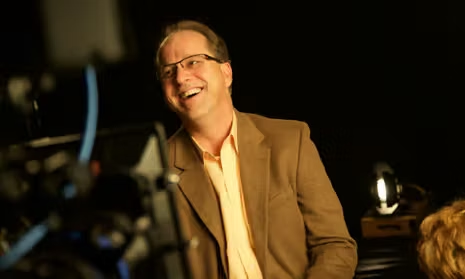
Jeffrey Kripal is a professor of philosophy and religion at Rice University, Houston, where he co-founded the Archives of the Impossible, a major research hub housing thousands of documents on UFOs, paranormal phenomena, and extraordinary human experiences. So I thought this Q&A with Bernardo Kastrup might be on little green men - but it was abducted by other concerns.
Jeffrey emphasised that "the sacred is not the good." It may be powerful, overwhelming, and transformative, but not necessarily benevolent by our own measure. Divine-like forces can appear as both angelic and demonic, creative and destructive. The trauma that can occasion spiritual revelations is accompanied by moral and philosophical ambiguity.
Have a tidy model for anomalous encounters, UAPs or religion? You're probably ignoring much of the data. Full understanding might escape even future generations, but the suspicion is that anomalous encounters may be nothing but our repressed nature, seeking expression. The invitation is to consider that even as individuals, we are vaster than we can imagine.
Whilst any single explanation was rejected, none more so than physicalism. Jeffrey's departing reflection that our culture may be at a flipping point - materialism just doesn't work.
Also discussed:
- It is impossible to explain the impossible
- The blind spots of rational people
- The deception behind UAPs
- What causes a perceptual 'flip'
- Jeffrey’s view on Jacques Vallée’s work
- Trauma, revelation and religion
- The variable speed of light
Background resources, and the recording of this session are below.
Next week, we embark on perhaps the most personal session so far, a book launch for Bernardo's autobiographical reflections on the Daimon, and the Soul of the West.
Until then!
Amir
 Tim Adams

Here is Jacques Vallée's TED talk that was referenced:
Also, you might enjoy this link to a Reddit AMA with Jacques Vallée:
https://www.reddit.com/r/IAmA/s/O7oAdCZ8ve
Jeffrey Kripal
Jeffrey Kripal, PhD, is a professor of philosophy and religion at Rice University in Houston, where he co-founded the Archives of the Impossible, a major research hub housing thousands of documents on UFOs, paranormal phenomena, and extraordinary human experiences.
He has written multiple books, contending that UFOs are not isolated physical phenomena—they are deeply linked to paranormal states such as telepathy, precognition, and spiritual revelations, and have implications that materialism cannot account for. For him, understanding will require interdisciplinary and historical depth, as they straddle a space outside conventional objective and subjective reality.
Bernardo Kastrup
Analytic idealism
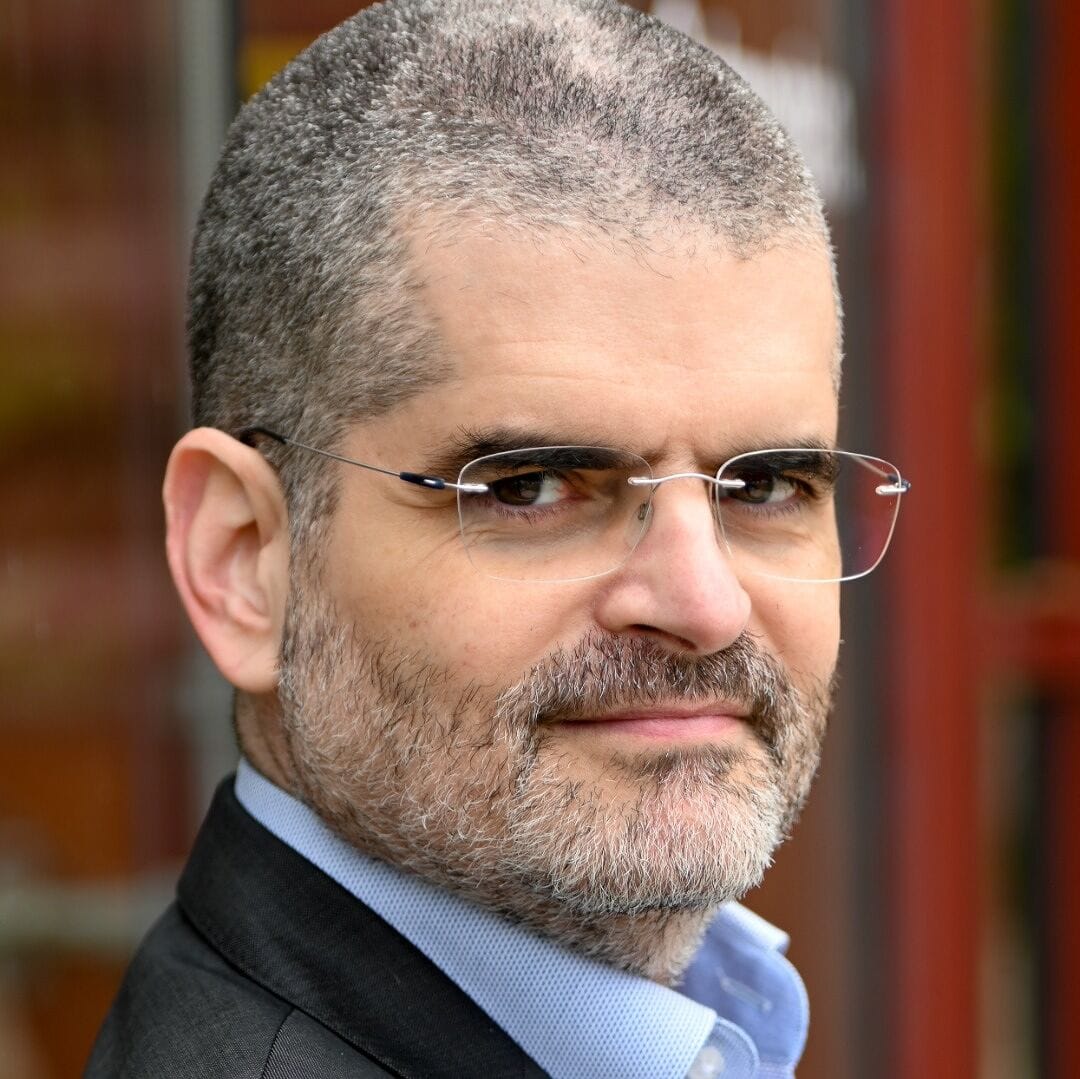
Bernardo Kastrup is the Executive Director of Essentia Foundation and Founder/CEO at AI systems company Euclyd BV. His work has set off the modern renaissance of metaphysical idealism. He has a Ph.D. in philosophy (ontology, philosophy of mind) and another in computer engineering (reconfigurable computing, artificial intelligence).
As a scientist, he has worked for the European Organization for Nuclear Research (CERN) and the Philips Research Laboratories (where the ‘Casimir Effect’ of Quantum Field Theory was discovered). He has also been creatively active in the high-tech industry for almost 30 years, having founded parallel processor company Silicon Hive (acquired by Intel in 2011) and worked as a technology strategist for the geopolitically significant company ASML. Most recently, he has founded AI company Euclyd BV.
Formulated in detail in many academic papers and books, his ideas have been featured in Scientific American, the magazine of The Institute of Art and Ideas, the Blog of the American Philosophical Association and Big Think, among others. His most defining book is Analytic Idealism in a Nutshell: A straightforward summary of the 21st-century’s only plausible metaphysics.
Explore Bernardo’s work →Go deeper
A community made possible by member support
Standard membership €25 / month
Reduced-price membership €15 / month
Cancel at any time
Bursaries on request
Explore membershipAlready a member? Sign in
Weekly meetings · Full recordings · Questions & community
Member discussion