
What Nature Represents
The symbolism and meaning present in nature

Date: 1 April 2025
Duration: 2h 4m
0:00:00 What might nature be showing us?
0:15:19 An accurate representation need not look like reality
0:20:25 Why the dashboard need not show everything
0:25:07 We are part of the process of representation
0:30:05 Fine-tuning and the observer’s conditions
0:35:23 Nature as improvisation rather than a blueprint
0:40:00 How a simple rule can look like a complex world
0:45:13 What might space and expansion symbolise?
0:55:10 Is memory really a file in the brain?
1:00:09 Why brains and the universe might share a pattern
1:05:13 Can we picture subjectivity itself?
1:10:33 What remains when we remove the crystal?
1:15:10 Why do cultures agree on mathematics?
1:20:17 Could IIT help map experience to appearance?
1:25:14 A future science of nature’s correspondences?
1:35:18 Evolution does not require materialism
1:40:06 Does the sun need a mind of its own?
1:45:16 Let philosophy open doors, not close them
1:50:01 Recognising something you already knew
1:55:31 Can we trust life without demanding it be different?
2:00:11 Sharing idealism as an ambassador
I hope yesterday's meeting fulfilled it's promise: to regard nature and reality with an ever deeper appreciation and meaning.
Bernardo discussed the potential symbolism of the sun, time, space, infinity, evolution and beauty. We spoke about how similar to many mystical tradition, space might symbolise awareness itself, pure subjectivity.
Something that stood out for me is how you can have a profound relationship with the sun (for example) without it needing to be an 'alter'. Similar to how the eyes of your beloved can have great meaning for you, be gateways to a deeper relationship, without them needing to be dissociated from the rest of the person.
We also discussed why representations can be more complex than that which they are representing, and the meaning behind mathematics being so consistent across cultures.
Perhaps more importantly, he clarified that all this analysis is there to open the door for direct experience, and when and how to share these perspectives.
Links to transcript, chat and recordings are below.
See you next week!
Amir

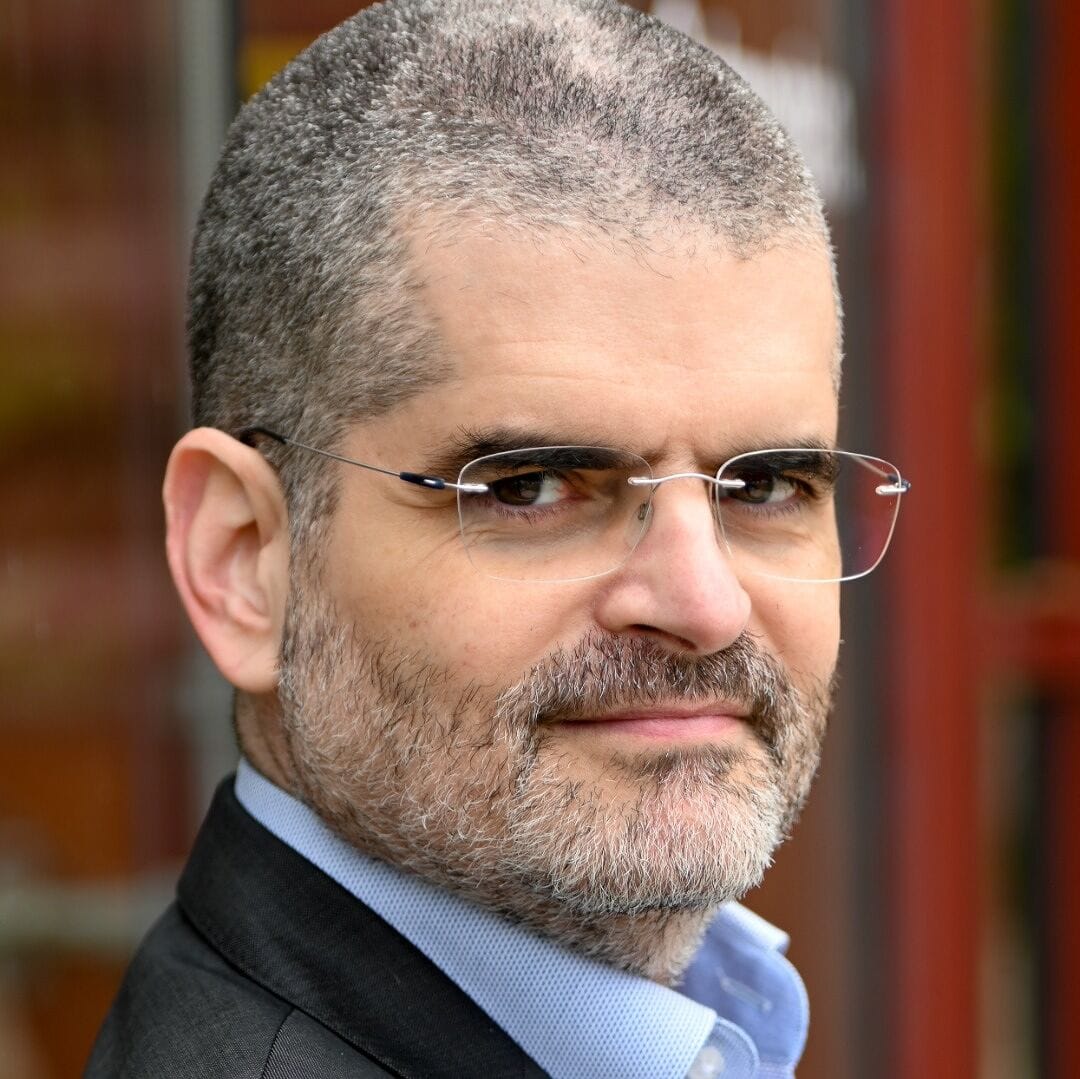
Bernardo Kastrup
Analytic idealism
Bernardo Kastrup is the Executive Director of Essentia Foundation and Founder/CEO at AI systems company Euclyd BV. His work has set off the modern renaissance of metaphysical idealism. He has a Ph.D. in philosophy (ontology, philosophy of mind) and another in computer engineering (reconfigurable computing, artificial intelligence).
As a scientist, he has worked for the European Organization for Nuclear Research (CERN) and the Philips Research Laboratories (where the ‘Casimir Effect’ of Quantum Field Theory was discovered). He has also been creatively active in the high-tech industry for almost 30 years, having founded parallel processor company Silicon Hive (acquired by Intel in 2011) and worked as a technology strategist for the geopolitically significant company ASML. Most recently, he has founded AI company Euclyd BV.
Formulated in detail in many academic papers and books, his ideas have been featured in Scientific American, the magazine of The Institute of Art and Ideas, the Blog of the American Philosophical Association and Big Think, among others. His most defining book is Analytic Idealism in a Nutshell: A straightforward summary of the 21st-century’s only plausible metaphysics.
Explore Bernardo’s work →Go deeper
A community made possible by member support
Standard membership €25 / month
Reduced-price membership €15 / month
Cancel at any time
Bursaries on request
Explore membershipAlready a member? Sign in
Weekly meetings · Full recordings · Questions & community
Member discussion