
The Laws and Habits of Nature
Naturalism, anomalous experiences, and creativity's source

Recording thumbnail: Photo by Marc Thunis / Unsplash
Date: 25 February 2025
Duration: 1h 55m
0:00:00 A surprise Q&A on nature’s habits
0:05:03 Is perception itself a creative act?
0:10:22 Creativity without personal ownership
0:15:43 What makes a mental state change?
0:25:14 Can we experience non-existence?
0:30:19 What does it mean to exist for yourself?
0:35:24 Eastern and Western paths: opposite directions, shared destination?
0:40:32 If the world is mental, why is it so regular?
0:45:28 A mental universe need not have a human-like mind
0:50:14 Speculation versus what we can demonstrate
0:55:21 How to introduce ideas without closing the conversation
1:00:00 Could physical laws reflect archetypal dispositions?
1:05:20 Could nature’s constants change?
1:10:17 What should we make of anomalous reports?
1:15:12 Bernardo’s childhood encounter with the inexplicable
1:20:16 Could different reality bubbles meet?
1:25:02 When creativity feels like a gift to the ego
1:30:23 The ideas forming outside our reporting awareness
1:35:45 What does mind at large mean?
1:40:15 Myth and history: where do we locate reality?
1:45:40 Why is it called idealism?
1:50:33 When an intellectual answer becomes a lived change
We had a bonus Q&A when Bernardo was able to join this meeting in the end, with several questions that didn't fit elsewhere. Recording links below.
The discussion included:
- The Habits of Nature - Discussion of how natural regularities might be better understood as habits rather than rigid laws, connecting to Sheldrake's work. This was contrasted with...
- Anomalous Experiences - Examination of experiences that appear to violate physical laws, potentially explained by "collisions" between different mental reality bubbles.
- Creativity's Source - Bernardo reflected on creativity, noting how genuine insights seem to "pop" into consciousness rather than originating from the ego.
- Eastern vs. Western Approaches - Exploration of different cultural paths to understanding the self - Eastern negation versus Western inclusion - and how they converge.
Looking forward to seeing you next week, and a reminder you can browse upcoming themes here and if you have questions, follow this guide here.
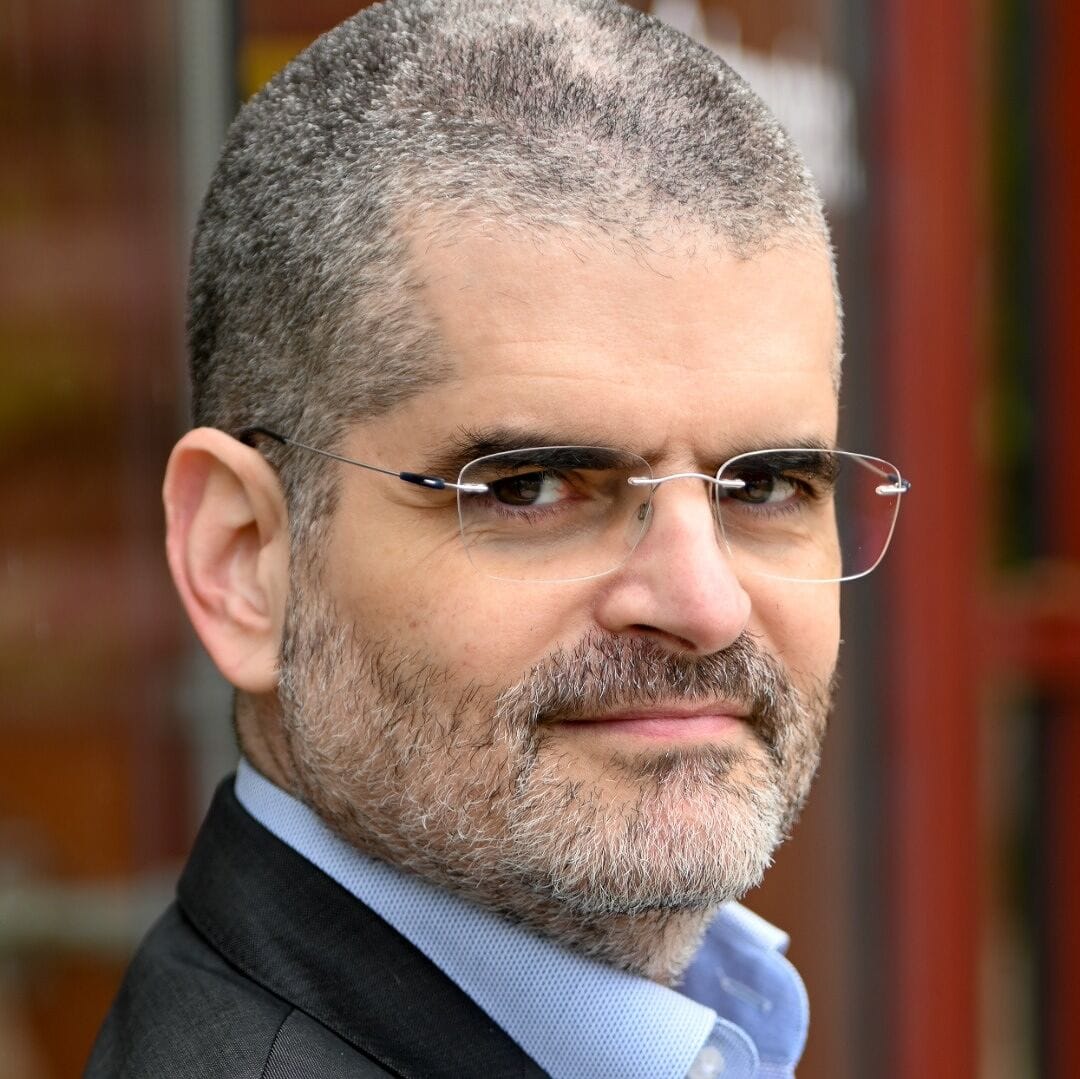
Bernardo Kastrup
Analytic idealism
Bernardo Kastrup is the Executive Director of Essentia Foundation and Founder/CEO at AI systems company Euclyd BV. His work has set off the modern renaissance of metaphysical idealism. He has a Ph.D. in philosophy (ontology, philosophy of mind) and another in computer engineering (reconfigurable computing, artificial intelligence).
As a scientist, he has worked for the European Organization for Nuclear Research (CERN) and the Philips Research Laboratories (where the ‘Casimir Effect’ of Quantum Field Theory was discovered). He has also been creatively active in the high-tech industry for almost 30 years, having founded parallel processor company Silicon Hive (acquired by Intel in 2011) and worked as a technology strategist for the geopolitically significant company ASML. Most recently, he has founded AI company Euclyd BV.
Formulated in detail in many academic papers and books, his ideas have been featured in Scientific American, the magazine of The Institute of Art and Ideas, the Blog of the American Philosophical Association and Big Think, among others. His most defining book is Analytic Idealism in a Nutshell: A straightforward summary of the 21st-century’s only plausible metaphysics.
Go deeper
A community made possible by member support
Standard membership €25 / month
Reduced-price membership €15 / month
Cancel at any time
Bursaries on request
Explore membershipAlready a member? Sign in
Weekly meetings · Full recordings · Questions & community
Member discussion