
Exceptional human experiences
Telepathy, placebo, and the outer edges of human experience

Date: 5 August 2025
Duration: 2h 18m
Thanks Rita Conde for providing timestamps
0:00 How to submit and vote on questions
9:00 Analytic Idealism on psi phenomena
11:00 Remote viewing and dissociation in the universal mind
17:20 Telepathy and leaked dissociative boundaries
19:40 Precognition (not an evolutionary advantage)
24:00 Block universe time and space as mental constructs,
26:30 Placebo and healing: the body represents mental processes
36:40 Statistical significance in psi research vs. physics (e.g. CERN example)
40:00 Observational science, repeatability, and psi skepticism
48:00 Out-of-body experiences and Higher Self
56:00 Mediumship and channeling: internal parts or real contacts?
57:40 Overlaps between IIT, Hameroff/Penrose, Federico Faggin & Analytic Idealism
1:07:00 Location as causation vs laboratory conditions
1:17:00 Causation may be non-local: intentional evolution
1:24:00 Psi is observational science, like astronomy
1:30:00 Our dashboard perception is always an interpretation
1:35:00 Transcendent reality beyond perception a virtual certainty
1:42:00 A personal account of after death communication & agency
2:05:14 Super-powers as ego inflating fantasies
Whilst this session focused on exploring the outer edges of the human experience, it ended with Bernardo sharing his most consoling perspective on death and losing our loved ones, drawing not just on his philosophy, but his own personal experience. When the implications of idealism are truly integrated, the ones we thought were lost are in fact closer than ever.
It was a touching moment, and for me, one that crystallised the value of these meetings, translating a beautiful philosophy into a more rich and connected life. It's a testament to the warm and human presence you each bring to this community, in addition to intellectual acumen and courageous curiosity.
Bernardo feels that it is a virtual certainty that our 'dashboard representations' of reality only capture a fraction of what is really out there.
Whilst not endorsing every claim made, he demonstrated how Analytic Idealism would hypothetically account for a range of exceptional phenomena. From telepathy to precognition, remote viewing, placebo, and spontaneous healing. It was a valuable overview of how Bernardo understands the scope and mechanisms of dissociation from Mind-at-Large.
Studies of psychic phenomena are criticized for being unrepeatable or of only small statistical significance. In response, Bernardo highlighted other observational science, such as astronomy, that do not rely on repeatability, and noted that numerous scientific careers have been built on smaller margins of statistical significance than many psi studies.
Over the next two weeks we open to the wider field of Unidentified Anomalous Phenomena - observations that defy known explanations, and are not immediately identifiable as being of human origin. Jeffrey Kripal will be joining as a guest on the second week.
This week, we additionally discussed:
- Why psychic abilities may not be conducive to survival
- A defence of psychic studies and scientific consistency
- Perspectives from IIT, Hameroff/Penrose, Federico Faggin
- How perception and interpretation are intertwined
- There need be nothing supernatural about psychic phenomena
- Bernardo’s thoughts on consciousness after death
- Seeking "super powers" as ego defence
Links mentioned
Here is the paper Bernardo mentioned in which Giulio Tononi discusses the metaphysical implications of Integrated Information Theory:
Only what exists can cause: An intrinsic powers view of free will
Bernardo's upcoming book, available for pre-order:
The Daimon and the Soul of the West
The Near Death experience that Bernardo mentioned as credible:
Anita Moorjani - Dying to be Me
Links mentioned in the chat:
- https://www.gonyacparanormal.com
- From materialism to superidealism and maybe back (I) | by Liviu Coconu
- https://yacman1010.kartra.com/page/MetaphysicsandParanormality
- https://www.amazon.com/author/ronyacovetti
This is the clip referenced from an earlier session, in which Bernardo defends the scientific method as neutral, but points out that individual scientists might not be. Here he explains why the same statistical pattern that wins a Nobel prize at CERN will be dismissed as "random" in a study of psi phenomena:
Thanks to Fawn Miller for inspiring the theme, and all your wonderful questions and warm engagement.
See you soon!
Amir
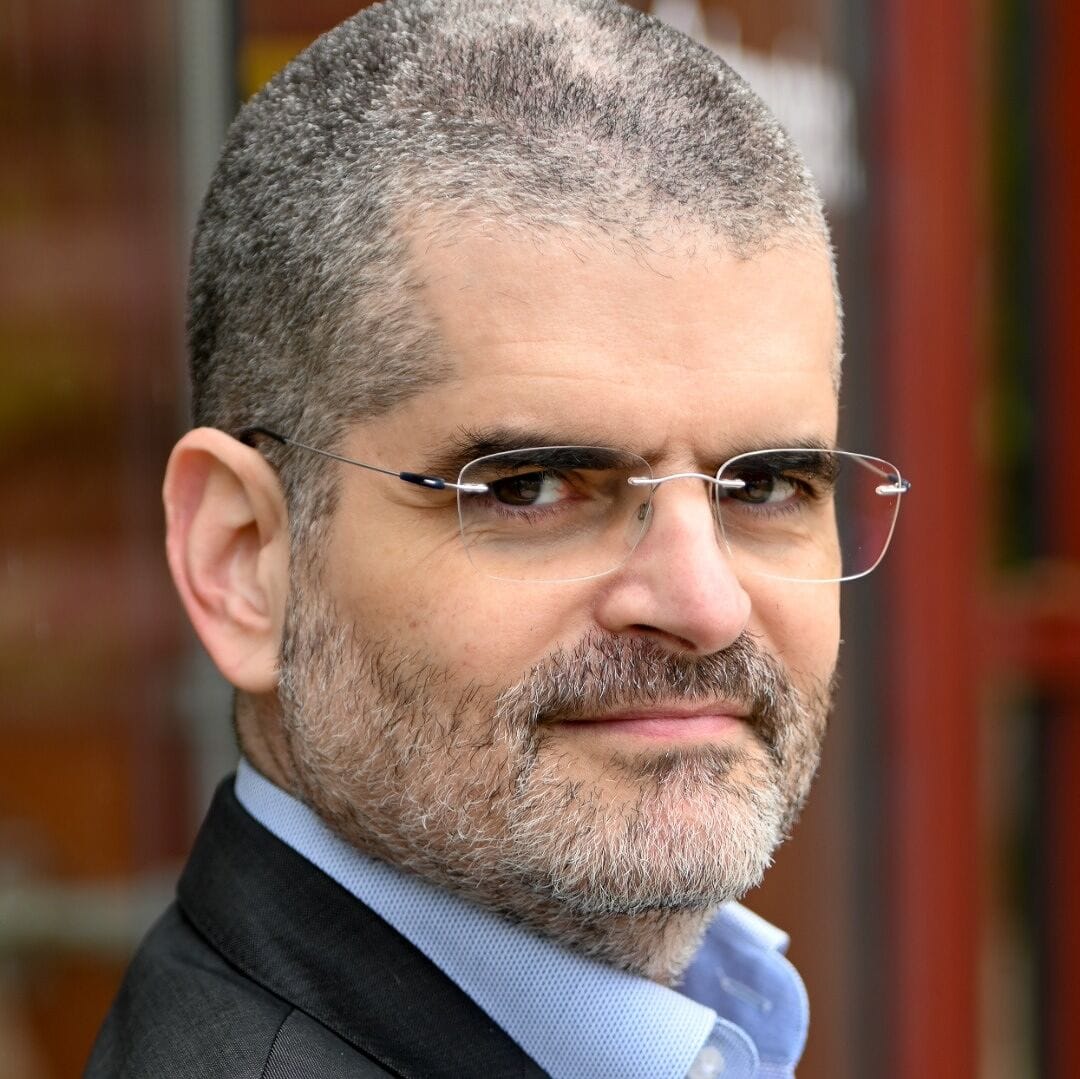
Bernardo Kastrup
Analytic idealism
Bernardo Kastrup is the Executive Director of Essentia Foundation and Founder/CEO at AI systems company Euclyd BV. His work has set off the modern renaissance of metaphysical idealism. He has a Ph.D. in philosophy (ontology, philosophy of mind) and another in computer engineering (reconfigurable computing, artificial intelligence).
As a scientist, he has worked for the European Organization for Nuclear Research (CERN) and the Philips Research Laboratories (where the ‘Casimir Effect’ of Quantum Field Theory was discovered). He has also been creatively active in the high-tech industry for almost 30 years, having founded parallel processor company Silicon Hive (acquired by Intel in 2011) and worked as a technology strategist for the geopolitically significant company ASML. Most recently, he has founded AI company Euclyd BV.
Formulated in detail in many academic papers and books, his ideas have been featured in Scientific American, the magazine of The Institute of Art and Ideas, the Blog of the American Philosophical Association and Big Think, among others. His most defining book is Analytic Idealism in a Nutshell: A straightforward summary of the 21st-century’s only plausible metaphysics.
Explore Bernardo’s work →Go deeper
A community made possible by member support
Standard membership €25 / month
Reduced-price membership €15 / month
Cancel at any time
Bursaries on request
Explore membershipAlready a member? Sign in
Weekly meetings · Full recordings · Questions & community
Member discussion