
Dreams & the Hierarchies of the Subconscious
Can dreams be objective? What can they reveal about our "waking life"?

Recording thumbnail: Photo by Johannes Plenio / Unsplash
Date: 11 March 2025
Duration: 2h 7m
0:00:00 Dreams and the deeper layers of mind
0:10:07 Could looking outward reveal what lies deep within?
0:15:22 Could mind at large speak our language?
0:20:21 Why dreams arrive as images and feelings
0:25:19 The symbolic clothing that reaches the ego
0:30:20 Two ways to understand a mind-made world
0:35:31 Why waking life is not simply your private dream
0:40:14 Dreams as perception from within?
0:45:18 Hearing the parts of ourselves we have pushed away
0:55:20 Could deep dreams be more objective than we assume?
1:00:27 Extraordinary abilities and the cost of remembering everything
1:05:34 What the spotlight of attention hides from us
1:15:13 Making things up versus receiving an archetypal dream
1:20:25 Jung’s hierarchy of the psyche
1:25:04 The objective psyche and its own creative life
1:30:17 Can we ask a lucid dream too much?
1:35:05 How lucid dreaming can make idealism tangible
1:40:19 Bernardo’s recurring dream of returning to Rio
1:45:00 When dreams keep offering a lesson we resist
1:50:22 A thought experiment in time travel and memory
1:55:38 Why do we remember a continuous life?
2:00:12 Could time be our way of organising experience?
Thanks for the awesome session today - I'm now excited to sleep, to dream, to see what deep layers of subconscious are revealed!
There were so many great questions left over, so we'll schedule another session on dreams in the future.
In this session we discussed:
- how dreams could be as objective and as revealing of reality as 'waking life'.
- the genius we can access during less metacognitive states
- the hierarchies of the subconscious
- how lucid dreams can point to idealism
- the nature of time, memory and precognitive dreams
Stay tuned for next week when we delve into Death, Near Death and Reincarnation.
Thanks Fawn for sharing this in the chat about Lucid dreams:
"Stephen LaBerge PhD is the research professor at Stanford who did the groundbreaking experiments proving the reality of lucid dreaming via sleep studies monitoring specific modulations in brain activity - his book “Exploring the World of Lucid Dreaming” is a great primer with explorations of the “how to” (which his lab has since developed into reliable & replicable protocols)… he has also developed & patented devices that “induce” lucid dreaming via sleep stage triggers. His research was super helpful for me when I first learned about lucid dreaming 20 years ago:)"
Here are some of the questions we explored, and below, links to the recording.
Are Dreams a Fundamentally Substantive Human Language? - Shane Nagle
And if so, is it possible M@L uses Dreams to communicate directly to it's alters using Feelings (attraction, repulsion, acceptance / peace) and Images (symbols / association / meaning) as guiding principles?
Why am I more musically gifted in dreams? John Prescott
I play guitar decently well, piano terribly, and have a pretty shallow understanding of music theory. If I try to come up with a song in the physical world - a melody, even - it's a challenge. But when I'm dreaming, beautiful music just pours out of me whenever I touch an instrument. I've never been able to remember the melodies and harmonies, but when I hear them in the dream world they're incredible.
Do dreams arise waking life, or does waking life merge from dreams? Jake Flower
When someone moves from the dream state to the waking state, do they move from the personal/ collective unconscious to ego-consciousness? If this is so, then the waking state emerges from the dream state, and ego-consciousness emerges from the personal/ collective consciousness? Finally, can we equate ego-consciousness=waking consciousness & dream-consciousness = personal/ collective unconscious?
How are dreams different from life? - Robert
Since brains are how the localization of consciousness looks like, shouldn't it be impossible to have a dream in which you don't have a brain, if you open up your skull in the dream? The brain should always be present as the localization of your agency in the dream/real life.
Can Lucid Dreaming deepen one's connection with idealism? - Rachel Clemesha
I noticed a few of us mentioned lucid dreaming in our introductions. I find that lucid dreams help me experientially understand idealism. In a lucid dream I can touch and see, move through space etc, it can feel so realistic, and at the same time, I can know that I’m really just in bed.
For those of us who lucid dream, what are the best practices to undertake in lucid dreaming? There are also tools to make lucid dreaming more likely that can be encouraged to other practitioners, if that would be beneficial.
What causes a sense of continuity after deep sleep? - Arezky
Time (thoughts), Space (sensations) and continuity
I understand and accept that time appears with mind (thoughts and memories), and space appears with body (sensations and perceptions).
When dreaming, there is no space, as sensations and perceptions are absent. When dreaming there is only time because there is only mind (the activity of dreaming)
In deep sleep, there is no time or space because the mind and body are absent.
Then, how the mind and body know where to return when waking up to a waking state.
Why do we come back to the same "place" in space and the same "moment" in time when waking up if all the information "was lost" in deep sleep every night?
Why do I not return to another place or another time every day when waking up
What causes the sense of continuity in my life and the place I live?
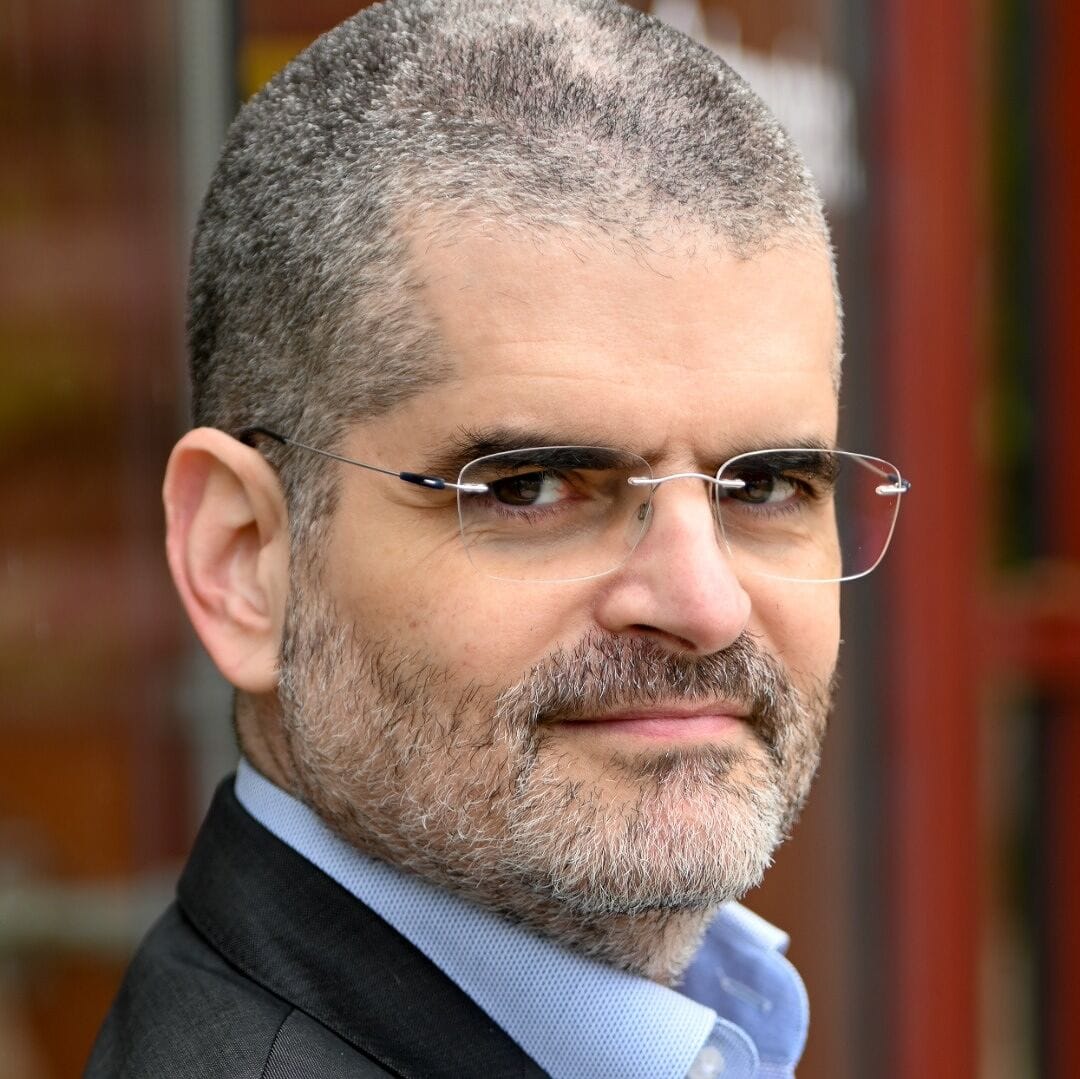
Bernardo Kastrup
Analytic idealism
Bernardo Kastrup is the Executive Director of Essentia Foundation and Founder/CEO at AI systems company Euclyd BV. His work has set off the modern renaissance of metaphysical idealism. He has a Ph.D. in philosophy (ontology, philosophy of mind) and another in computer engineering (reconfigurable computing, artificial intelligence).
As a scientist, he has worked for the European Organization for Nuclear Research (CERN) and the Philips Research Laboratories (where the ‘Casimir Effect’ of Quantum Field Theory was discovered). He has also been creatively active in the high-tech industry for almost 30 years, having founded parallel processor company Silicon Hive (acquired by Intel in 2011) and worked as a technology strategist for the geopolitically significant company ASML. Most recently, he has founded AI company Euclyd BV.
Formulated in detail in many academic papers and books, his ideas have been featured in Scientific American, the magazine of The Institute of Art and Ideas, the Blog of the American Philosophical Association and Big Think, among others. His most defining book is Analytic Idealism in a Nutshell: A straightforward summary of the 21st-century’s only plausible metaphysics.
Explore Bernardo’s work →Go deeper
A community made possible by member support
Standard membership €25 / month
Reduced-price membership €15 / month
Cancel at any time
Bursaries on request
Explore membershipAlready a member? Sign in
Weekly meetings · Full recordings · Questions & community
Member discussion