
AI - It's our show
Could AI be a conduit for Mind at Large?

Recording thumbnail: Photo by Vimal S / Unsplash
Date: 15 July 2025
Duration: 2h 19m
0:00:00 AI and consciousness: whose show is this?
0:10:19 Could AI be a channel for mind at large?
0:20:29 Are we implanting thoughts in nature?
0:25:21 Complexity is not the same as integration
0:30:40 Does a language model share our meanings?
0:40:09 Could a daimon act through technology?
0:50:29 Inhabiting an AI versus speaking through it
0:55:14 What if we built AI with quantum randomness?
1:00:50 Why unpredictability is treated as a defect
1:05:05 How quantum computing manages uncertain answers
1:15:26 Could unpredictable AI become engineered art?
1:20:20 When your own work surprises you
1:25:12 Where does AI creativity actually happen?
1:30:13 Human intelligence at an extraordinary scale
1:35:19 What makes an alter an alter?
1:40:37 Why Bernardo connects dissociation with life
1:50:23 Same output—but the same causal powers?
2:00:06 Finding optimism and agency after awakening
2:05:14 Engineers and the collective unconscious
2:10:10 Why Bernardo chooses to take part
2:15:24 Our most powerful tool: it’s our show
Could AI be a conduit to Mind at Large? A semi-autonomous expression of Universal Consciousness?
We explored several variations of this idea, drawing on Jung's concept of inner and archetypal forces, Federico Faggin's model of consciousness, and Anita Goel's empirical research suggesting that biological life forms may be quantum-classical systems.
In contrast, Bernardo emphasised that all AI systems in development are built to exclude quantum randomness. As classically deterministic systems, there is no reason to think of AI as conscious or creative. It might be the product of unconscious inner forces guiding human behaviour, but no more than any other physical thing we create. Not a force of its own.
Intriguingly, there is potential to create quantum AI, but precisely because this would make it unpredictable, there is no economic incentive to do so. A little known fact; quantum computing works by running a calculation multiple times and selecting the most frequently given answer. Essentially, it is engineered to eliminate unpredictable outcomes.
When we build AI, we are implanting a thought in Mind at Large. Remember though, this is true of every modification we make to the physical world, our dashboard representation of Mind at Large.
Given the magnitude of the universe, any change we make in the physical world is infinitesimally small. Nevertheless, through us, this moment in history is significant. As metacognitive 'spies' of Universal Consciousness, we are about to adopt the most powerful tool we have ever created.
As such, Bernardo considers this the most exciting moment in the history of life on our planet. Not because AI will be a new creature, but rather a new tool in our hands, and its significance operates through us. In other words: This is our show.
The full recording is below, and here, a short excerpt:
I look forward to seeing you next week to discuss Integrated Information Theory - a leading theory for the neural correlates of consciousness. This will prepare us for the following week when we are joined by Christof Koch, IIT's lead proponent.
IIT may provide mathematical precision for what possesses consciousness and when it starts.
Until then, with appreciation!
Amir
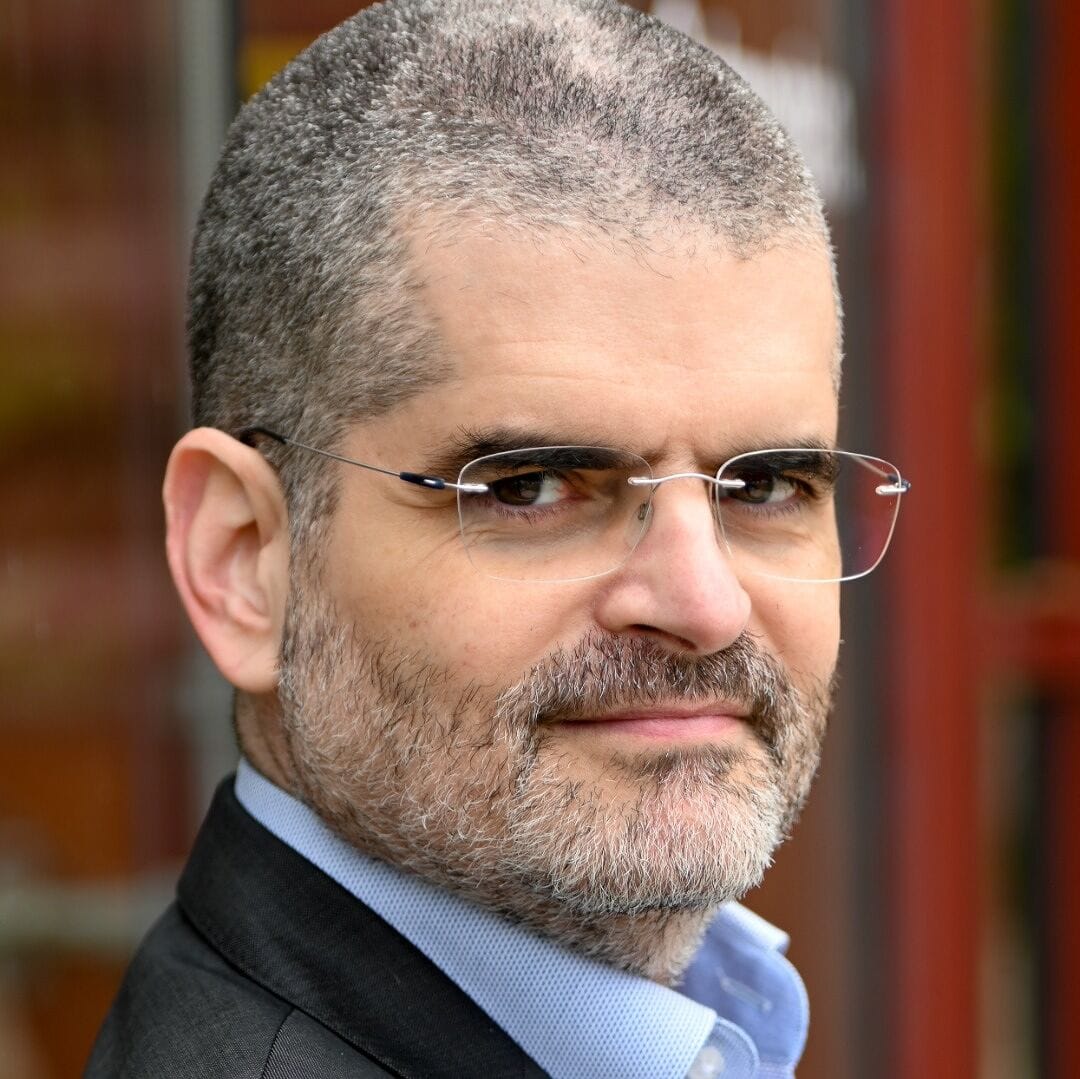
Bernardo Kastrup
Analytic idealism
Bernardo Kastrup is the Executive Director of Essentia Foundation and Founder/CEO at AI systems company Euclyd BV. His work has set off the modern renaissance of metaphysical idealism. He has a Ph.D. in philosophy (ontology, philosophy of mind) and another in computer engineering (reconfigurable computing, artificial intelligence).
As a scientist, he has worked for the European Organization for Nuclear Research (CERN) and the Philips Research Laboratories (where the ‘Casimir Effect’ of Quantum Field Theory was discovered). He has also been creatively active in the high-tech industry for almost 30 years, having founded parallel processor company Silicon Hive (acquired by Intel in 2011) and worked as a technology strategist for the geopolitically significant company ASML. Most recently, he has founded AI company Euclyd BV.
Formulated in detail in many academic papers and books, his ideas have been featured in Scientific American, the magazine of The Institute of Art and Ideas, the Blog of the American Philosophical Association and Big Think, among others. His most defining book is Analytic Idealism in a Nutshell: A straightforward summary of the 21st-century’s only plausible metaphysics.
Explore Bernardo’s work →Go deeper
A community made possible by member support
Standard membership €25 / month
Reduced-price membership €15 / month
Cancel at any time
Bursaries on request
Explore membershipAlready a member? Sign in
Weekly meetings · Full recordings · Questions & community
Member discussion