
Could the answer be looking for you?
Michael Levin and Bernardo Kastrup in conversation
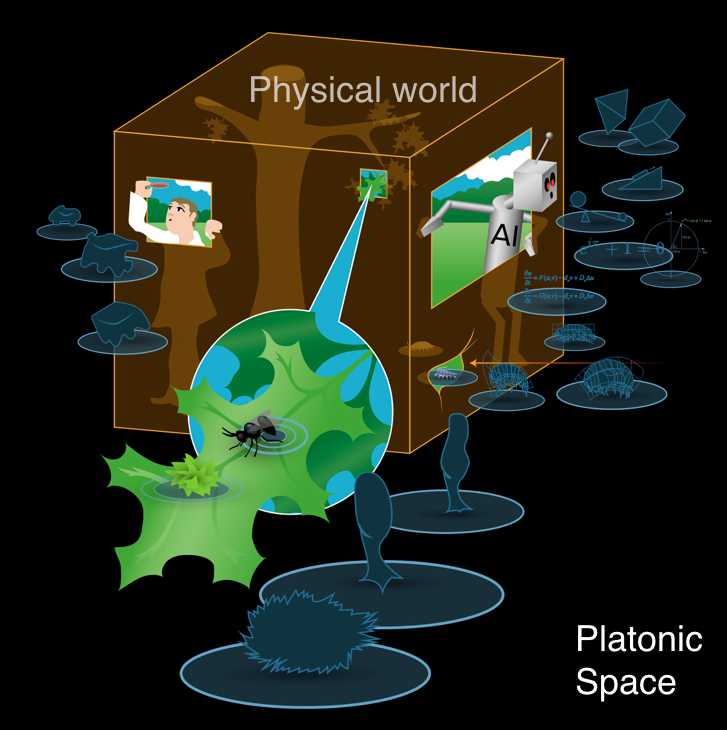
This was a wide ranging Q&A with participant questions taken from comments at the bottom of this page.
 Amir Giles
Every question evoked a fascinating account of Michael's research or thinking.
What mechanisms coordinate the behaviour of individual cells towards shared goals? There may be several, but Michael's lab has found two - sharing memories and sharing stress. But that still leaves many phenomena unexplained.
For example, when a planaria, (a worm with remarkable regenerative capability) is placed in barium, it's head explodes. It then grows a new head resistant to this toxin, a process which requires expressing very specific genes out of thousands of options - a problem solving capability that is astounding. Planaria are not exposed to barium outside of labs, so it can't be explained by evolution.
By way of potential explanation, Bernardo offered his hunch, inverting the conventional way of thinking. If all of nature is one mind, the answer is already 'out there. 'Nature knows everything there is to be known, since it is everything. The question is how do we reverse the forgetting.
"The key explanatory challenge is to say how, within a whole, things appear to be parts. And if you invert the challenge that way, it's less mind-boggling."
The needle in the haystack is also looking for you
Michael agrees that maybe solutions aren’t just passive things we have to stumble on by blind search. Maybe the structure of the world is such that the “right” solutions pull systems toward them. The usual story is molecules just drift around by Brownian motion until, by sheer luck, the right ones bump into each other like a needle found in a haystack. Michael suggests that in many real systems, it looks more like a mutual reaching-out, from the agent seeking a solution and the solution seeking the agent. He's releasing a paper soon with Chris Fields, detailing examples of this idea in biology and physics.
The will to understanding
Michael also spoke of chemical networks that learn and exhibit causal emergence, leading to an upward ratchet in intelligence and agency not explainable by biology or physics. These chemicals are not resident in living systems. It could be an indication of very early competencies in nature that what we call 'life' has learnt to utilize. For Bernardo, it implies that the Will to Understanding might be fundamental to existence.
If everything is mind, what is medicine?
Michael and Bernardo also shared thoughts on spontaneous remissions of disease, and why they are so rare. Drugs & surgery are not superfluous in Analytic Idealism, and meditation unlikely to cure all disease - but when it does, there is a way to account for it. Nevertheless, for Michael, if these cases happen once we could learn how to have them happen more often, with the implications for healing and medicine being profound.
Time stamps
Courtesy of Rita Conde
00:00:10 - Michael on Bernardo's book Decoding Jung's Metaphysics
00:05:24 - Trauma as a catalyst at the level of biology
00:07:25 - Trauma as a reset between internal personal complexes
00:08:56 - Trauma leading to self insight (not transpersonal)
00:12:18 - Stress as cognitive glue coordinating cell behaviour
00:15:41 - Memory sharing and electrical networks
00:17:35 - ... unrelated to IIT
00:20:00 - Archetypes manifesting in biology
00:21:55 - The functioning of memory in planaria
00:25:55 - Is memory an encoded hologram?
00:26:00 - Book reference: Shuffle Brain by Paul Pietsch
00:30:22 - Memory doesn’t have a single reservoir
00:32:06 - How groups adapt to toxins better than individuals
00:32:45 - How Analytic Idealism accounts for unexpected problem solving
00:38:14 - The answer is trying to reach the agent as much as the agent is trying to reach the answer
00:40:30 - Why planaria have divergent personalities
00:45:45 - Speculating on spontaneous remission of disease after extraordinary experiences
00:55:55 - As an idealist, I’ll still want that pill
00:57:50 - Chemical networks that learn
01:05:00 - Memory and time
01:08:00 - The inception of false memories
01:12:25 - Platonic space and archetypes
01:14:48 - Memory and the brain
01:15:38 - Brain injuries
01:17:45 - Platonic space in Michael’s work
01:22:15 - DMT realm and Platonic realm
01:28:42 - Jung: the archetypes are empty, but they inform (give form)
01:29:20 - Mathematical lattice of a Daimon
01:31:07 - We cannot be closer to ‘it’ because we are it in expression.
01:31:48 - The role of the cell membrane in the evolution of consciousness — Essentia Foundation paper
01:35:30 - The physicalist faux pas: consciousness arising from something unconscious
01:36:16 - The cell membrane as the thin interface of separation
01:39:00 - What is the cognitive lexicon
01:41:15 - The solar system as a giant mind — how could we design an experiment to test that?
01:42:00 - Is there a unified principle to healing?
01:53:27 - Reintegrating cancer cells: future therapies
01:54:30 - Bioelectrical fields in cancer cells
01:55:35 - Belief is not enough: Native communities decimated by imported diseases
01:57:37 - Possible explanations for the epidemic of depression or the rise of autoimmune diseases?
01:59:00 - Next week’s guest and topic: Christopher Timmerman — DMT, pure consciousness, and entities
AI Summary
This is generated by Zoom's AI technology. Let me know if you find it helpful and I can include it in some future newsletters...
Exploring Jung's Insights Together
The meeting began with informal greetings and introductions among participants. Amir and Michael discussed Michael's recent reading of Bernardo's book on Jung, which Michael found meaningful due to a synchronistic encounter with his son. Bernardo expressed appreciation for Michael's feedback on the book. The group then prepared to delve into a dialogue between Bernardo and Michael from their previous meeting, which Amir described as "amazing." Bernardo encouraged Michael to continue exploring Jung's work, suggesting that it could be a rewarding endeavor.
Trauma and Transpersonal Experience
The group discussed the relationship between trauma, dissociation, and potential access to transpersonal experiences. Michael explained that trauma can cause significant cellular and developmental changes, but he was cautious about drawing parallels to human psychology. Bernardo suggested that trauma might reset the system by disrupting integrated information theory (IIT) complexes, potentially leading to psychological insights but not necessarily transpersonal experiences. The discussion touched on concepts like cell stress, horizontal empathy, and monads, but no definitive conclusions were reached about trauma's role in accessing transpersonal states.
Cellular Stress Sharing Mechanisms
Michael explained his research on stress sharing as a cognitive glue that enables cells to collaborate and function together as a whole, even when they don't have individual memories or goals. He described how cells can share stress through leaky membranes, which leads to increased plasticity and allows for the formation of larger goal states and collaborative outcomes. Bernardo clarified that this concept of stress sharing is unrelated to the theory of Integrated Information Theory (IIT), as IIT focuses on whether a unitary, composite mental state arises across multiple cells, whereas Michael's work is about incentives for cooperation among cells.
Jung's Types and Planarian Memory
The group discussed Jung's theory of psychological types and their potential biological foundations, with Michael noting that while the connection between biology and psychological patterns is still being explored, demonstrating utility for basic behavioral propensities could open the door to understanding more complex systems. They also explored memory in planaria, with Michael explaining that while no one has properly tested memory retention in tiny pieces of planaria, his prediction is that memory would be distributed holistically rather than localized to specific pieces. Michael shared that planaria exhibit remarkable individual personalities and unique behaviors during training, though the mechanisms behind personality differentiation after division remain unclear.
Planaria Research and Regeneration Insights
The group discussed Michael's research on planaria, including experiments with toxins and regeneration. Michael explained that planaria can resist toxins better in groups and demonstrated remarkable regenerative abilities. Bernardo offered a philosophical perspective on the experiments, suggesting that everything starts from a state of knowing and that the challenge is to explain how things appear to be parts within a whole. The conversation touched on the complexity of planaria behavior and the potential role of genetics and experience in shaping their personalities. Amir raised questions about whether toroidal vortices could model biological behavioral processes and about the potential causal efficacy of dream-time revelations in healing.
Understanding Spontaneous Healing Mechanisms
The group discussed spontaneous remission and healing, with Michael emphasizing the need to understand why such events are rare despite being biologically possible. Bernardo and others debated the relationship between mind and body, with Bernardo suggesting that drug therapy and surgery can bypass the limitations of the ego to directly influence unconscious mental states. The conversation touched on the limitations of psychological insight in curing physical conditions, with Amrita highlighting how strong belief systems can sometimes work against healing. The discussion concluded with Amir introducing the next speaker, Jeff, who inquired about Michael's previous comments on biological telos and directional activity at the base of life.
Mathematical Models of Consciousness Emergence
Michael discussed his research on mathematical models of molecular pathways, highlighting that even random networks can exhibit learning and causal emergence, leading to an upward ratchet in intelligence and agency. He emphasized that this phenomenon can occur long before the evolution of self-reproducing units, suggesting a potential path to the emergence of consciousness. Rita raised a question about the contradiction between idealist memory as a non-physical process and its physical manifestation, to which Michael responded by explaining the need for a specific interface that allows memory patterns to manifest in the physical world.
Analytic Idealism and Archetype Evolution
Bernardo discussed analytic idealism, explaining that under this philosophy, the physical world is just a representation of mental processes and there is no separate realm of idealism. He clarified that archetypes are properties of what is, not separate entities, and that memories could potentially be encoded in specific brain locations, though this is not a requirement of idealism. Bernardo also addressed the question of whether archetypes are subject to evolution, explaining that they are part of the drive for fitness and that evolution would not drive for completeness in representing all mental states.
Platonic Minds and Memory Access
The meeting focused on discussions about the nature of minds, memory, and potential access to a platonic realm of possible minds. Michael emphasized that his current work involves developing useful frameworks rather than claiming ultimate truths about reality, while Bernardo discussed the metaphor of minds ingressing and the need to understand its deeper implications. Jorge raised a speculative question about whether DMT experiences might provide access to Michael's platonic realm, which Michael acknowledged as a possibility but noted that such experiences are not specific to brains and are being explored in various systems in the lab. Bernardo concluded by highlighting the power of thinking in terms of a platonic realm that informs and shapes other realms.
Archetypes and Consciousness Evolution
Bernardo and Jorge discussed Jung's concept of archetypes, emphasizing that archetypes are not separate realms but intrinsic dispositional regularities that inform the emergence of forms in both mental and physical realms. Jorge expressed a closer connection to these patterns of activity, while Bernardo clarified that archetypes are latent in everything and cannot be closer to us than they already are. Amir facilitated a discussion on the evolution of consciousness, referencing an essay by Professor John Torday that explores consciousness as a result of material interactions between cells. The conversation touched on the potential for symbiogenesis and phylogenesis to contribute to an understanding of consciousness differentiation at various biological levels, with Amir posing questions about the dissociation of mind at large and individual consciousness, as well as the concept of an evolving light cone and the possibility of humanity expanding its collective consciousness.
Individuated Consciousness and Cell Membranes
The group discussed the concept of individuated consciousness and its relationship to the cell membrane, with Bernardo explaining that the cell membrane acts as a Markov blanket separating internal and external states. Michael questioned whether the cell membrane is unique or essential for consciousness, suggesting that while it may be effective in biology, other systems could potentially achieve similar results. The discussion also touched on the cognitive light cone, with Michael defining it as the size of the largest goal an agent can pursue in a problem space, and considering whether similar concepts could apply to social or collective structures.
Chronic Illness and Integrative Identity
The meeting focused on exploring the connection between chronic illnesses, including cancer, and the concept of fragmentation or loss of integrative identity. Cate raised the question of whether there is a unified principle underlying these conditions, which Amir and Bernardo discussed in relation to cultural and psychological factors. Michael shared insights from his research, noting that while the proposed framework is relevant to many disorders, it may not fully explain all aspects of disease. The group also discussed the potential for bioelectric integration as a therapeutic approach in cancer treatment. Bernardo emphasized the importance of considering external factors, such as bacterial and viral infections, in the context of historical cultural changes. The conversation ended with plans for future discussions and a reminder about an upcoming event with Christopher Timmerman.