
Duality, Near-Death & Soul, with guest Marjorie Woollacott
3rd Feb - Discussion with Bernardo Kastrup & Marjorie Woollacott

Publicly, Bernardo argues for Analytic Idealism, a position that can be defended in the rationalist language of our time. But personally, he entertains the possibility that reality is "a dualist process running on an idealist operating system". This means that for practical purposes, we could speak in terms of having some kind of a soul which imprints on the body, and continues to exist in some way after death.
He clarifies this idea, and the reasons to consider it, near the end of our meeting on the 30th of December , at 1 hour and 44 minutes in.
"It's not saying that there is a body that is fundamentally different from a soul in the sense that body stuff is different from soul stuff. I'm not saying that. But there could be a mental complex that imprints itself in a cognitive neighbourhood in the great ocean of mind, as a body, and can withdraw from that neighbourhood, and then you would have something that is operationally indistinguishable from soul and body."
This contradicts naturalism, the official position of Analytic idealism, and sparked so many questions that we’ll dedicate a complete session to this topic, supported by Marjorie Woollacott.
We had a wonderful Q&A with Marjorie on the 20th of Jan which you can watch here:
 Amir Giles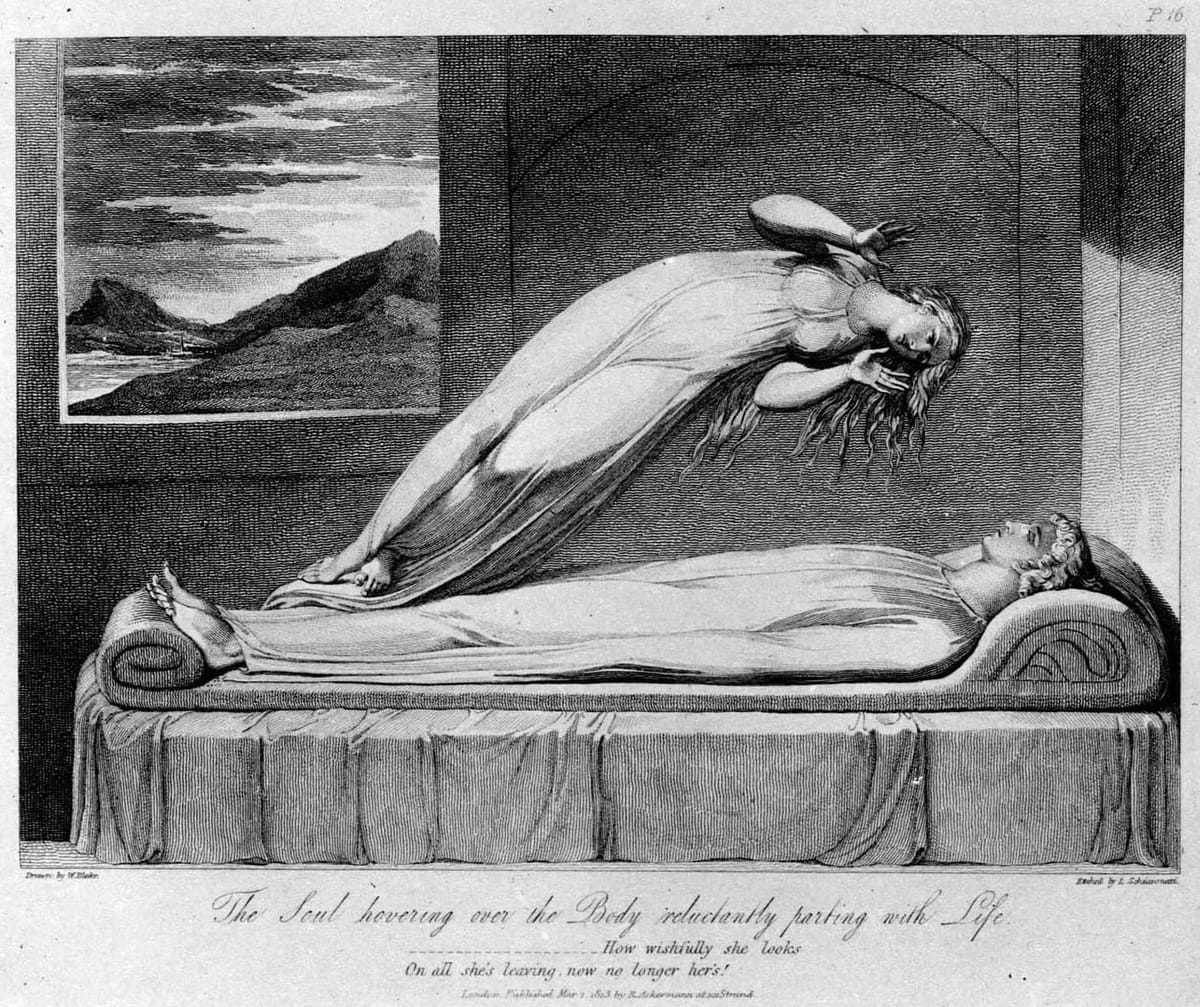
Amongst her many credentials described below, Marjorie is Research Director of the International Association for Near-Death Studies and has published peer-reviewed work on near-death reports including cases with claimed veridical perceptions during profound physiological crisis.
You might also enjoy her interview with Essentia here:
She also recommends this article by Pim van Lommel that was just published in The Psychologist, published by the British Psychological Society:
https://www.bps.org.uk/psychologist/continuity-consciousness
Marjorie Hines Woollacott, PhD
Marjorie Hines Woollacott, PhD, has been a neuroscience professor at the University of Oregon for more than three decades and a meditator for almost four. Her research has been funded by the National Institutes of Health and the National Science Foundation. She coauthored a popular textbook for health professionals and has written more than 180 peer-reviewed research articles, several of which were on meditation, the topic that motivated her to write the book 'Infinite Awareness.'
Asking questions
Everyone is welcome to propose questions using the comments section below.
In meetings with a guest, there is typically less time for participant Q&A, but your comments are all read and will help direct the discussion.
As always, its helps if you can:
- Give it a short CLEAR TITLE in capital letters.
- Write an optional short description of what your comment is about.
- Share further reflections below if you want, but if selected, aim for brevity when asking to help the flow of the discussion.
Also make sure to read the other questions and 'heart' the ones you are most curious about!
Zoom room
3rd Feb 2026
6-8pm UK time / 7-9pm CET / 1-3pm EST