
Live your questions, listen to soul
James Hollis and Bernardo Kastrup in conversation
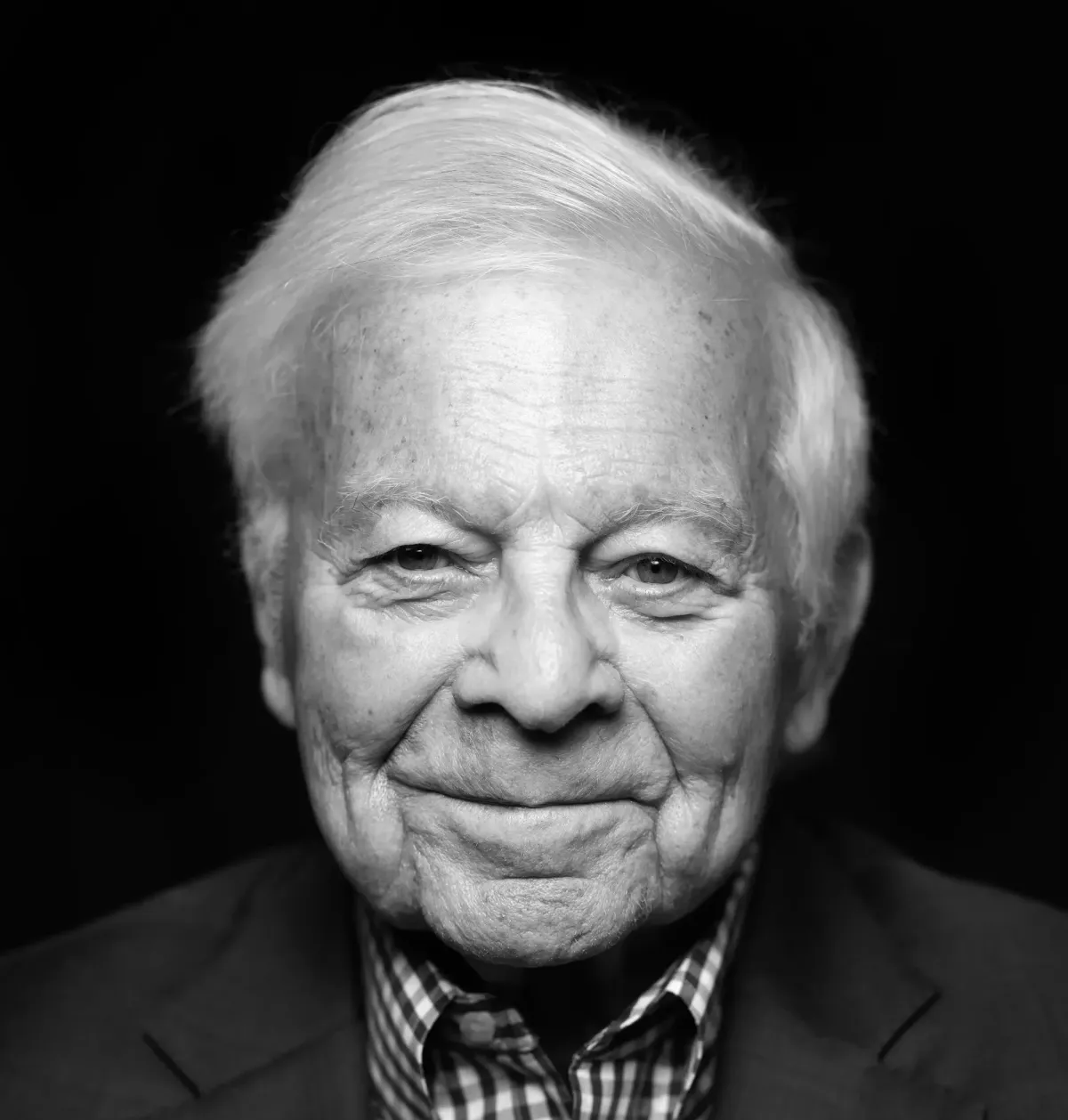
“It’s the questions we ask that give us the quality of our life journey.” - James Hollis
Below is the recording of James Hollis & Bernardo Kastrup in dialogue, my paraphrase of some of the highlights, and some reflections. I would love to hear yours.
Whilst Jim admires Bernardo for asking the big questions, at 85 years old, he’s more comfortable than ever with ambiguity. We never arrive at an answer that isn't soon replaced by another, when we have better questions, better tools or deeper insights. So he suggests a more practical concern:
“How now, in the face of these circumstances over which you may have little to no control, are you going to conduct your life?”
This is a way to take responsibility, but also, to embody the great questions into the fabric of your life, until some distant day, Rilke says, “you may live your way into their answer for you.”
The answers may not be immediate or obvious, so there is virtue in powerlessness and patience. Often, one simply has to wait and allow something to emerge from below. It might not arrive when we want, or in a form we immediately recognise. It might even show up in a context we find challenging, but, says Jim, it always does arise.
5 ways to listen to your soul
By definition, we don’t know the unconscious. Yet it continuously spills into the world through us and around us, and we can cultivate a deeper relationship with the mystery we are. So this isn’t a passive process; it is an active attendance:
First, it shows up in the choices we make and their often unintended consequences. But also, in the unexpected feelings that refuse the logic of our known life. So pay attention. If you’ve achieved some status in your career and yet there is an emotional flatness, it's a protest from deep within.
Second, notice your energy system. If you keep mobilising your ego in directions that are inconsistent with your deeper nature, “it's going to lead to boredom, depression, burnout, self-medication - a life of distraction.” When you’re doing what’s right for you, the energy is there.
Third, attend to your dreams. By the age of 80, you’ll have spent 6 years dreaming. Nature would not waste so much energy without purpose. With greater attention you might recognise something within you that comments on your life, compensates for what you ignore, and indicates an agenda beyond egoic concerns.
Fourth, and most elusive, is the subjective sense of meaning - the feeling that outer choices are consistent the intentions of the soul. These might not be acceptable to the world around us, but are aligned with the world within.
Last, when we get off track, is psychopathology. It registers in the body, in our emotional life, or in our behavioral patterns. In analytic psychology, these symptoms are acknowledged, but the focus is more on why they have come. What dances at the “twilight of my psychological life?”
Your questions are guides to an interesting life
The ego is the "narrow pinprick of consciousness that we think we are in any given moment." Necessary and valuable, but can inflate and seek control beyond its ken. Neurosis is when we identify with the ego more than with nature. It’s exemplified in our culture’s fear of ageing, sickness and death. These are problems for the ego, but not a problem for life, for which birth, sickness and death are part of its nature.
But even this existential anxiety is not to be rejected.
When asked what he would say to his 10 year old self, James responded with reassurance. Anxiety is normal. Trust the journey, trust the process, “the questions you have today are the questions you’ll be asking at 85… and they will give you an interesting life.”
Soulful idealism?
James would not be drawn into an explicit metaphysical position, yet his whole attitude exudes a deep trust of nature, curiosity for life's unfolding wisdom, and a reverence for mystery. For Bernardo, this dovetails perfectly with metaphysical idealism.
James acknowledges that the images and impulses that emerge from the unconscious, whilst not themselves the great mystery, are symbolic. They point beyond to their timeless source. Jung felt that the only way to account for synchronicity was to accept that our archetypes extend into the world itself.
This implies we can interpret our lives like the symbols of our dreams. But whilst everything might have meaning, Bernardo does caution that not all perceived meanings are valid. Or as my friend Gaia puts it - there is knowing that it’s all magic, there is magical thinking, and they are not the same.
But doesn't idealism reduce suffering at the cost of meaning?
It’s might be obvious how idealism offers more scope for meaning than materialism. After all, meaning is a mind state, and for a physicalist, mind states are mere epiphenomena of mindless matter. As Amy Lemon said, this cuts us off from "the deep and infinite psyche that we are and that flows through us at all times.” In contrast, for idealism, mind states are the substance of reality, the creative flow of a dynamic source.
But there can be a tension between this perspective and a narrative common in non-dual circles. If reality is ultimately one mind, and the ego and its images mere illusion, then all this business of listening to soul merely compounds unnecessary suffering.
The first instruction I received in meditation was to regard thought as distraction, and return attention to the breath. Some non-dual teachings go further, and say thought is delusion. A wild preoccupation with an imaginary future and non-existent past, orbiting a separate self that doesn’t even exist.
From this perspective, concern for personal meaning and the arch of our lives separates us from the reality of here and now. Thinking removes us from reality and is close to psychosis.
So is meaning doomed, for both idealist and physicalist?
Bernardo doesn't think so. His relationship with idealism actually opens him up to a deeper sense of meaning, and a greater respect for the unfolding journey.
Whilst the images thrown up from the source are in one sense illusions, (there ultimately really is no separation) Bernardo contends that even illusions say something about the source which creates them. A novel, in which every line is a work of fiction, still betrays much about the mind of the author who wrote it. As such, the image we call reality is a living symbol for what lies beyond, clues to the dynamic mind of nature.
Whilst many traditions might aim at ultimate truth, the personal meaning discussed here is more like a felt sense than a manifesto. A connection to source via its manifestation our personal life, that echoes with more or less resonance depending on how carefully we listen.
Personally, it is perhaps more simple still; splitting reality into ultimate and relative does not seem non-dual to me. Although all we ever have is the now, I can recognise that thoughts and emotions are part of that reality, and the tension dissolves. If it's all the excitation of one great mind, regret for the past and concern for the future are as real as the mountains and stars, and as worthy of your sacred attention. Your story is part of the fabric of life, connected to all that can ever exist, rising up in and as the only moment we ever know...now.
Still, I’m sure, as James said, the answer I’m with today will be replaced by another tomorrow. So I'm happy to return to the more humble and immediate question:
"How now, in the face of circumstances over which I have little to no control, am I going to conduct my life?”
I look forward to hearing your response,
Amir
About James Hollis
“our cultural icons—success, peace, happiness, and distraction—pale before the question of whether or not one experiences this life as meaningful.” - James Hollis
James Hollis, PhD, is widely regarded as one of the world’s leading Jungian analysts and interpreters of Jung’s legacy in our time. Zurich-trained at the C. G. Jung Institute in Zürich, he is a Jungian analyst in private practice in Washington, DC, after an earlier career teaching humanities and the history of ideas for 26 years.
He has held major leadership roles in the Jungian world, including Executive Director of the Jung Educational Center in Houston, Executive Director of the Jung Society of Washington, founding Director of Training at the Philadelphia Jung Institute, Senior Training Analyst for the Inter-Regional Society of Jungian Analysts, and Vice-President Emeritus of the Philemon Foundation.
Hollis is the author of more than seventeen influential books on depth psychology and the challenges of modern soul-making, among them The Middle Passage, Swamplands of the Soul, The Eden Project, Finding Meaning in the Second Half of Life, Living an Examined Life, Living Between Worlds and A Life of Meaning, which have become touchstones for readers navigating midlife, meaning and the demands of the unconscious.
TIMESTAMPS
Courtesy of Rita Conde
Mutual admiration and the value of metaphysical enquiry
00:00:03 - Bernardo praises James's work on men, midlife and Jung. In Bernardo's opinion, James is the greatest Jungian alive.
Living with ambiguity & the ego’s limits
00:02:30 - The Ego craves certainty, clarity, and control — but life refuses to comply. Maturity requires tolerating ambiguity.
00:04:40 - Navigating in a sea of anxiety
00:05:20 - How we can conduct our lives
The three main enquiries of philosophy: metaphysics, epistemology, ethics
00:07:45 - Kant: we cannot know the thing‑in‑itself (ding an sich) : the philosophical foundation for psychology and phenomenology.
00:10:40 - Why we had to invent psychology
00:12:40 - To serve nature, to serve others, to serve the mystery
00:13:02 - James cites Jung: «Life is a short pause between two great mysteries».
00:13:16 - How does James relate to the mystery
00:14:45 - The virtue of patience
00:15:28 - Bernardo quotes Rilke’s Letters to a Young Poet
The unconscious speaks through feelings, energy, dreams
00:17:05 - The five channels through which the unconscious «spills into the world»: feelings; energy systems; dreams; meaning; psychopathology.
00:24:00 - We cannot speak about the unconscious but it speaks through us all the time
Consciousness, Archetypes and Idealism
00:25:01 - Jung’s psychology and metaphysical idealism are not in conflict - they differ only in terminology. Archetypes extend into the world itself, which fits naturally with idealism.
The Daimon: Hillman, Socrates and the Muse
00:33:08 - James and Bernardo discuss the Daimon - the inner guiding force. The Daimon is not always benign; it has its own agenda.
Book references: James Hillman’s The Soul’s Code, Socrates: “It is not I who speak; it is the Daimon who speaks through me.”, Milton invoking the “Heavenly Muse” in Paradise Lost.
The Journey, Ithaca, and the second half of life
00:42:45 - Using Cavafy’s poem Ithaka, James explains that the value of life lies in the journey, not the destination.
The right relationship with the mystery, mortality and the ego
00:51:32 - Living the “right relationship” with the mystery that animates existence.
Q&A with Bernardo: Idealism and Meaning
00:57:58 - The world is psychic
01:05:00 - Meaning as non-local
01:08:00 - Does idealism reduce suffering at the cost of meaning?
Book reference Man’s Search for Meaning, by Viktor Frankl
01:25:00 - Perils of idealism: magical thinking
01:27:55 - The vertigo of eternity
01:30:00 - Suffering as engine of meaning
01:33:20 - Kierkegaard and the question of chosen suffering
01:36:00 - Vedanta and meaning beyond the personal
01:39:00 - Illusion (Maya) as a gateway to truth
01:42:00 - Two levels of meaning: ultimate vs. momentary
01:44:00 - Bernardo's articulation of meaning
01:45:25 - Meaning through duty vs. pleasure
01:49:00 - The recognition: «It’s not about me»
01:55:20 - Non-duality as the direct experience of consciousness without labels, images, or thought
01:57:10 - Closing the session