
Why Bernardo is distressed by the idea of a soul
3rd Feb 2026 - Bernardo Kastrup & Marjorie Woollacott on Near Death, Duality & Seeing without Eyes

That a soul could exist after death is conceivable to Bernardo, but distressing. It departs from naturalism and suggests that life could be a like simulation, or a game. It implies that our reality is planned, intentionally deceptive, and hiding something from us on purpose.
“The key assumption for the naturalist is that the universe is not trying to deceive you," says Bernardo. Under naturalism reality is instinctive, and life emerges spontaneously out of what we call the laws of nature, not designed by supernatural beings.
But if we are in a sort of game, our natural world is one step removed from the way things really are. We are insulated from the very data we need to account for the whole thing, which for Bernardo is deeply dissatisfying.
"Now, all the evidence can be constructed, everything can be deceiving you, no conclusion you extract has any validity whatsoever, because it's all a big game, and you don't know who is playing it, and you don't know what they are up to, and you don't have access to what motivated the game... for people with a naturalist disposition, this is awful stuff. It's really awful."
The trouble is, its hard to ignore the fact that our personality isn't easy to explain based on genes or environment alone, and the copious anecdotal evidence from near death experiences.
"I'm not going to be one that will tell you, therefore, naturalism has to be true, and whatever evidence you have, it's anecdotal nonsense, and we will not even review your paper. I'm too honest towards myself to fool myself that way. I can't do that. But if you ask me, do I like where this is going? No, no, I don't like this at all. It robs some of the meaning that I think I have in my life.”
It's all still mind
None of this is a challenge to idealism. It is conceivable to have a mental complex that imprints itself in a cognitive neighbourhood in the great ocean of mind, appearing as a body, and can withdraw from that neighbourhood. "Then you would have something that is operationally indistinguishable from soul and body." (Bernardo first clarified this idea, and the reasons to consider it, near the end of our meeting on the 30th of December.)
Seeing without eyes
It's the reports of seeing during Near Death Experiences that are the biggest challenge to naturalism. Why would nature spend millions of years to evolve eyes if sight is possible without them? “If we can see without eyes, it's very difficult to argue for a satisfying, complete, naturalist explanation, because it would then suggest a form of game being played, something deliberately set up.”
He had earlier tried to reconcile this in his essay “The Phantom World,” arguing that when we die we may have access to all the data accrued by people previously living. But he’s since encountered so many reports of people accessing fresh information that he no longer finds this explanation satisfactory.
Of relevance here is Àlex Gómez-Marín’s research proposal Seeing without Eyes.
Bernardo considers Marjorie Woollacott the world's academic authority on Near-Death Experiences, and they engaged in a vibrant dialogue on the topic. This was followed by many great questions from you all, including an account of reincarnation that was so well articulated, Bernardo invited Martin to submit it as an essay to Essentia Foundation.
We also discussed:
- Continental philosophy vs analytic philosophy
- Telepathy tapes and the bias against paranormal science
- Levels and hierarchies of dissociation
- Reincarnation as a pattern of dispositions
As always, I look forward to hearing your reflections in the comments below or on telegram.
Until next week!
Amir
Marjorie Hines Woollacott, PhD
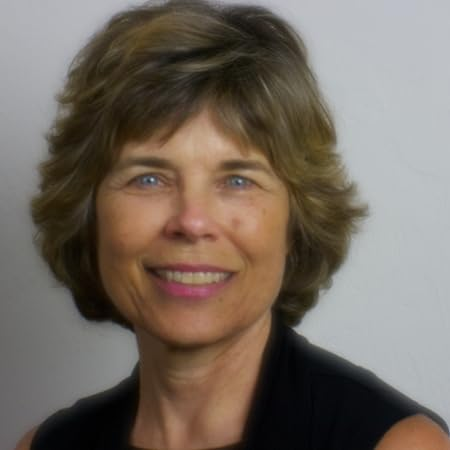
Amongst her many credentials, Marjorie is Research Director of the International Association for Near-Death Studies and has published peer-reviewed work on near-death reports including cases with claimed veridical perceptions during profound physiological crisis.
has been a neuroscience professor at the University of Oregon for more than three decades and a meditator for almost four. Her research has been funded by the National Institutes of Health and the National Science Foundation. She coauthored a popular textbook for health professionals and has written more than 180 peer-reviewed research articles, several of which were on meditation, the topic that motivated her to write the book 'Infinite Awareness.'
We had a Q&A with her on the 20th of January, which you can see here:
 Amir Giles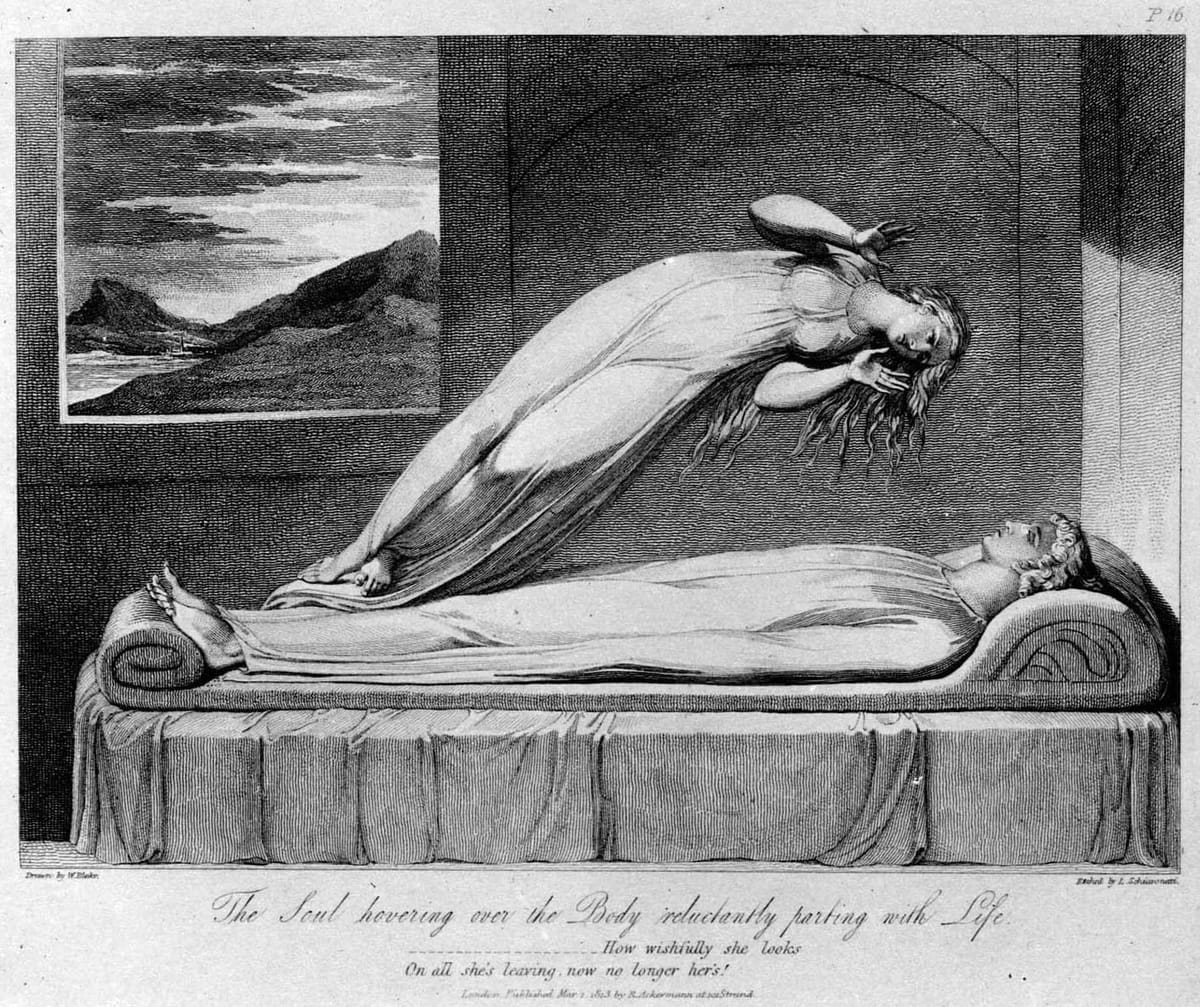
She also recommends this article by Pim van Lommel that was just published in The Psychologist, published by the British Psychological Society:
https://www.bps.org.uk/psychologist/continuity-consciousness
Recording
0:00:00 Announcements
0:03:30 Types of dualism
0:09:30 NDE’s suggest life is a deliberate game
0:10:00 Why this is distressing to Bernardo
0:15:40 Defining naturalism
0:18:00 Marjorie & Bernardo Dialogue
0:20:00 Continental philosophy vs analytic philosophy
0:22:30 Science of astronomy and telepathy tapes
0:28:30 Perception without a body
0:30:00 NDE’s change worldview
0:31:30 Bernardo’s phantom world hypothesis
0:38:00 Naturalism vs supernaturalism
0:48:00 Why do we have eyes?
0:56:00 Michael Levin’s Platonic space
1:00:00 Could after death vision be reconstruction?
01:03:00 Insights from higher states of consciousness
01:09:00 Levels of dissociation have less empirical grounding
01:17:00 Why discarnate entities aren’t perceivable
01:18:00 The limits of Bernardo’s disposition
01:29:00 Do NDE’s really say anything about ultimate reality?
01:30:00 Subtle bodies and perception: scholasticism vs empiricism
01:43:00 Seeing 360 degrees is anti-naturalism
01:47:00 Reincarnation as repeating dispositional structures of Mind at Large
2:05:00 On killing other beings
2:09:00 Time travel thought experiment