
The Precognition of Unconditional Love - with Dr Julia Mossbridge
10th Feb 2026 dialogue with Bernardo Kastrup on time, reality & prejudices of science
Precognition is the term for knowing something about the future before it happens.
But you probably knew I was going to say that.
Nevertheless, the topic can cause discomfort. No one wants to lose credibility for entertaining what many consider "fringe science."
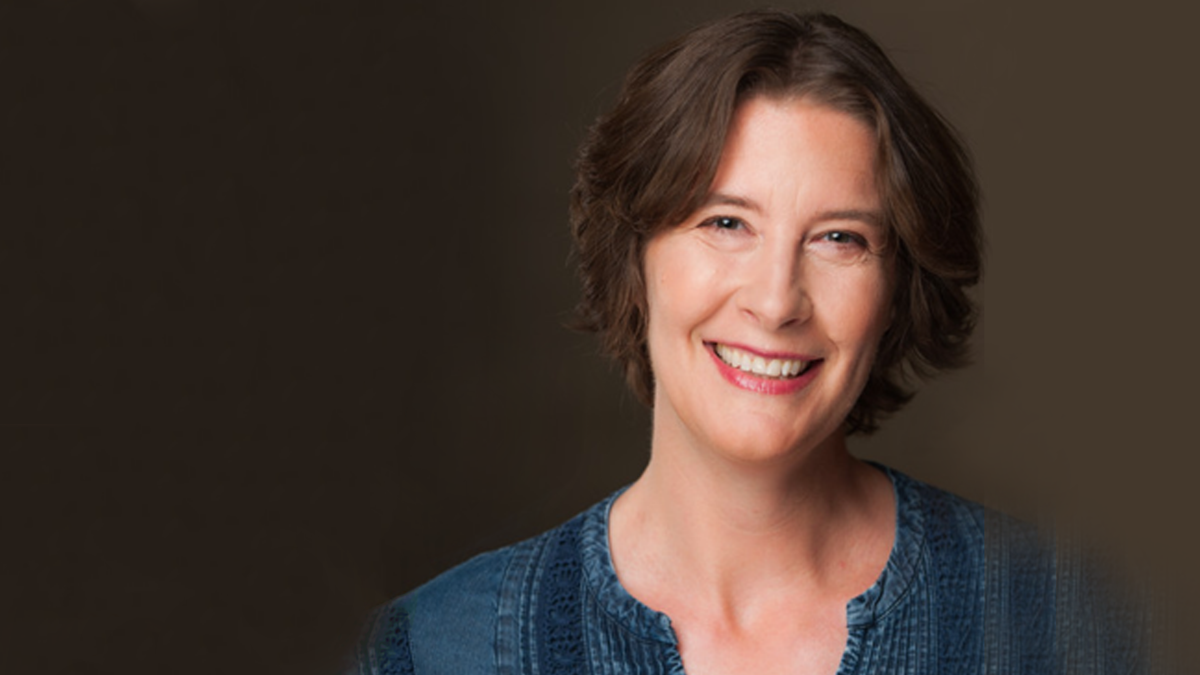
Despite this prejudice, Bernardo is perfectly comfortable with the notion. As are some physicists who anyway consider time an emergent property. So I was intrigued by the research presented by Dr Julia Mossbridge in this heart-felt dialogue. She shared the many reasons to believe we could access information from the future, and what it indicates about reality and time.
Your body keeps the score before the score
Most fascinating is the possibility that precognition is common, at least subconsciously. When measuring physiological markers, the body can respond to future information before any known sensory channel could access it. Julia suggests this might be why successful day traders typically have higher than average introspective awareness, an ability to track their physiological response to potential trades.
Even more inspiring is her finding on what consistently improves precognition:
Unconditional love.
“it's pretty clear that for people who are in a high state of unconditional love, you're statistically significantly more likely to be accurate on the information you get.”
This is defined as “having the capacity to be loved and having the capacity to love without anything needing to change.”
The irony is that many people seek precognition because they want to get something. But to access the skill, the wanting needs to drop.
Spoiler alert: Love is a trainable skill.
Perhaps more important then, is that states of unconditional love can be trained. This likely bring many benefits regardless. The formula is simple:
“If you believe in God, pray and simply ask for the experience of unconditional love in the moment right now.
If you don't believe in God, make the intention to set aside 2 minutes right now and experience unconditional love.”
Julia recommends to "just do it every day."
My prediction is that with practice, you’re going to love the result either way.
Time to acknowledge the control prejudice in physics
Julia is clear about one thing. She doesn’t know what time is. But she does have ideas about how it might work.
Some physicists believe time is fundamental, and others believe it is merely a cognitive construct. Julia sees value in both perspective, but is fairly certain it isn't what most people think: a one direction canvas on which events are painted. Because no one in physics, philosophy or psychology can agree, it's a field of study ripe with potential.
Still, there are many biases and prejudices in science which could hold things back. A seldom examined assumption is that all organising principles in nature should be present at the microscopic level, and everything else emerge from there.
“This is completely arbitrary”, says Bernardo. “There is nothing written in stone in nature saying that that is how nature is." If there are organizing principles that kick in at a microscopic scale, there is nothing a priori forbidding nature to also have fundamental, built-in organizing principles that only kick in at larger scales… no reason to think that we can reduce everything to particle physics."
In other words, there may fundamental laws of nature, or organizing principles, "that only kick in at the level of an organism. Or a society. Or a planetary system. Or a galaxy. Or clusters of galaxies.”
This unquestioned belief is likely motivated by the desire for control. If we could explain everything based on microscopic effects, then all of nature’s organizing principles could be discovered under laboratory conditions.
“I generally hold that reductionism, materialism, are really about an emotional wish for control.” Julia says. Bernardo agrees, "but I agree while sharing the prejudice. I would really like to reduce everything to one thing. And that's maybe my psychology. For me, I think it's less control and more closure”.
After Julia left, we followed with a one-hour deep dive on why Bernardo is so vexed by "seeing without eyes."
This was one of the most exciting discussions we've had recently, a sentiment echoed by many in the chat.
We also discussed:
- What matters is compassion
- How the average experience is severe abuse and neglect
- Time travel therapy
- Requirements for good model of time
- Where are all the precognitive billionaires?
- Why meaning doesn’t need time (but the ego does)
As always, I would love to hear your reflections, in the comments below or telegram, and I look forward to seeing you next week!
Amir
P.S. We'll meet on Wed rather than Tues next week. Topic to be confirmed.
About Julia Mossbridge
Dr. Julia Mossbridge is an American cognitive neuroscientist, author and educator who works on understanding and training exceptional human performance including psi effects, notably on precognition and presentiment. She is a Senior Distinguished Fellow in Human Potential at the Center for the Future of AI, Mind, and Society at Florida Atlantic University, Member of the Loomis Innovation Council at the nonpartisan Stimson Center, Affiliate Professor in the Department of Biophysics and Physics at University of San Diego, and the co-founder and founding executive director of the nonprofit TILT: The Institute for Love and Time.





Recording
Time stamps:
0:00:00 Julia Mosbridge
0:02:00 No agreement of time
0:08:00 Physicists on precognition
0:09:00 Science designs experiment, philosophy thinks
0:10:30 precognition: information from the future
0:16:00 physics, time and mind-like particles
0:17:50 the big question: time/consciousness
0:19:40 Bernardo: time as a mental construct
0:21:00 Time might be emergent - loop quantum gravity
0:26:00 Bias in science & physics about scale
0:34:00 Motivations for science: terror, control, meaning
0:38:00 Requirements for good model of time
0:43:00 Dashboard failures => precognition, de ja vu
0:44:30 Healing trauma through time perception
0:49:30 Common errors about time (eternity / crass determinism / meaning)
0:51:00 kinds of meaning
0:57:00 Precognition through unconditional love
1:00:50 How to train unconditional love
1:03:00 Where are the precognitive billionaires?
1:13:00 What matters is compassion
1:13:30 Normalised abuse in childhood and academia
1:23:00 Voluntary access to precognition
2nd half: The problem with Seeing without Eyes
1:28:40 Why veridical perception in NDEs is problematic to Bernardo
Must it really contradict naturalism?
1:40:00 Seeing in dreams is not problematic
1:52:00 We should gain access to the feeling of the room, not what it looks like
1:56:00 Attempted explanations lose specificity
2:00:00 Bernardo takes incompleteness for granted
2:06:00 God
2:09:00 Even if Analytic Idealism is wrong, its less wrong than physicalism