
Everything is determined & that gives life meaning
Why blame is naive, shame should be cherished, and the true meaning of free will

Recording thumbnail: Photo by Rohan Gupta / Unsplash
Everything is determined. Nothing is random. Every choice you ever made could not have gone another way.
Yet contrary to popular intuition, Bernardo argues that this is precisely what gives life meaning. The alternative would be random events that do not reveal what we are.
Instead, each choice we make is the universe discovering what it is. Although determined it can’t be predicted; it would take a computer as big as the universe to calculate our next action any faster than just letting it happen. From this perspective, the universe is that computer, running the self-discovery programme of life.
Your life is a microcosm of this universal principle. Your choices feel free because they can’t be predicted, yet they emerge from the essence of your being: Consciousness, in the terrific and terrible act of self-discovery.
Let go of revenge, cherish your shame
Could belief in determinism lead to moral depravity?
Not for Bernardo. It implies less regret and less seeking revenge, but not an invitation for apathy. Our actions still have terrific consequences. Self-reflection can illuminate their depth. This is why he cherishes his shame and seeks to understand what motivated behaviour he considers evil.
On a societal level, determinism could encourage a more pragmatic and compassionate justice system, and a recognition that we must find expression for timeless archetypes. There are limits to how much we can temper daimonic forces already in full flow. (There were 32 assassination attempts on Hitler's life.) Good reason to study history and better understand how to work with archetypal forces.
Your actions emerge 'freely' from who you are, but are determined by what you are. In this meeting we explore what this means and why it matters.
We also discuss:
- Why blame is metaphysically naive
- Reasons to cherish your shame
- Why the timeless is not static
- How a bird’s suffering fills its universe
- 32 assassination attempts on Hitler
- Free will, the Daimon & the archetypes
- The potential value of violent video games
I look forward to any reflections in the comments, until next week.
Amir
Date: 1 November 2026
Duration: 2h 8m 11s
0:00:00 Introduction
0:02:35 Free will is not what people think
0:06:02 Libertarian free will is incoherent
0:14:36 Conditioning, responsibility and blame
0:20:02 Blame is metaphysically naive
0:22:14 Dutch vs US justice systems
0:28:51 Unconsciously seeking revenge
0:36:33 Studies on the effect of belief in determinism
0:40:31 Letting go of regret
0:42:13 Don’t seek revenge
0:44:24 Are there random events?
0:47:15 Causation from outside the dashboard?
0:58:50 The value of moral outrage
1:04:59 Determinism ≠ apathy
1:09:12 Cherish your shame
1:24:38 Can we combat daemonic evil?
1:26:35 Determinism ≠ apathy 2
1:29:45 32 attempts to assassinate Hitler
1:37:19 Determinism gives meaning to life
1:49:04 Relating to destructive archetypes
1:52:22 Virtue to violent video games?
2:01:59 Why do we feel free?
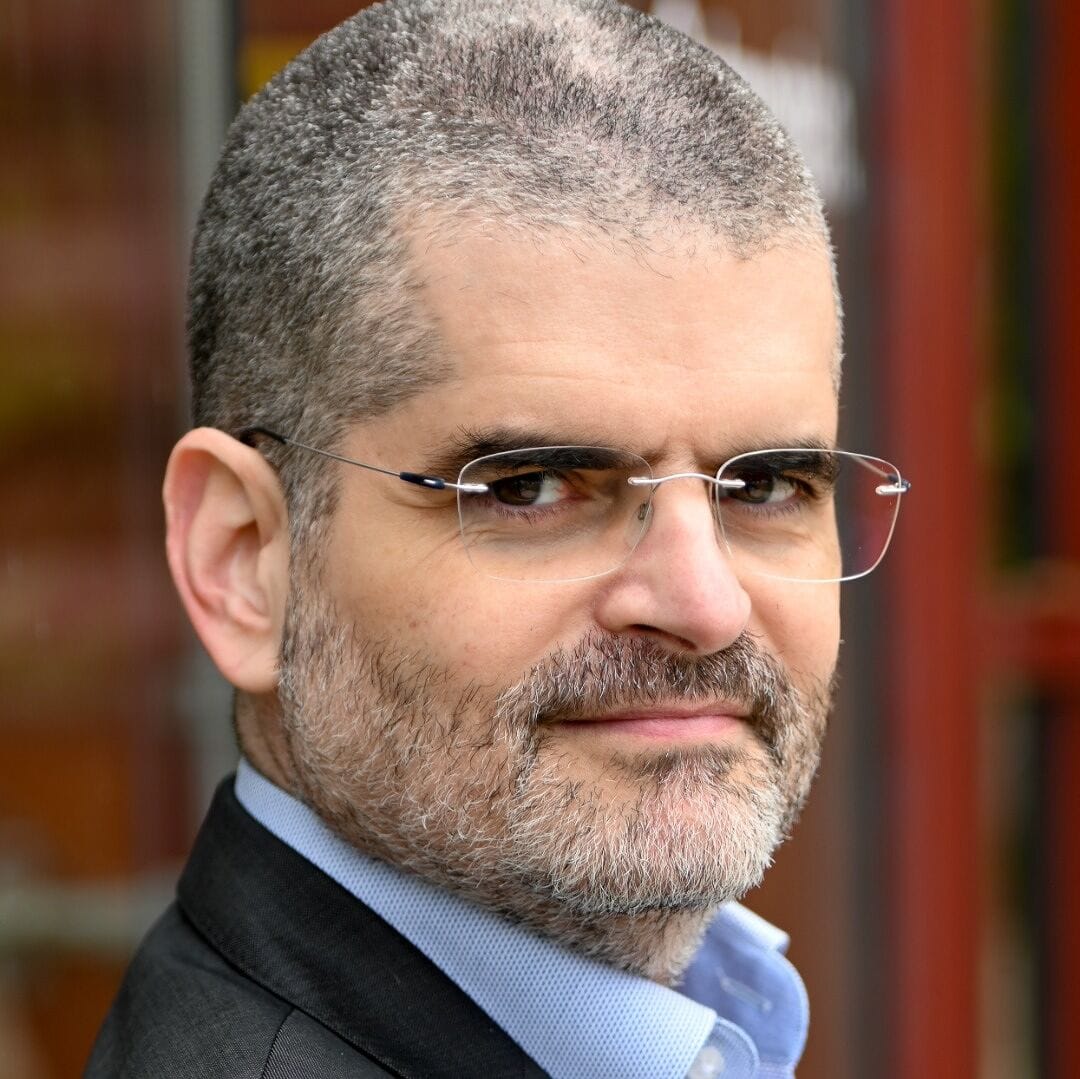
Bernardo Kastrup
Analytic idealism
Bernardo Kastrup is the Executive Director of Essentia Foundation and Founder/CEO at AI systems company Euclyd BV. His work has set off the modern renaissance of metaphysical idealism. He has a Ph.D. in philosophy (ontology, philosophy of mind) and another in computer engineering (reconfigurable computing, artificial intelligence).
As a scientist, he has worked for the European Organization for Nuclear Research (CERN) and the Philips Research Laboratories (where the ‘Casimir Effect’ of Quantum Field Theory was discovered). He has also been creatively active in the high-tech industry for almost 30 years, having founded parallel processor company Silicon Hive (acquired by Intel in 2011) and worked as a technology strategist for the geopolitically significant company ASML. Most recently, he has founded AI company Euclyd BV.
Formulated in detail in many academic papers and books, his ideas have been featured in Scientific American, the magazine of The Institute of Art and Ideas, the Blog of the American Philosophical Association and Big Think, among others. His most defining book is Analytic Idealism in a Nutshell: A straightforward summary of the 21st-century’s only plausible metaphysics.
Become a member to join our weekly live calls and access all the recordings
Go deeper
A community made possible by member support
Standard membership €25 / month
Reduced-price membership €15 / month
Cancel at any time
Bursaries on request
Explore membershipAlready a member? Sign in
Weekly meetings · Full recordings · Questions & community