
Death, imagination & reality
Reasons to cultivate your personal relationship with the beyond

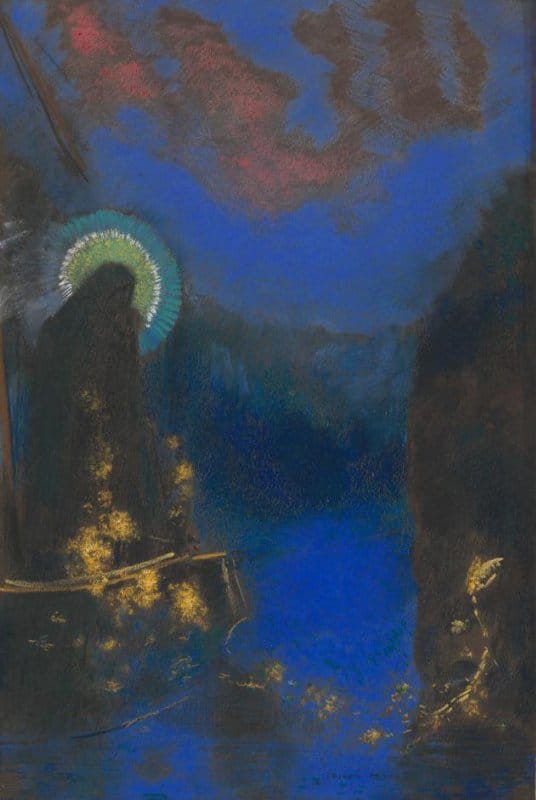
Recording thumbnail: Odilon Redon - Flower Clouds 1903

On the day this was recorded, someone very close to Bernardo had passed away, making this conversation highly personal and poignant.
According to analytic idealism, fear of oblivion is incoherent. The consciousness behind your eyes reading this is the one thing that truly exists, and that which you truly are. “It can change configuration, it can change state, but it cannot go anywhere because it's that within which things come and go.”
Although we covered this purely analytic account of what death may represent, Bernardo also shared his more personal intuitions on this subject.
We have all lost or will lose people close to us, and we each share the same fate. It is a time in which our philosophy is truly tested. Bernardo shared how he measures his own philosophy; the older he gets, the more welcoming and warm he feels towards death.
How to evaluate your fantasy of death
Bernardo expects the transition to be something like being greeted by a welcoming committee of loved ones. Those who were most important in your life, whether friends, ancestors, or people you have admired.
Today, my welcoming committee just grew by one face. So as I get older, the warmth of death deepens, becomes richer.
He is careful to emphasise that this is a conscious fantasy: beyond death, there is no reason to think our current cognitive structure will be relevant. There is analytic grounding for the idea of life complexes, “but if you focus too much on the analytic part, you miss out on the depth and the richness and the warmth of the fantasy.”
The role of this kind of fantasy is analogous to the convenient fictions we tell ourselves in science – a closer relationship with the truth. Science is measured by how accurately it predicts what happens next. For Bernardo, your fantasies about death can be measured by how warm it makes you feel about the coming transition and beyond. How well it puts you in a mental state that welcomes the coming state of mind.
Imagination and reality are points of view
Beyond this dissociation, the distinctions we make between imagination, fantasy, and reality lose their meaning. “Beyond the dissociative boundary, it's mind manifesting itself to itself.”
If you really take analytic idealism to heart you must conclude (because it's an inevitable logical consequence,) that reality and imagination are not different ontological categories.
The distinctions are products of the game of identification. When we are identified with our avatar, our alter, the world out there seems real, objective and independent. When we re-identify with consciousness, reality is equivalent to imagination.
For Bernardo, the worst insult to mind is to say ‘it was all just a dream’. The dream is rich in meaning.
So whilst he admits the welcoming committee is fantasy, equally, he means this "less metaphorically than you might think."
The fantasy that dies
What really dies when this dissociation ends is the fantasy that the world ‘out there’ is ‘literally’ real, rather than symbolic, and that our inner experience is somehow inconsequential.
Meaning is the oxygen of life, and materialism props up a fantasy that life has none. In contrast, for idealism, meaning is so vital that it requires multiple points of view to really understand it. And that is what we are, multiple points of view on the one reality.
In death, nothing is lost. All the memories remain - they were never in the brain. They are part of mind. You are in the process of experiencing them first hand.
Death is like taking off a tight shoe.


Death is matched in archetypal importance perhaps only by birth. But birth is likely much harder. Birth is putting on a tight shoe and embarking on an effortful yet fragile trance. Death, to paraphrase Ram Dass, is the relief of finally taking it off.
We also discussed:
- Living your life next to your suffering
- Memory, imagination and eternity
- Is death akin to deep sleep?
I also recommend watching our session on Birth as the other side of this meeting's coin.
Amir
P.S. Please watch out for upcoming emails about the schedule, in slight flux as we transition more meetings to Sundays, and as clocks change in different time zones.

Date: 25 October 2026
Duration: 2h 16m 7s
0:00:00 Welcome
0:01:20 A personal encounter with loss
0:03:11 Birth and death in the Heart Sutra
0:05:06 Is death like deep sleep?
0:10:49 The state of mind and its contents
0:14:33 Stepping beyond a single life complex
0:16:22 When reality and imagination meet
0:20:38 The limits of analytic thinking
0:24:41 The dream avatar and the waking world
0:26:38 A welcoming committee
0:30:02 Symbols, meaning and literal truth
0:33:22 Taking our inner life seriously
0:38:38 Non-duality and the basis of identity
0:41:51 Dissociation does not change what you are
0:45:48 Suffering and meta-suffering
0:48:51 Living alongside suffering
0:54:14 Accepting suffering and helping others
1:01:58 Does my life have meaning for mind at large?
1:06:06 Life as nature exploring itself
1:12:23 Mind at large is not someone else
1:15:27 The value of a life’s insights
1:17:53 Death as remembrance
1:20:36 Guilt, regret and the transition
1:22:48 Personal confidence and the limits of argument
1:24:59 Birthdays and the archetype of birth and death
1:26:06 The ancestors and the warmth of death
1:29:49 Beyond literal and metaphorical truth
1:35:54 Why symbols need not mean a lesser reality
1:37:53 Identity, agency and what feels real
1:44:41 Announcements and finding earlier discussions
1:46:58 What remains when dissociation ends?
1:50:17 Memory, time and the persistence of a life
1:53:36 The dreamer and the dream avatar
1:55:43 A father, a life and the possibility of loss
1:59:17 Giving ourselves permission to go deeper
2:01:01 Can emotions carry across the transition?
2:03:54 Dying in dreams
2:07:08 The vertigo of eternity
2:13:07 Kundera and the art of conversation
2:14:07 Questions for another meeting and closing
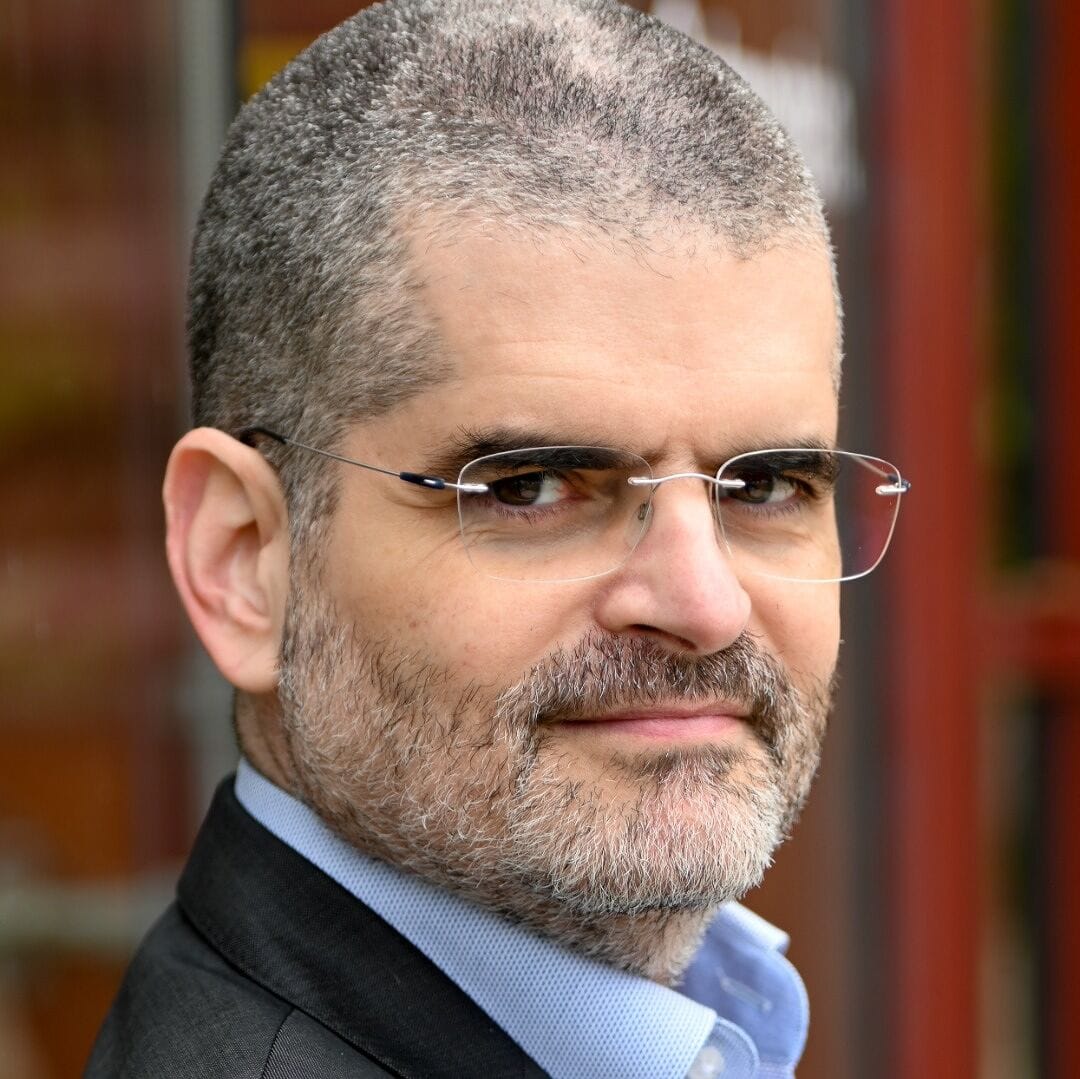
Bernardo Kastrup
Analytic idealism
Bernardo Kastrup is the Executive Director of Essentia Foundation and Founder/CEO at AI systems company Euclyd BV. His work has set off the modern renaissance of metaphysical idealism. He has a Ph.D. in philosophy (ontology, philosophy of mind) and another in computer engineering (reconfigurable computing, artificial intelligence).
As a scientist, he has worked for the European Organization for Nuclear Research (CERN) and the Philips Research Laboratories (where the ‘Casimir Effect’ of Quantum Field Theory was discovered). He has also been creatively active in the high-tech industry for almost 30 years, having founded parallel processor company Silicon Hive (acquired by Intel in 2011) and worked as a technology strategist for the geopolitically significant company ASML. Most recently, he has founded AI company Euclyd BV.
Formulated in detail in many academic papers and books, his ideas have been featured in Scientific American, the magazine of The Institute of Art and Ideas, the Blog of the American Philosophical Association and Big Think, among others. His most defining book is Analytic Idealism in a Nutshell: A straightforward summary of the 21st-century’s only plausible metaphysics.
Become a member to join our weekly live calls and access all the recordings
Go deeper
A community made possible by member support
Standard membership €25 / month
Reduced-price membership €15 / month
Cancel at any time
Bursaries on request
Explore membershipAlready a member? Sign in
Weekly meetings · Full recordings · Questions & community