
Bernardo's surprising thoughts on what comes after Analytic Idealism
and why it's only just begun
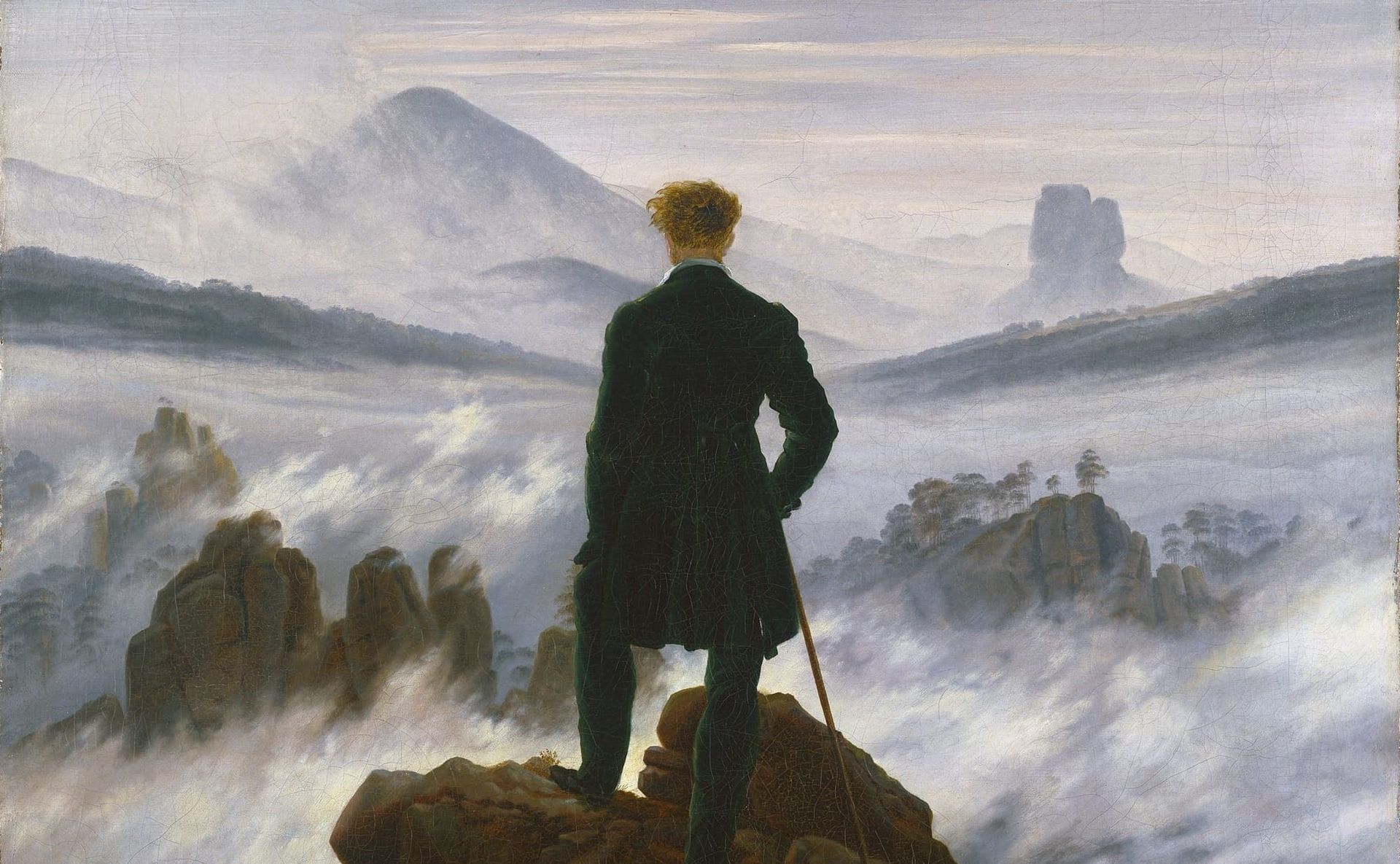
Recording thumbnail: Caspar David Friedrich, Wanderer above the Sea of Fog, Public domain

Bernardo gets really specific here about what could invalidate analytic idealism, what could lie beyond its naturalistic assumptions, and what it could mean for humanity.
First, he surveys the metaphysical options that are on and off his table. From physicalism, dualism, panpsychism to the many forms of idealism, it's a rapid tour of the merits of each, and where intuition and mystical experience fit in the picture.
You might find some of the thoughts he shares surprising.
When being wrong is not a failure
He is careful, however, to emphasise: If it turns out analytic idealism is incorrect, it would not invalidate its value. We need a finger pointing in the right direction even when it is not the final destination.
“I think today, analytic philosophy is the pointing finger, and I think there is no other pointing finger. That's the only one that has a chance to take us out of the madness of physicalism.”
But if evidence forces us to abandon naturalism, the next domino to fall is logic.
“And that's what the Zen Buddhists have been saying for two and a half thousand years now. So none of this is really new for humanity. The question is, are we going back or are we progressing the next circle of the spiral?”
Bernardo’s sincere answer is that he doesn’t know.
“My education tells me we are going back. But my maturity, which took so long to come, whispers in my ear like a little demon that it may be the next turn of the spiral, that this may actually be a step forward because the basis of our analytic reasoning are so tenuous.”
Analytic Idealism has only just begun

But don’t mistake these speculations for the idea that analytic idealism should be discarded, or even complete. If seeing without eyes or alien abduction is real, it will take a lot before the evidence is robust enough for us to abandon naturalism, (if that ever happens.)
In the meantime, Bernardo’s papers are getting cited more than ever, and there is much theoretical and experimental work still to be done.
The hope is for analytic idealism to become increasingly specific and sophisticated, perhaps joining with integrated information theory and the concept of Markov Blankets to explain dissociative boundaries and even life.
“Analytic idealism has just been started. It's not under my control, thank goodness, because it means it will continue if I'm not here anymore. There is a long road ahead.”
For me, this meeting is essential viewing for any aspiring ambassadors of idealism. A clear map of the territory, a guide for how to use it, and encouragement to find your own unique way.
We also discussed:
- Extending analytic idealism with your intuition
- What we have lost from ancient traditions
- Can you combine analytic idealism and belief in God?
- Why losing naturalism means maths, science and logic become tenuous guides to reality
- Avoiding self-deception
I look forward to hearing your thoughts and questions in the comments section.
Next week we explore UAPs and implications, with Harvard astronomer Avi Loeb.
Until then,
Amir
P.S. click the 'play' icon at the top to watch the full recording, or a preview if you are free subscriber.
Date: 13 October 2026
Duration: 2h 13m
0:00:00 Welcome and catching up
0:02:13 Could some meetings move to Sundays?
0:03:53 Suggesting guests and submitting questions
0:06:43 Five approaches to consciousness
0:09:17 Why Bernardo rejects physicalism
0:09:56 Why dualism stays on the table
0:10:41 Two forms of panpsychism
0:13:24 The combination problem
0:18:53 What makes a good explanation?
0:21:44 Panpsychism and quantum fields
0:26:40 The case against neutral monism
0:32:44 Subjective and objective idealism
0:34:34 Solipsism and the shared world
0:39:29 What does dualism have going for it?
0:44:00 Could dualism run on idealism?
0:48:17 What would a next step need to explain?
0:53:54 What if naturalism falls?
0:58:59 Engineering, spiritual insight and truth
1:01:48 Could analytic idealism survive seeing without eyes?
1:04:50 Is logic empirical?
1:13:22 Letting go of philosophical labels
1:18:21 When systems of thought outgrow themselves
1:25:11 Deepening analytic idealism versus moving beyond it
1:32:51 What have we lost from older traditions?
1:37:18 When inner experience becomes religion
1:41:19 Can an analytic idealist believe in a metaconscious mind at large?
1:44:43 Would metaconscious nature threaten naturalism?
1:48:41 Could grace allow a metaconscious God to be spontaneous?
1:52:32 Spontaneity and making room for the daimon
1:56:19 Could dissociation serve cosmic self-discovery?
1:58:00 Purpose does not require metacognition
2:01:28 Introspection, evidence and self-deception
2:08:59 The value of a theory we may eventually discard
2:12:41 Closing and next meeting
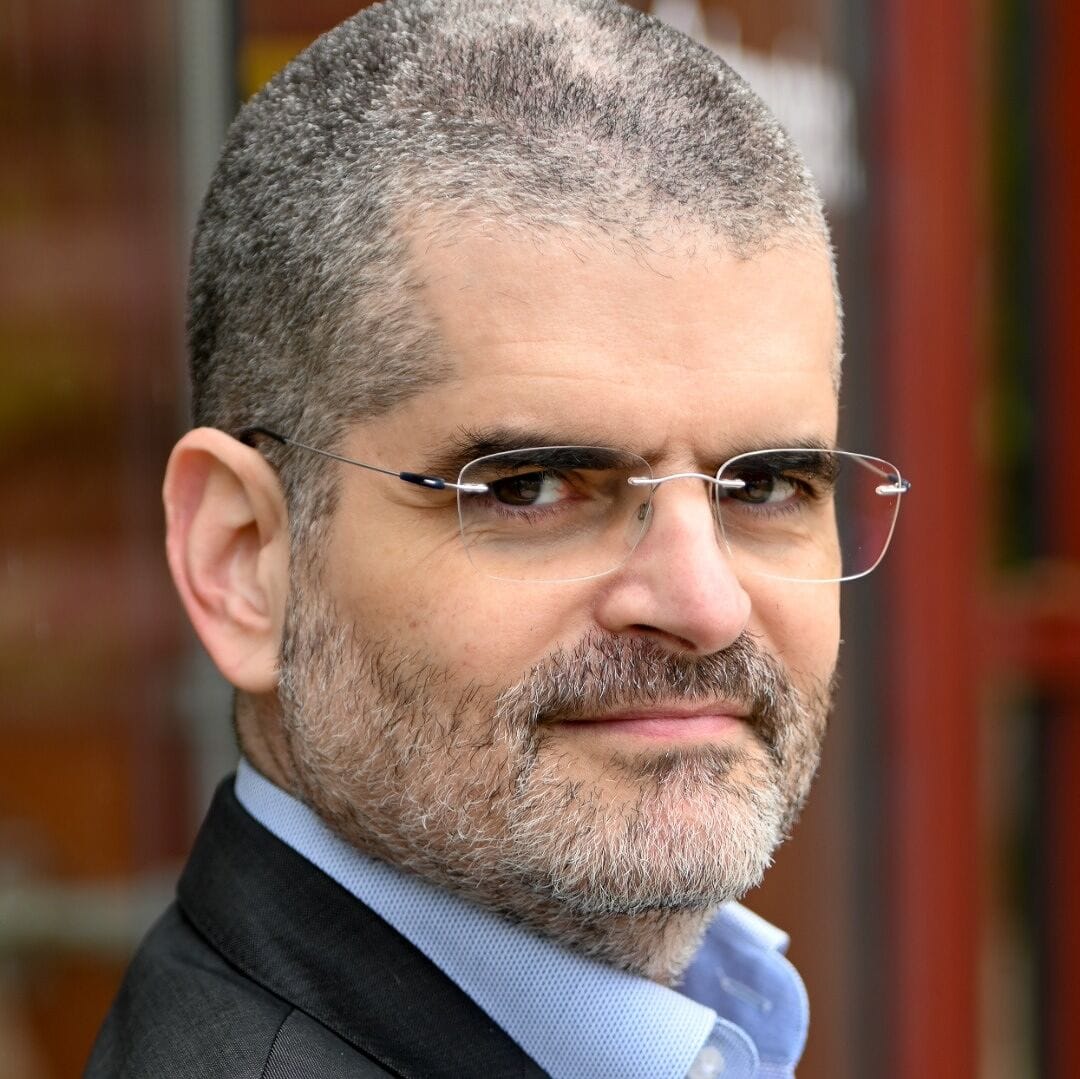
Bernardo Kastrup
Analytic idealism
Bernardo Kastrup is the Executive Director of Essentia Foundation and Founder/CEO at AI systems company Euclyd BV. His work has set off the modern renaissance of metaphysical idealism. He has a Ph.D. in philosophy (ontology, philosophy of mind) and another in computer engineering (reconfigurable computing, artificial intelligence).
As a scientist, he has worked for the European Organization for Nuclear Research (CERN) and the Philips Research Laboratories (where the ‘Casimir Effect’ of Quantum Field Theory was discovered). He has also been creatively active in the high-tech industry for almost 30 years, having founded parallel processor company Silicon Hive (acquired by Intel in 2011) and worked as a technology strategist for the geopolitically significant company ASML. Most recently, he has founded AI company Euclyd BV.
Formulated in detail in many academic papers and books, his ideas have been featured in Scientific American, the magazine of The Institute of Art and Ideas, the Blog of the American Philosophical Association and Big Think, among others. His most defining book is Analytic Idealism in a Nutshell: A straightforward summary of the 21st-century’s only plausible metaphysics.
Become a member to join our weekly live calls and access all the recordings
Go deeper
A community made possible by member support
Standard membership €25 / month
Reduced-price membership €15 / month
Cancel at any time
Bursaries on request
Explore membershipAlready a member? Sign in
Weekly meetings · Full recordings · Questions & community