
Belief in God
Jamey Hecht & Bernardo Kastrup consider a metaconscious God, the problem of evil & the divided brain.
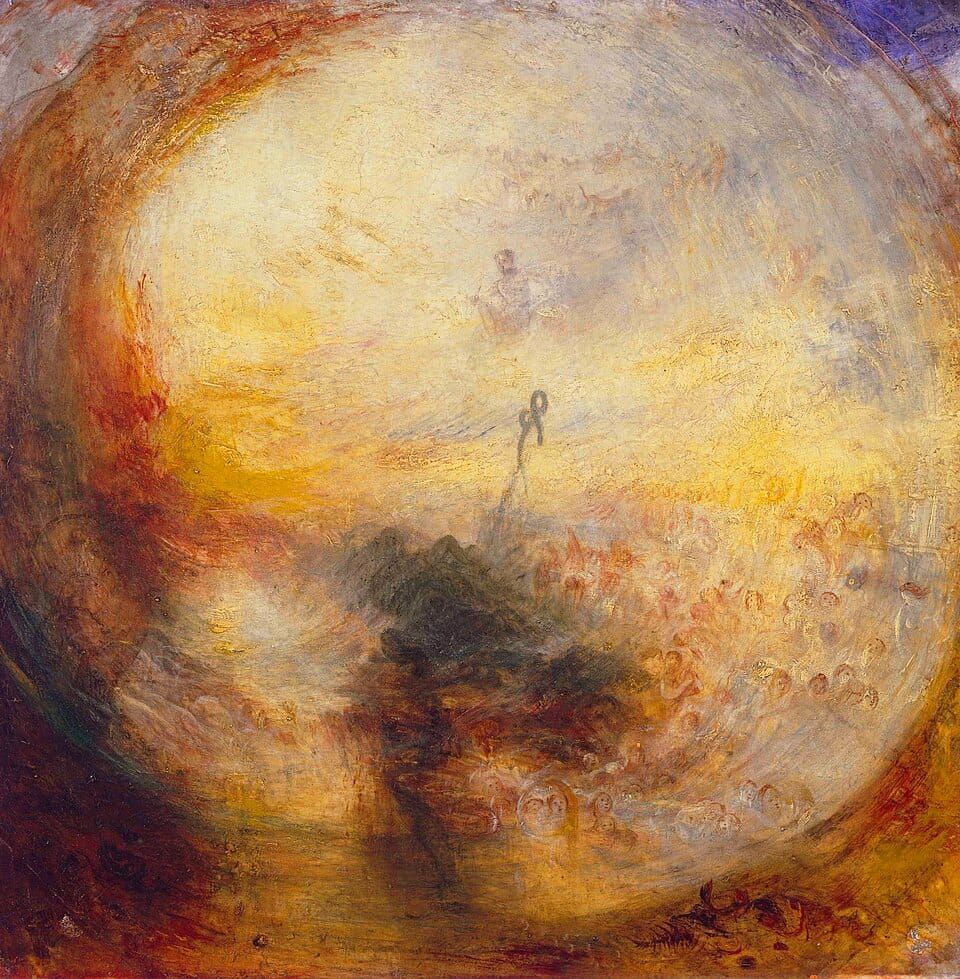
Recording thumbnail: J.M.W. Turner - Light and Colour (Goethe's Theory) – The Morning after the Deluge – Moses Writing the Book of Genesis
The celebrated neuroscientist Ramachandran once asked a split-brain patient if he believed in God. With his left brain he answered no. But with his right, he pointed to 'yes'.
This dance of opposites and play of paradox makes explicit what many already suspect about our complicated relationship with the divine, and was central to this poetic dialogue between author Jamey Hecht and analytic philosopher Bernardo Kastrup.
Bernardo's analytic conclusion has been that whilst the universe is conscious, that portion of it that sits outside of living beings, (what he calls Mind at Large, and we could conceivably call ‘God’), is not metaconscious. For Bernardo, its intelligence, creativity and purpose are as spontaneous and unplanned as the elaborate worlds we build each night in our dreams. We create them, but we do not plan them. They may have deep meaning, one that only becomes apparent upon later self-reflection.
For Jamey, this conception of God seems to strip reality of the deepest meaning he intuits it to have: a genuine two-way relationship with the divine.
Jamey recounts being liberated by Iain McGilchrist's study into the two ways we perceive the world. As a brief (and oversimplified) introduction: For the left brain hemisphere the world is made of knowable objects that we can understand and manipulate. For the right hemisphere, the world is one of context and relationships. Nothing is ever fully known, and surprise is always expected.
The left, whilst invaluable, can be deluded by its own specious certainty and self-sufficiency. The right is able to take in the bigger picture and knows that both modes are needed.
"It is as obvious to my left brain that there is no God as it is clear to my right brain that the living God is all there is." - Jamey Hecht
Jamey's intuition (echoed by many ancient traditions) that the purpose of creation is relationship that is the basis for his account of free will and his perspective on the problem of evil:
A relationship with the divine is only possible in a universe with sufficient regularity to be meaningful, but sufficient freedom to allow us to choose. To choose to look beyond what we know, and whether and how we strive to relate to it.
It is likewise this precarious balance that creates the conditions for the most beautiful blessing and the most horrific suffering that we know reality can occasion.
The faith Jamey speaks of is far from fundamentalist. Dogma, whether theistic or atheistic, is a pitfall of excessive left-brain thinking. The right brain is open to truths it cannot prove, respecting analysis whilst emphasising context and relationship.
Bernardo let analysis rest in this meeting, and engaged with Jamey’s proposal less as a philosopher, and more as a fellow human being facing the magnificent mysteries of life. Bernardo recognises both the value and limits of what his approach can offer:
“I would be really shocked if analytic idealism were the whole truth. Even fairly disappointed if the story ended there. I defend it because I think it is the best next step we can take..."
There is a short video preview available to everyone, you can read here a free chapter from Jamey’s book, Into Theism (soon to be published by Essentia Books), and of course, members can enjoy the whole conversation above.
Needless to say, I could only hint at the depths of what was covered in this short introduction, but I hope I’ve whetted your appetite to investigate more.
We also discussed:
- The evidence of near death life review
- How to understand evil
- What is good?
- The wise way to connect with timeless truths in untrue myth
With warmest regards,
Amir
P.S. Our next meeting is now this coming Sunday instead of next Tuesday. Check the schedule for updates.

Date: 22 September 2026
Duration: 1h 59m
Topic: Belief in God
Title: Belief and disbelief — Jamey and Bernardo
Duration: 9m 8s
https://vimeo.com/1229614654/67735a1aaa
0:00:00 Welcome and meeting arrangements
0:03:07 Introducing Jamey Hecht
0:06:31 Into Theism and the divided brain
0:09:00 Two ways of paying attention
0:12:07 Holding belief and disbelief together
0:16:26 Do you mean a metaconscious God?
0:18:05 Creation, relationship and freedom
0:21:24 The limits of analytic idealism
0:25:41 Can our relationship with the divine be two-way?
0:29:58 The surface and depth of the world
0:33:27 Was Schopenhauer’s will unconscious?
0:34:56 Which experiences suggest divine intention?
0:39:14 Divine sparks and recognition after death
0:43:16 What persuades you? Intuition, art and experience
0:48:36 Translating Sophocles: the next line comes through
0:51:52 Suffering and joy without denying either
0:55:59 Does analytic idealism exclude God?
0:57:35 Approaching the problem of evil
1:02:08 Natural evil in a world of regularities
1:03:30 Can justice and mercy be reconciled?
1:07:32 Is theodicy inherently hubristic?
1:12:44 Job and the certainty of his comforters
1:16:46 Does making myth literal create conflict?
1:21:17 Shared values, different beliefs about facts
1:27:16 Concretizing myth versus taking it literally
1:30:35 Responding to myth as though it were true
1:32:59 Religious practice as a lens for the sacred
1:36:05 Where does our knowledge of evil come from?
1:40:53 What if God is not what you expect?
1:46:05 Bernardo: analytic idealism is not the whole truth
1:49:20 What is good?
1:52:25 Bernardo on the golden rule
1:55:01 Be a little kinder: closing reflections
1:56:24 Book publication and next meeting
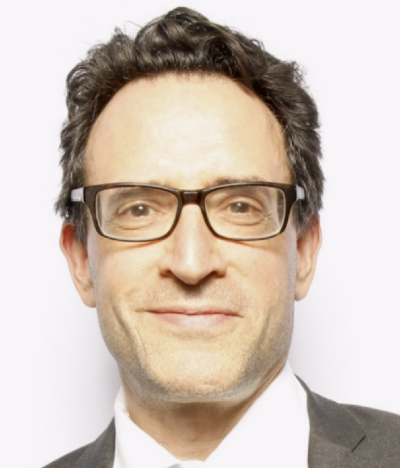
Jamey Hecht
Jamey Hecht, PhD, PsyD, LMFT is a psychoanalyst in private practice in Brooklyn, NY. He has published papers on literature, philosophy, art, film, and psychoanalysis in many scholarly journals, and poetry and fiction in some two dozen literary magazines.
His books are: Plato’s Symposium: Eros and the Human Predicament (Twayne,1999); a translation with commentary, Sophocles’ Three Theban Plays: Antigone, Oedipus the Tyrant, Oedipus at Colonus (Wordsworth Editions, 2005); Bloom’s How To Write About Homer (Chelsea, 2010); and two books of poetry: Limousine, Midnight Blue (Red Hen Press, 2009), and Dodo Feathers: Poems 1989-2019 (IPB, 2019). His major work, Into Theism: Overcoming Obstacles to Belief in God will appear from Essentia Books in the Spring of 2027.
He enjoys acting in Shakespeare plays, sculpting, and drawing comics.
Publications: www.jameyhechtauthor.com
Clinical blog: https://www.drjameyhecht.com/blog
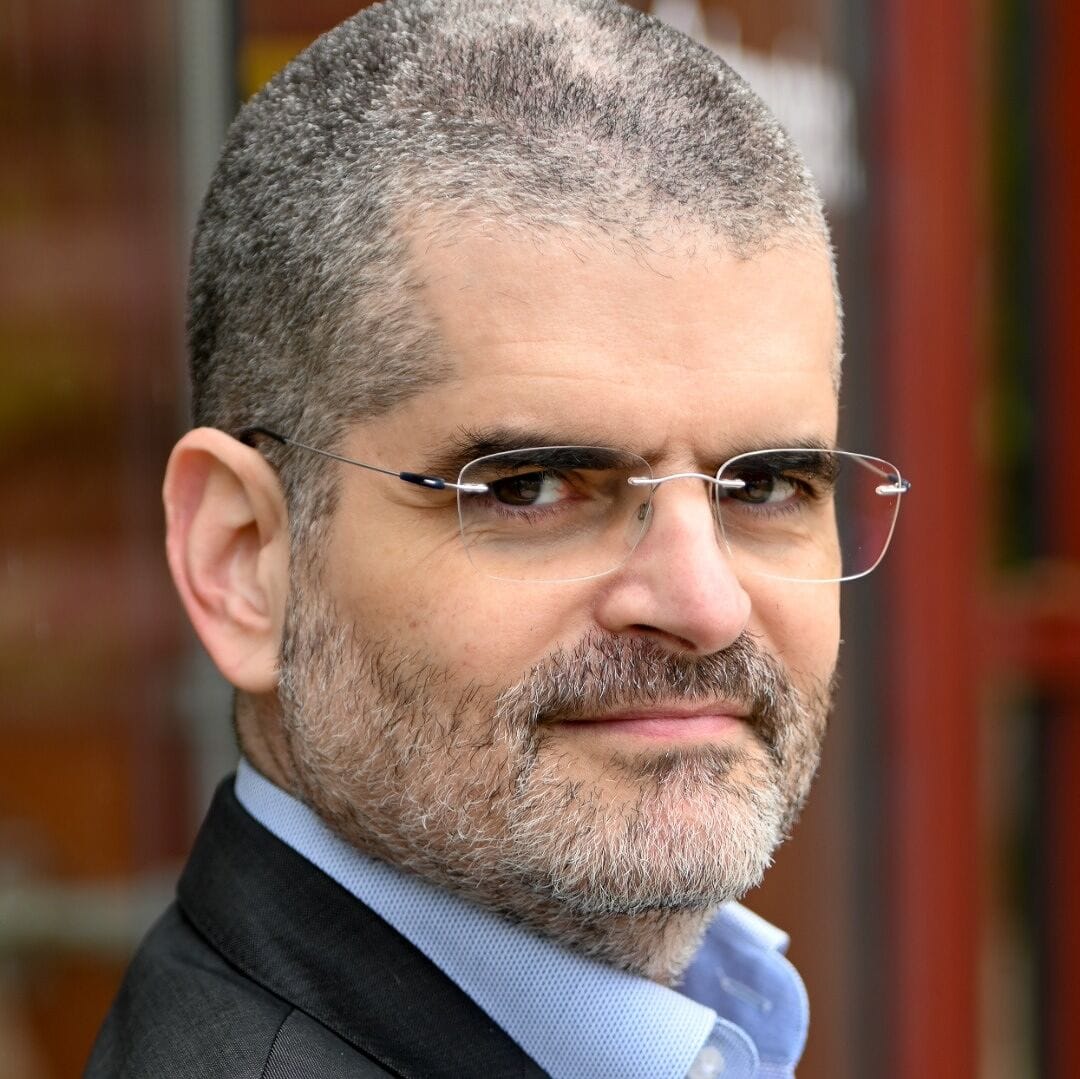
Bernardo Kastrup
Analytic idealism
Bernardo Kastrup is the Executive Director of Essentia Foundation and Founder/CEO at AI systems company Euclyd BV. His work has set off the modern renaissance of metaphysical idealism. He has a Ph.D. in philosophy (ontology, philosophy of mind) and another in computer engineering (reconfigurable computing, artificial intelligence).
As a scientist, he has worked for the European Organization for Nuclear Research (CERN) and the Philips Research Laboratories (where the ‘Casimir Effect’ of Quantum Field Theory was discovered). He has also been creatively active in the high-tech industry for almost 30 years, having founded parallel processor company Silicon Hive (acquired by Intel in 2011) and worked as a technology strategist for the geopolitically significant company ASML. Most recently, he has founded AI company Euclyd BV.
Formulated in detail in many academic papers and books, his ideas have been featured in Scientific American, the magazine of The Institute of Art and Ideas, the Blog of the American Philosophical Association and Big Think, among others. His most defining book is Analytic Idealism in a Nutshell: A straightforward summary of the 21st-century’s only plausible metaphysics.
Go deeper
A community made possible by member support
Standard membership €25 / month
Reduced-price membership €15 / month
Cancel at any time
Bursaries on request
Explore membershipAlready a member? Sign in
Weekly meetings · Full recordings · Questions & community
Member discussion